As world leaders gather in Paris for the 2026 Peace Forum, a critical question looms large: Can Africa’s rising diplomatic and technological influence reshape the future of global peace? The answer may very well come from two African nations taking center stage—Senegal and Benin. Their participation isn’t just symbolic; it signals a turning point in how the continent asserts its voice on issues from digital sovereignty to climate security.
Paris 2026: A global stage for African leadership on peace and technology
The Forum de Paris sur la paix, held every November, has long been a hub for heads of state, policymakers, and civil society to address the world’s most pressing challenges. Against a backdrop of escalating geopolitical tensions, economic rivalries, and rapid technological disruption, this year’s edition takes on added significance. For the first time in its history, the forum will see African nations—not just as observers, but as architects of the agenda.
Among the key figures shaping this shift are President Bassirou Diomaye Faye of Senegal, who arrived in Paris ahead of the forum, and Mahuna Akplogan, Benin’s Minister of Digital Transformation and Innovation. Their presence, along with other high-level delegates from across the globe, reflects a growing recognition that the solutions to 21st-century challenges must be co-designed with African stakeholders.
Senegal’s diplomatic push: Rewriting the rules of global cooperation
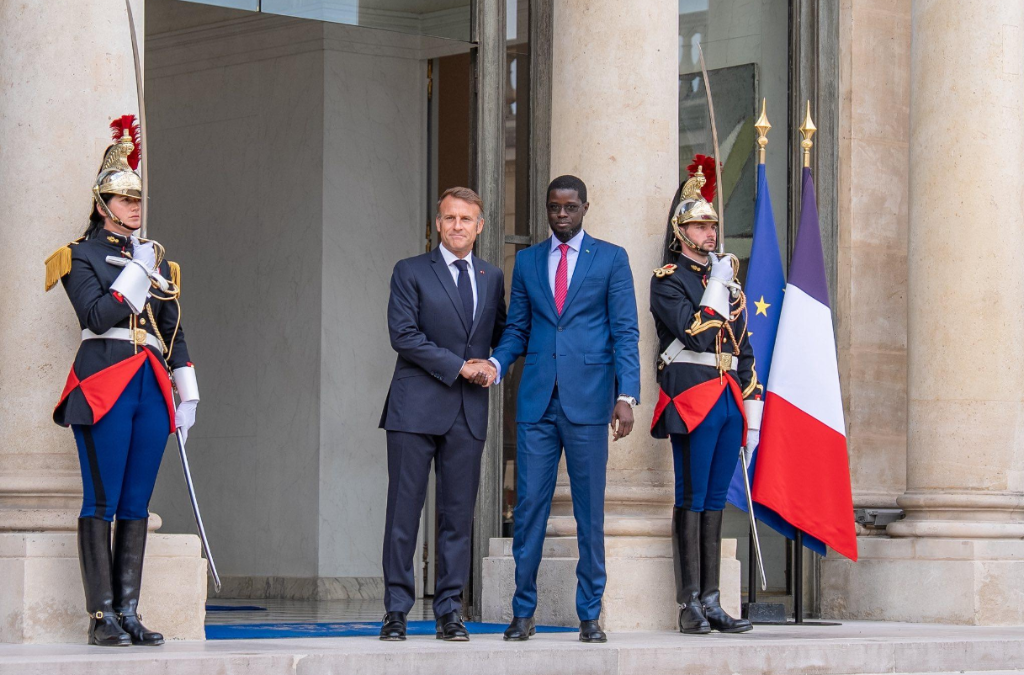
Senegal’s participation at the forum is more than a diplomatic courtesy—it’s a strategic move. In a meeting with French President Emmanuel Macron just a day before the forum’s start, President Faye underscored Dakar’s commitment to a new model of international cooperation. One rooted in mutual respect, shared sovereignty, and Africa-led solutions.
The West African nation is leveraging its platform in Paris to push for urgent action on several fronts:
- Sahel security and counterterrorism: Senegal advocates for African-led peacekeeping models that respect local contexts and reduce dependency on external military interventions.
- Climate justice and green development financing: Dakar is calling for a overhaul of international funding mechanisms to ensure African nations have direct access to resources without conditionalities that stifle innovation.
- Reform of global governance institutions: Senegal highlights the need for African representation in global decision-making bodies, including the UN Security Council and World Bank, to reflect current geopolitical realities.
For President Faye, the Paris forum is not just about participating—it’s about leading. Senegal’s strategy hinges on turning dialogue into actionable partnerships that deliver tangible benefits for its citizens and the broader continent.
Benin’s digital sovereignty agenda: Turning data into power
While geopolitical discussions often dominate peace forums, Benin’s representation brings a crucial missing dimension to the table: digital sovereignty. Led by Minister Mahuna Akplogan, Benin’s delegation is championing a future where Africa controls its technological destiny.
Key priorities highlighted by Benin include:
- Local AI and data infrastructure: Building homegrown artificial intelligence systems trained on African datasets to avoid biases and ensure culturally relevant applications.
- Regulation of digital platforms: Advocating for policies that prevent tech giants from exploiting African data without reciprocity or benefit-sharing.
- Africa-driven innovation ecosystems: Promoting public-private partnerships that invest in African tech startups, ensuring that technology serves as a tool for economic liberation, not domination.
In an era where digital infrastructure dictates economic and political power, Benin’s stance at Paris is clear: No nation can claim true sovereignty if it relies on foreign-controlled technology.
Beyond rhetoric: From dialogue to lasting impact
The Forum de Paris sur la paix is more than a talking shop. Its success hinges on whether the world’s leaders leave Paris with more than just declarations—they need commitments, timelines, and measurable outcomes.
Senegal and Benin are not alone in their ambitions. Leaders from Timor-Leste, Lithuania, Slovakia, and beyond are also using the forum to push for a more inclusive, tech-empowered, and equitable global order. The diversity of voices in attendance underscores a global consensus: the challenges we face today—whether climate change, cybersecurity, or economic inequality—cannot be solved without African leadership.
But rhetoric alone won’t drive change. The real test will come when these discussions translate into:
- New funding mechanisms for African-led peace and development initiatives.
- Legal frameworks that protect African digital rights and ensure fair access to technology.
- Structural reforms in institutions like the UN and IMF to reflect Africa’s growing influence.
For Senegal and Benin, the Paris forum represents a moment of opportunity—to shape the narrative, set the agenda, and secure a future where Africa is not a passive recipient of global policies, but an equal co-creator of them.
What’s at stake? Africa’s chance to lead the 21st century
The stakes could not be higher. Africa holds a third of the world’s critical minerals, a young and dynamic workforce, and some of the fastest-growing economies. Yet, for decades, its potential has been held back by exclusion from global decision-making tables and reliance on outdated systems designed elsewhere.
The Paris Peace Forum offers a rare chance to break this cycle. By prioritizing digital innovation, sovereign governance, and equitable partnerships, Senegal and Benin are not just asserting their place in the world—they’re redefining what it means to be a global leader in the 21st century.
The question now is: Will the rest of the world listen?