Senegal politics: Ousmane Sonko’s bold response after dismissal

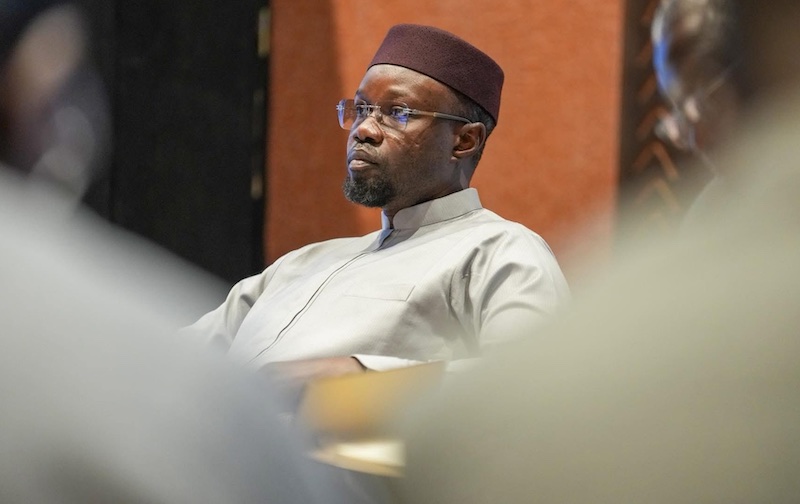
In a decisive move following his dismissal last week, Ousmane Sonko, the former Prime Minister and leader of the Pastef party, launched a sharp counterattack against President Bassirou Diomaye Faye. Speaking with unfiltered candor, Sonko declared that while he had no intention of destabilizing Senegal’s institutions, his party’s parliamentary majority could trigger a vote of no confidence at any moment. “The current situation resembles a political cohabitation,” he emphasized, adding that he had repeatedly warned the President about this outcome months ago, to no avail.
During the press conference held in Dakar, Sonko spared no criticism for the newly formed government led by Prime Minister Al Amine Lô. According to him, the executive branch suffers from a fundamental lack of political legitimacy. “We have a government that lacks any political foundation,” he stated, dismissing the coalition touted by the presidency as meaningless. “The so-called coalition they keep mentioning holds no real representation,” he asserted. In his view, labeling the government as a “technocratic administration” is simply an attempt to mask its political isolation. Sonko went on to assert that Pastef holds the exclusive mandate of popular legitimacy within the majority, reminding everyone that his party remains the country’s top political force, directly elected by the people. Governing without it, he argued, equates to governing without the people themselves.
A political test for the presidential camp
The Senegalese executive now faces significant vulnerability, a point underscored by political observers. The absence of Pastef from the government presents a critical challenge for the Diomaye Faye camp. With the party controlling 130 of the 165 parliamentary seats, this creates a unique dynamic: a cohabitation within the presidential majority itself. While the President retains constitutional powers, the successful implementation of his agenda will hinge on his ability to maintain trust with the Pastef deputies. Beyond cabinet composition, the bigger question looming is whether the executive can push through its legislative agenda and reforms without the direct involvement of the majority party.
Analysts suggest that President Bassirou Diomaye Faye has strayed from the very principles that defined his rise. “He has erased the memory of what brought him to power,” one commentator noted. “Today, he governs in an unfamiliar space—a formally legitimate power but one stripped of its narrative roots. Legitimate because it is constitutional. Orphaned because it has severed ties with the history that once gave it meaning beyond mere state administration.”
Meanwhile, across the aisle in the National Assembly, Ousmane Sonko stands ready with his 130 deputies, their voices and popular mandate intact. He is not merely an opponent but the guardian of the original political narrative. “We were here before, and we will remain after,” he appears to signal, prepared to assert his party’s dominance at any moment.
A rupture, not a cohabitation
Political analysts describe the unfolding scenario in Senegal as unprecedented. “This is not a classic cohabitation—where the President faces an opposing parliamentary majority—but something far more complex and potentially destabilizing: a rupture within the same movement,” a Bamako-based observer remarked. “We have a head of state and a party that controls an absolute majority yet refuses to participate in government.”
The central question now is how a technocratic government without its own parliamentary base can govern while Pastef, with its million-strong mobilization network, holds sway. The answer may unfold in the coming weeks and months—on the streets, in institutions, and within the corridors of the Presidential Palace.