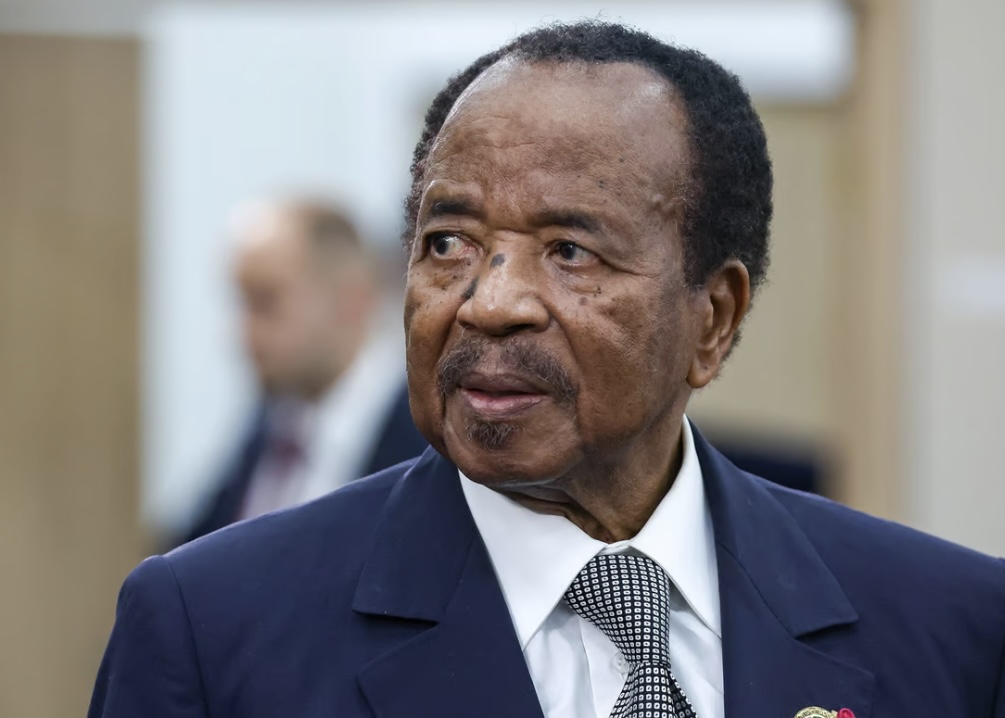
Forty-five days after President Paul Biya left Cameroon for what was described as a private visit to Europe, the ruling Rassemblement démocratique du peuple camerounais (RDPC) convened an urgent meeting of its top officials. No official statement has been issued regarding a possible return date for the 93-year-old leader, deepening uncertainty about the state of the country’s highest office.
While the RDPC insists that state institutions continue to function normally, opposition figures are demanding clarity on how power is being exercised during Biya’s absence. Questions linger over the constitutional mechanisms that should apply when a president is away for an extended period, especially given the lack of specific legal provisions governing such situations.
Party defends stability while critics call for transparency
In an official statement, RDPC Secretary-General Jean Nkuete announced a “critical working session” with senior party members, though no details were provided about the agenda or reasons behind the meeting. The party has sought to counter speculation, with RDPC propaganda chief Christophe Mien Zok publishing an editorial in L’Action asserting that “authority remains intact” and dismissing claims that Cameroon is being run in “autopilot mode.”
Official presidential channels have continued to release statements attributed to Biya, including greetings sent to world leaders on national occasions. However, no public appearances or government activities involving the president have been reported since his departure on June 7.
Opposition pushes for constitutional review amid leadership questions
Several opposition leaders have seized on Biya’s absence to demand greater accountability. Deputy Jean-Michel Nintcheu has called on the Constitutional Council to declare a presidential vacancy, while the Union démocratique du Cameroun (UDC) has urged institutional clarity without speculating on Biya’s personal situation. The party argues that while an extended foreign trip does not automatically constitute a power vacuum, the lack of transparency raises legitimate concerns about the effective exercise of presidential duties.
Constitutional gaps fuel debate over presidential absences
Cameroon’s legal framework provides no clear timeline for when the Constitutional Council should intervene in cases of prolonged presidential absence. The UDC has also highlighted the unfilled vice-presidential position—a role reintroduced during a 2024 constitutional amendment—as a structural weakness. The party advocates for legal reforms to define procedures for temporary presidential incapacitation, including scenarios where the president is abroad for extended periods. Since assuming office in 1982, Biya has made frequent trips to Europe, but his current absence is the longest on record with no official return date announced.