The harrowing 18-month ordeal of two European women kidnapped in northern Niger has finally reached a resolution—but at what cost? Eva Gretzmacher, an Austrian national, and Claudia Abbt, her Swiss counterpart, were abducted in the volatile city of Agadez in early 2025. Their liberation, confirmed in late October 2026, has thrust the shadowy world of cross-border hostage negotiations into the spotlight, with Libya emerging as an unlikely but pivotal player in a region plagued by insecurity.
Two Kidnappings, One Uncertain Path to Freedom
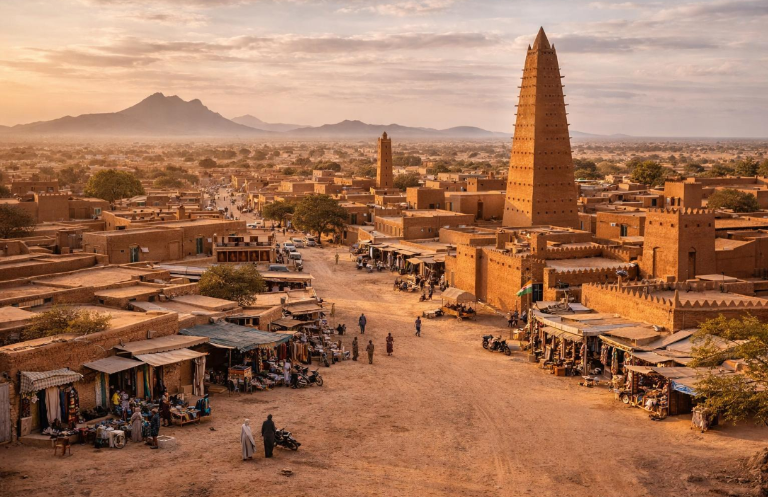
Eva Gretzmacher’s abduction in January 2025 marked the beginning of a prolonged crisis. The Austrian aid worker, long based in Agadez—a bustling desert hub and critical crossroads for trade and migration—found herself in the crosshairs of armed groups operating in the heart of the Sahel. Months later, in April 2025, Claudia Abbt, a Swiss national living in the same city, suffered an identical fate. Their disappearances sent shockwaves through European capitals, exposing the fragility of security in a region where the reach of extremist networks extends far beyond remote desert territories.
The identities of their captors remain shrouded in ambiguity. While some reports have hinted at the involvement of the Islamic State in the Greater Sahel (ISGS), no definitive evidence has surfaced. What is clear, however, is the sophistication of these operations, underscored by the women’s prolonged captivity—18 months of uncertainty that tested the limits of international hostage resolution mechanisms.
Benghazi as the Pivotal Escape Route
Their release took an unexpected turn when they were transferred to Benghazi, a Libyan stronghold under the control of Khalifa Haftar, the de facto ruler of eastern Libya. While the exact details of the mediation remain unconfirmed, whispers in diplomatic circles point to Haftar’s inner circle playing a key role. The potential involvement of his son, Saddam Haftar, has further fueled speculation about Libya’s dual role as both a crisis actor and an unlikely facilitator in the Sahel’s tangled web of conflicts.
For Haftar’s forces, brokering such a high-profile release offers more than just humanitarian relief—it provides a strategic opportunity to bolster their international reputation. In a region where Libya’s fractured governance leaves no single authority fully in command, Haftar’s ability to negotiate across borders may signal a shift in how future hostage crises are managed. Yet without transparent negotiations, the true motives behind his intervention remain open to interpretation.
Niger’s Security Dilemma: Who Holds the Upper Hand?
The liberation of Gretzmacher and Abbt offers temporary relief but does little to address the underlying vulnerabilities plaguing Niger. The country remains a hotspot for jihadist activity, with armed groups exploiting porous borders and remote terrain to launch attacks and conduct kidnappings. Agadez, despite its economic importance, sits at the mercy of these forces, its urban centers no longer immune to the chaos sweeping the Sahel.
Foreign governments have responded with stark warnings. In updated travel advisories, European and North American authorities now advise against all non-essential travel to Niger, citing terrorism and kidnapping risks. These advisories are not mere bureaucratic formalities—they reflect the harsh reality that foreign nationals, even in urban areas, face constant peril. The question now looms: How can Niger safeguard its people and visitors when the threat is as mobile as its adversaries?
The Unanswered Questions Behind the Mediation
While the spotlight shines on the women’s long-awaited return, critical questions linger. Who was truly behind their detention? Were the negotiations conducted through direct Libyan channels, or did intermediaries operate in the shadows? And perhaps most importantly—what concessions, if any, were made to secure their freedom?
The lack of clarity surrounding the process complicates efforts to draw broader lessons from this episode. In a region where kidnapping for ransom and political leverage has become a disturbingly common tactic, the Gretzmacher and Abbt cases underscore a harsh truth: liberation often hinges on channels of communication that thrive in obscurity. For now, the women are safe—but for others held in similar circumstances, the path to freedom remains fraught with uncertainty.
What the Future Holds for Sahel Hostage Dynamics
As Eva Gretzmacher and Claudia Abbt reunite with their families, the international community must confront a sobering question: Can Libya’s shadow diplomacy serve as a sustainable model for resolving future hostage crises in the Sahel? The answer may depend on whether Haftar’s intervention signals a new chapter in regional security—or merely a temporary detour in a decades-long battle for stability.
One thing is certain: in a region where borders are porous and extremist groups adapt with alarming speed, the fight to protect lives and prevent kidnappings is far from over.