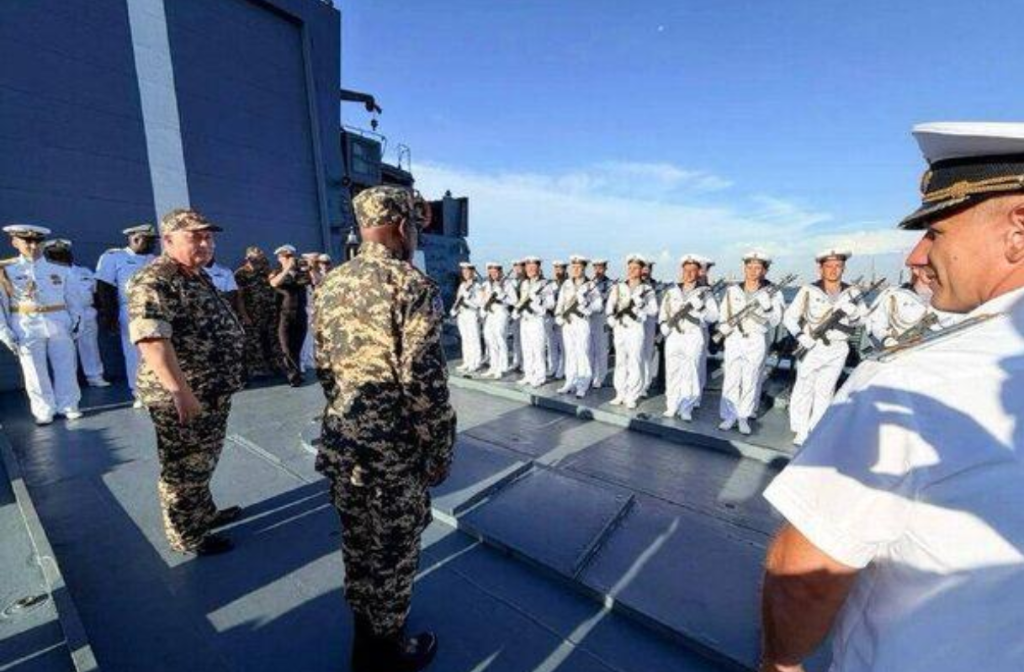
When the Russian naval training ship Perekop docked at Walvis Bay on October 20, 2026, the official narrative framed it as a routine maritime training mission. Over seven days, the vessel had covered a staggering 1,800 nautical miles, part of a broader campaign to train future officers in long-distance navigation and operational logistics. Yet, in an era marked by intensifying global power struggles, even a training exercise can carry weight far beyond its stated purpose.
Is this just an educational mission, or does it signal the beginning of a deeper strategic shift for Russia’s naval ambitions in Africa? The evidence points to the latter—but with caution. While no secret agreements have been made public, the visit reflects Moscow’s broader playbook of naval diplomacy: using training missions as a bridgehead for influence, access, and long-term presence.
Beyond the classroom: naval training as a soft-power tool
At face value, the Perekop’s arrival fits a pattern common to maritime powers: training vessels transit foreign ports to provide hands-on education for naval cadets. These missions serve a practical function—enhancing navigational skills, testing ship capabilities, and fostering professional exchanges. But they also carry symbolic weight. A training ship doesn’t carry combat-ready weapons, yet its presence broadcasts intention: we are here, we are capable, and we are building relationships.
In Namibia, the visit included formal meetings between Russian naval officers, Namibian defense officials, and embassy representatives. These exchanges, widely reported by regional observers, underscore the diplomatic dimension of the stopover. While framed as academic, such interactions create channels of communication that could facilitate future cooperation—whether in joint exercises, port access, or technical support.
The Swedish Defence Research Agency (FOI), in its 2026 assessment of Russian military engagement in Africa, noted that training missions often serve as low-risk avenues for establishing military ties. They allow a state to project presence without the commitment of a permanent base—an important consideration for a navy like Russia’s, which lacks a broad network of African outposts.
Walvis Bay as a strategic gateway in southern Africa
Walvis Bay, Namibia’s only deep-water port on the Atlantic coast, occupies a unique position in southern Africa’s maritime landscape. Its location offers convenient access to key shipping lanes between Europe, the Americas, and the Indian Ocean. But beyond geography, the port provides logistical advantages: refueling, maintenance, and technical support for transiting vessels.
For a navy projecting power across distant waters, such ports are invaluable. They reduce operational strain and extend operational reach. While Moscow has not confirmed plans to establish a permanent base in Namibia, the Perekop’s visit suggests an interest in deepening port access. Whether through formal agreements or repeated stopovers, such access could allow Russia to sustain longer deployments, conduct training rotations, or even deploy surveillance capabilities in the South Atlantic.
Analysts point out that even the promise of regular port calls can strengthen a navy’s bargaining position when negotiating future access. The mere existence of a relationship—and the expectation of future visits—can shape regional dynamics, prompting neighboring countries to consider their own maritime strategies.
There is no evidence yet of a deal granting Russia exclusive access to Walvis Bay. But the visit signals that discussions are happening—and that the port’s value extends beyond its economic role.
From diplomacy to defense: what could come next?
The Perekop’s mission was framed in technical terms: officers trained, charts reviewed, courses plotted. Yet diplomacy rarely operates in a vacuum. When military vessels visit foreign shores, the ripple effects often extend into defense cooperation.
Potential outcomes could include:
- Joint exercises: Future naval drills involving Russian and Namibian vessels, possibly with other African partners.
- Logistics support: Agreements allowing Russian ships to use Walvis Bay for repairs, resupply, or crew rotation.
- Training collaborations: Expanded programs for Namibian officers at Russian naval academies or technical schools.
The Russian government has long used defense cooperation as a tool to expand influence in Africa. Through arms sales, military training, and diplomatic engagement, Moscow seeks to position itself as an alternative partner to Western nations—one that offers support without political conditions. Walvis Bay’s visit fits into this larger strategy.
Is this a message to the West?
In a global order increasingly defined by rivalry between Russia, China, and Western powers, naval presence is more than operational necessity—it’s a statement. When a Russian ship docks in an African port, it doesn’t just train sailors; it signals resolve, visibility, and reach.
The FOI analysis highlights that Russia’s African naval activities serve dual purposes: practical naval readiness and strategic signaling. The message is clear: Moscow retains the capacity and will to operate far from its home waters, even in regions traditionally dominated by Western navies.This is not to suggest that the Perekop’s visit was a direct provocation. But in a region where Western powers have long maintained naval dominance, Russia’s growing maritime footprint is undeniable. It reflects a broader pattern: as traditional alliances shift, African states are becoming key players in a new geopolitical game.
Reading between the lines: what the Perekop’s visit really means
The Perekop’s stopover was not an isolated event—it was a calculated move in a larger strategy. While Russia emphasizes training and education, the benefits extend well beyond the classroom. By establishing routine contact, deepening port relations, and signaling presence, Moscow is laying the groundwork for future engagement.
Yet, the absence of concrete agreements—such as a formal military pact or a permanent base—keeps the situation in a zone of potential rather than certainty. The real test will come with follow-up actions:
- Will Russian ships return to Walvis Bay on a regular basis?
- Will training evolve into joint exercises or shared logistics?
- Will Namibia expand defense cooperation with Russia beyond training missions?
Until such developments occur, the Perekop’s visit remains a strategic overture—ambitious, deliberate, but not definitive. It is a reminder that in Africa, as in other regions, influence is not claimed in a single visit. It is built over time, through presence, persistence, and partnership.
The ship has already sailed. The question now is whether the port will welcome it back—and what that return might signal for Southern Africa’s maritime future.