
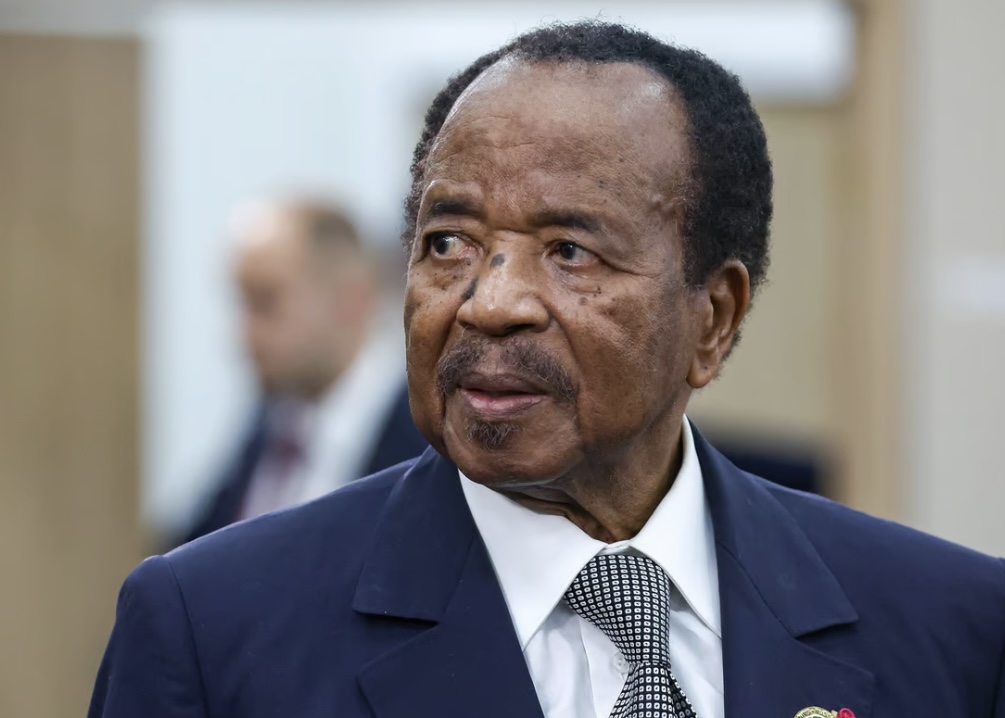
The Rassemblement démocratique du peuple camerounais (RDPC) convened a high-level meeting of its top officials 45 days after President Paul Biya departed for a private trip to Europe. No official timeline has been provided regarding his return, intensifying the uncertainty surrounding the country’s leadership.
While the ruling party insists that state institutions are functioning normally, opposition figures are demanding transparency about the president’s prolonged absence and the mechanisms in place to address such scenarios. The lack of updates has fueled speculation, with critics questioning whether the government is operating without clear leadership.

In an attempt to quell concerns, the RDPC released a statement announcing an “important working session” through its Central Committee Secretary-General, Jean Nkuete. However, the communiqué offered no details on the agenda or the reasons behind the meeting. President Biya, now 93, left Cameroon on June 7, with the presidency initially describing the trip as a “short private stay in Europe.” Since then, no official announcement has confirmed his return date.
The prolonged silence has triggered widespread commentary. In a July 15 editorial published in L’Action, the RDPC’s propaganda director, Christophe Mien Zok, dismissed suggestions that power is being exercised in “autopilot mode,” declaring that “the Lion has not left” and insisting that the presidency remains fully operational. Official channels have continued to share presidential messages, including greetings sent to foreign leaders such as Emmanuel Macron and the President of Montenegro, yet no public activities have been documented since his departure.
Opposition voices demand accountability
The absence of President Biya has revived calls for clarity from political opponents. Deputy Jean-Michel Nintcheu went so far as to urge the Constitutional Council to declare a vacancy in the presidency. Meanwhile, the Union démocratique du Cameroun (UDC) has taken a more measured stance, refusing to speculate on the president’s personal situation but emphasizing the necessity of institutional continuity. In a July 18 statement, the party acknowledged that a prolonged absence abroad does not automatically constitute a power vacuum but stressed the need to scrutinize how executive responsibilities are being fulfilled and to clarify the procedures for temporary incapacitation.
Legal gaps in handling presidential absences
Cameroon’s legal framework does not specify a maximum duration for the president’s absence from national territory. Analysts argue that this ambiguity warrants institutional review, yet no law defines when the Constitutional Council should intervene. The UDC also highlighted another concern: the vice-presidential position, reintroduced in April’s constitutional revision, remains unfilled. The party advocates for legal reforms to establish a clear framework for scenarios involving prolonged presidential absence. President Biya, who has led the country since 1982, is known for frequent trips to Europe, but his current absence—now the longest since assuming office—has drawn unprecedented attention without any official explanation for his return.
You may also like
-
Félix Tshisekedi’s shift on inclusive national dialogue in Democratic Republic of Congo
-
What to expect from DRC’s national dialogue amid opposition tensions
-
Opposition leader nintcheu urges constitutional council to declare presidential vacancy
-
Cameroun politics: is the presidency vacant amid biya’s extended stay abroad?
-
The shadow over the Niger river: how the Niger’s intelligence services shaped a nation