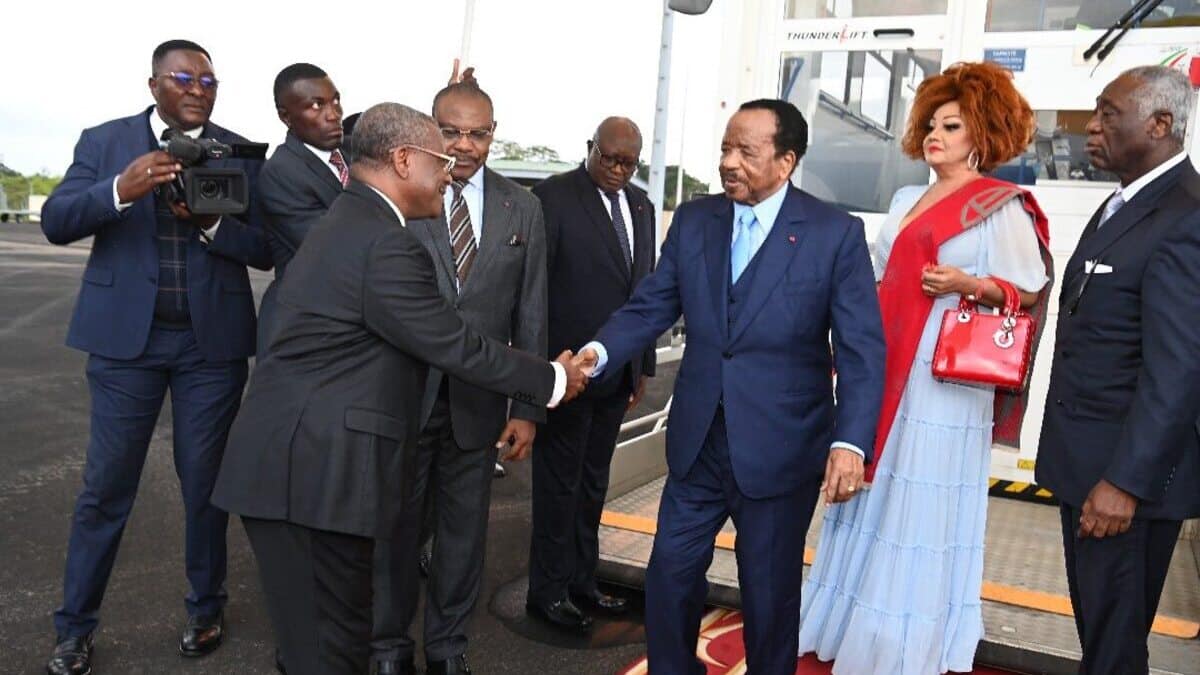
Cameroun politics: is the presidency vacant amid Biya’s extended stay abroad?
In a Monday political editorial broadcast on Radio Tiémeni Siantou (90.5 FM in Yaoundé and Bafang), commentator Eric Boniface Tchouakeu raises pressing questions about the prolonged private visit of Cameroon’s head of state in Europe.
In a Monday political editorial broadcast on Radio Tiémeni Siantou (90.5 FM in Yaoundé and Bafang), commentator Eric Boniface Tchouakeu questions the extended private visit of Cameroon’s head of state in Europe.
President Paul Biya left Cameroon on June 7, 2026, for what was officially described as a short private stay in Europe, according to a statement released by his Cabinet Director, Samuel Mvondo Ayolo.
Jeune Afrique, a well-known pan-African publication, confirmed through multiple reports that the Cameroonian leader has been in Geneva, Switzerland—a city he frequently visits—since taking office on November 6, 1982.
What began as a brief trip has stretched indefinitely, fueling widespread speculation about President Biya’s health at 93 years old. Despite repeated assurances from authorities, rumors persist, with some even suggesting a power vacuum in Cameroon.
At this juncture, it is essential to clarify that Cameroon’s constitution does not link the concept of a power vacuum to the number of days a president spends abroad. The legal framework does not impose any time limits on foreign travel for the head of state.
A power vacuum in Cameroon can only be established under three narrowly defined circumstances outlined in the current constitution: death, resignation, or permanent incapacitation of the sitting president. However, neither the constitution nor any other law specifies what constitutes permanent incapacitation, leaving this determination open to interpretation.
Therefore, concerns about a power vacuum cannot be raised solely based on an extended stay abroad by the president.
The prolonged delay in forming the government following the October 12, 2025 presidential election—and the swift reinstatement of the Vice-President position—may explain why some are now tracking the number of days President Biya has spent outside Cameroon since June 7, 2026.
In over 43 uninterrupted years in power, the president has never signed or issued a significant decree from abroad.
While legally permissible for the president to govern from abroad, the prolonged absence raises ethical and political concerns rather than legal ones.
Be the first to comment on this article
Comments