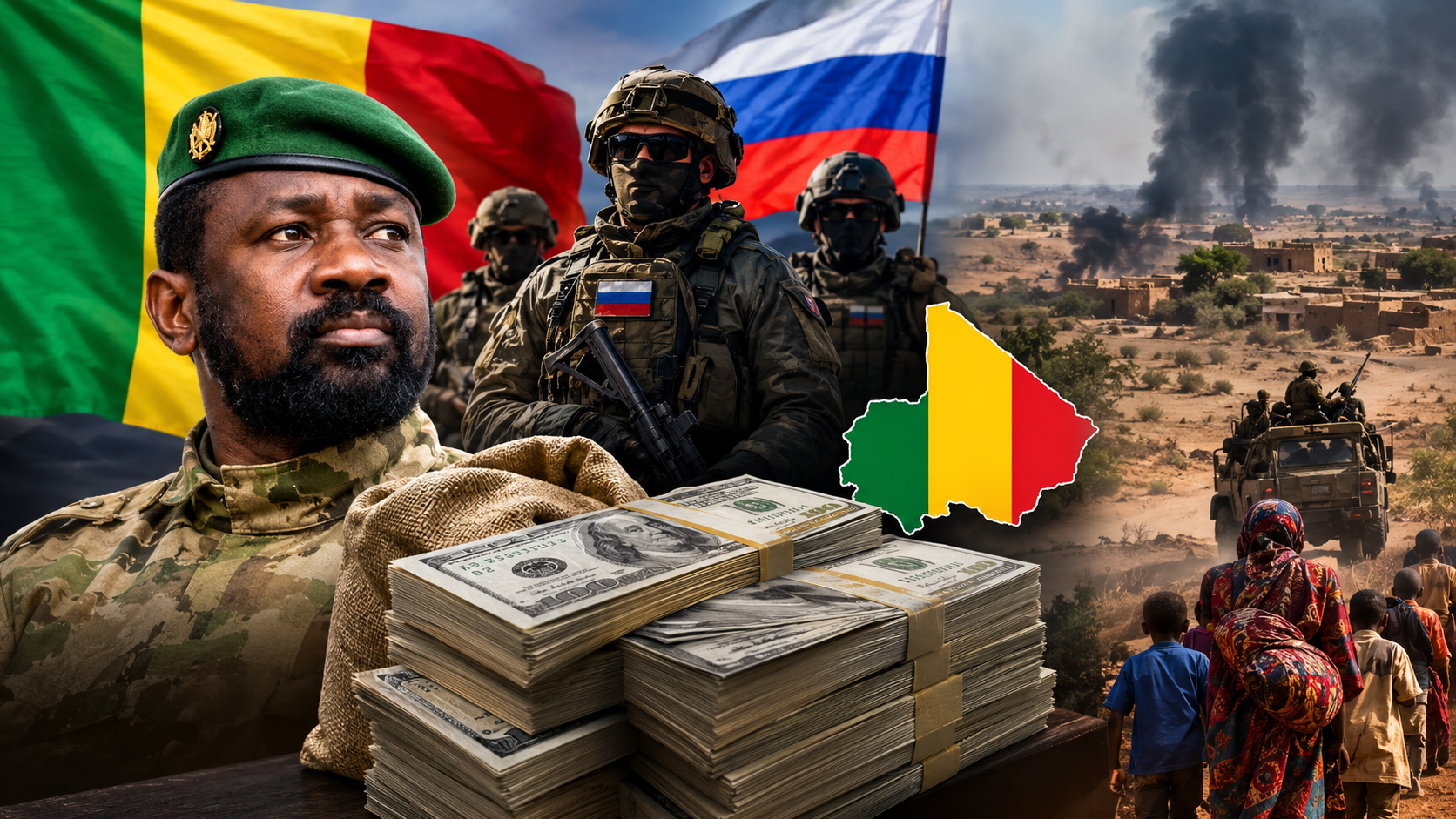
Is a billion-dollar investment in foreign military support translating into tangible progress on the ground for Mali? The question looms large over Bamako’s strategic pivot toward Moscow, as the country faces persistent insecurity despite unprecedented financial commitments to Russian-backed forces.
Beyond rhetoric: measuring the actual cost of Mali’s Russian military partnership
The financial scale of Mali’s engagement with Russian paramilitary units first Wagner, now integrated into the Africa Corps has reached staggering heights. Official expenditures suggest a monthly cost of approximately $10,000 per foreign fighter, culminating in an estimated total investment nearing one billion dollars. While this figure includes operational costs, logistics, and associated expenditures, the core question remains: what concrete outcomes justify such an expenditure in a country still grappling with violent extremism and regional instability?
The Malian government framed this shift as a path to reclaim national sovereignty, emphasizing independence from traditional Western allies as a cornerstone of its security doctrine. Yet, sovereignty in both its operational and political dimensions cannot be measured solely by the absence of foreign partners. It must be judged by demonstrable improvements in security, governance, and civilian protection. So far, the evidence remains elusive.
From Wagner to Africa Corps: structural change without visible progress
The rebranding of Russian forces from Wagner to Africa Corps marks a procedural evolution rather than a strategic transformation. For Bamako, the critical test lies in whether this restructuring has translated into enhanced coordination with the Malian Armed Forces, improved intelligence-sharing, or stronger protection for vulnerable communities.
Military interventions by external actors can temporarily shore up capacity, but they are not a substitute for a robust, self-sufficient national defense architecture. If Mali’s security continues to rely on costly foreign contingents, the long-term sustainability and indeed, the sovereignty of such an arrangement comes into sharp question. A million-dollar contract demands more than rhetoric; it compels results that can be measured, audited, and justified to the people it is meant to serve.
The human cost of unmet expectations
Behind the financial ledger lies the human dimension. For farmers denied access to their land, traders hesitant to travel essential routes, internally displaced families yearning to return home, and communities living under the shadow of armed groups, security is not an abstract concept it is a daily necessity. Yet, despite the infusion of substantial resources, these fundamental needs remain unmet in many regions.
The persistence of attacks whether against civilians, military outposts, or critical infrastructure undermines the narrative that this investment has yielded meaningful progress. The true benchmark of success is not the nominal presence of foreign forces, but the observable reduction in violence, the restoration of civilian mobility, and the gradual reassertion of state authority. To date, these indicators have not consistently reflected the scale of investment.
Sovereignty in question: when strategic choices demand accountability
The Malian authorities justified the rupture with Western partners by invoking national autonomy and self-determination. However, autonomy is not synonymous with disengagement from international cooperation; it is about ensuring that such cooperation delivers verifiable benefits to the population. When billions of dollars are committed to a foreign military partnership, the duty of transparency extends beyond nationalistic declarations.
The public has a right to know not only the full scope of the financial commitment but also the operational scope of Russian forces, the specific missions assigned, the duration of engagements, and the measurable impact on security metrics. Without such clarity, the billion-dollar expenditure risks being perceived less as a strategic investment and more as a political gamble with uncertain returns.
What constitutes success in Mali’s security crisis?
To evaluate the effectiveness of this partnership, one must look beyond headline figures and political speeches. Success would be defined by:
A sustained decline in armed attacks and civilian casualties
Improved protection for civilians in conflict zones
Enhanced freedom of movement along critical transport corridors
Reinforced state presence in previously abandoned territories
Measurable progress in intelligence gathering and operational coordination
Without these indicators, the justification for such a substantial expenditure weakens. The Malian government’s challenge is not merely to continue defending its strategic choices, but to prove through tangible outcomes that those choices have improved the lives of its citizens.
Conclusion: the billion-dollar verdict awaits
Mali’s billion-dollar partnership with Russian military forces represents a high-stakes gamble not just financially, but politically and socially. While no security strategy unfolds overnight, the passage of time demands tangible evidence of progress. For a nation weary of conflict and longing for stability, the true cost of this alliance will ultimately be judged not by the volume of payments made, but by the volume of security delivered.
The question Mali must answer is clear: has this investment yielded the stability, protection, and progress its people deserve? The answer will determine whether this billion-dollar gamble was a calculated risk or a costly miscalculation.
By Daniel Mbami — Journalist