As erratic rainfall, scorching droughts, and devastating floods ravage Benin’s agricultural heartlands, a bold new initiative seeks to rewrite the future for nine of the country’s most vulnerable districts. Launched in Sèmè-Podji on November 11, 2026, the Integrated Project for Climate Resilience in Vulnerable Border Communes (PIRRCF) isn’t just another pledge—it’s a 15.5-million-dollar investment designed to overhaul local economies, secure water access, and future-proof farming against climate unpredictability. But can this five-year gamble turn the tide for over 31,000 farmers by 2031?
Why these nine districts were chosen for Benin’s climate lifeline
Not all communes in Benin face the same level of climate risk. The PIRRCF targets Sèmè-Kpodji, Sakété, Kétou, Savalou, Dassa-Zoumè, Djougou, Copargo, Ouaké, and Malanville—districts where unreliable rains and degraded soils have crippled harvests, slashed incomes, and pushed rural households to the edge of food insecurity. These areas were selected not for their size, but for their outsized vulnerability to climate shocks that threaten Benin’s food basket.
For generations, farmers in these zones have relied on rain-fed agriculture, leaving them defenseless against droughts that now strike earlier and withdraw later each year. The PIRRCF’s strategy? To break this cycle by equipping communities with tools and systems that adapt to climate change—not fight against it.
From maize fields to solar pumps: what the PIRRCF will deliver
The project’s core isn’t just about throwing money at the problem—it’s about reimagining how agriculture, water, and energy operate in harmony. Here’s what’s on the table:
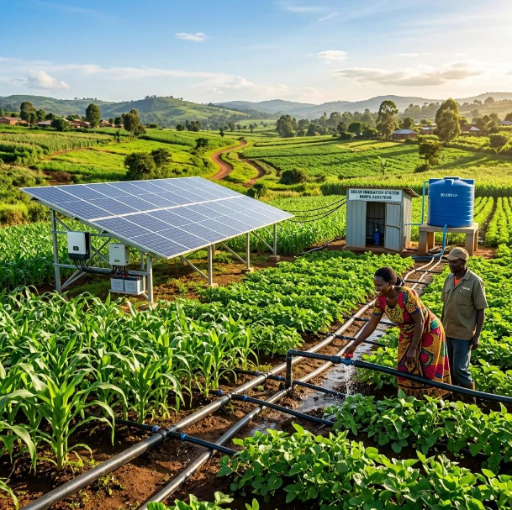
- Water security first: Three new reservoirs, two valley floor developments, five drip-irrigation systems, and twelve pastoral boreholes are planned to wean farms off seasonal rains and ensure year-round crop growth.
- Solar-powered pumping: Low-cost solar solutions will replace diesel generators for water access, cutting energy bills and reducing carbon footprints in a country where electrification remains patchy.
- Farmers 2.0: digital tools for smarter decisions: Mobile apps and data platforms will deliver real-time weather alerts, soil moisture data, and market prices—giving growers the information they need to plant, irrigate, and sell at the right time.
- Building greener, building smarter: Locally sourced compressed earth blocks and stabilized soil bricks will replace energy-intensive concrete, lowering construction costs while boosting resilience to heatwaves.
Who benefits—and how much is at stake
The numbers tell a story of ambition and urgency. By 2031, the PIRRCF aims to:
- Train and support 20,000 farmers, livestock herders, and agri-entrepreneurs in climate adaptation techniques.
- Lift agricultural productivity by 20% and boost household incomes by 30% for 10,000 families.
- Create 5,000 direct jobs in farming, solar energy, and digital services, with an additional 15,000 indirect jobs in related sectors.
- Reach 31,687 direct beneficiaries, including over 12,300 women, while indirectly benefiting up to 1.5 million people across the nine districts.
Behind these figures lies a human reality. For farmers like those in Malanville, where flash floods have destroyed entire harvests, the stakes couldn’t be higher. “We’re tired of planting and losing,” said one local cooperative leader. “This project isn’t just about survival—it’s about thriving.”
Will the money reach the fields? The make-or-break factors
A fund of $15.5 million sounds transformative, but its success hinges on execution. The plan depends on:
- Timely infrastructure delivery: Will the reservoirs, boreholes, and irrigation systems be completed before the next drought season?
- Local ownership: Are village leaders, women’s groups, and youth collectives actively shaping how resources are used?
- Transparent governance: Can funds be tracked from Brussels to Benin’s border towns without disappearing into bureaucratic cracks?
- Measurable impact: Will productivity gains, income increases, and job creation be verified—and celebrated—every step of the way?
The PIRRCF’s backers—the UN Development Programme, Switzerland, Belgium, and Benin’s government—insist that accountability is built into the design. “This isn’t a handout,” noted a Swiss development advisor. “It’s an investment in Benin’s future, with clear milestones and real consequences for failure.”
Beyond agriculture: building resilient economies from the ground up
The project’s vision extends far beyond farms. By promoting eco-friendly building materials—like compressed earth blocks—and supporting small-scale artisans, the PIRRCF aims to create a ripple effect:
- Green construction jobs: Training youth and women in sustainable building techniques opens doors to steady income and reduces reliance on expensive, imported materials.
- Local supply chains: Sourcing materials and services within Benin keeps money circulating in rural communities, strengthening the self-reliance that climate shocks often erode.
- A culture of resilience: When communities see solar pumps powering irrigation, digital tools guiding planting decisions, and locally made bricks rebuilding homes, the message is clear: adaptation isn’t a luxury—it’s the new normal.
The ultimate test: can Benin’s farmers outpace climate change?
The PIRRCF launches at a critical juncture. While the project’s timeline stretches to 2031, the clock is ticking for Benin’s rural communities. With extreme weather events intensifying—from the Sahel’s spreading aridity to West Africa’s erratic monsoons—delay is not an option. The question now is whether this fund can translate promises into progress faster than the climate steals livelihoods.
For the nine districts in the crosshairs, the answer will shape not just harvests, but futures. Will Benin’s gamble pay off?