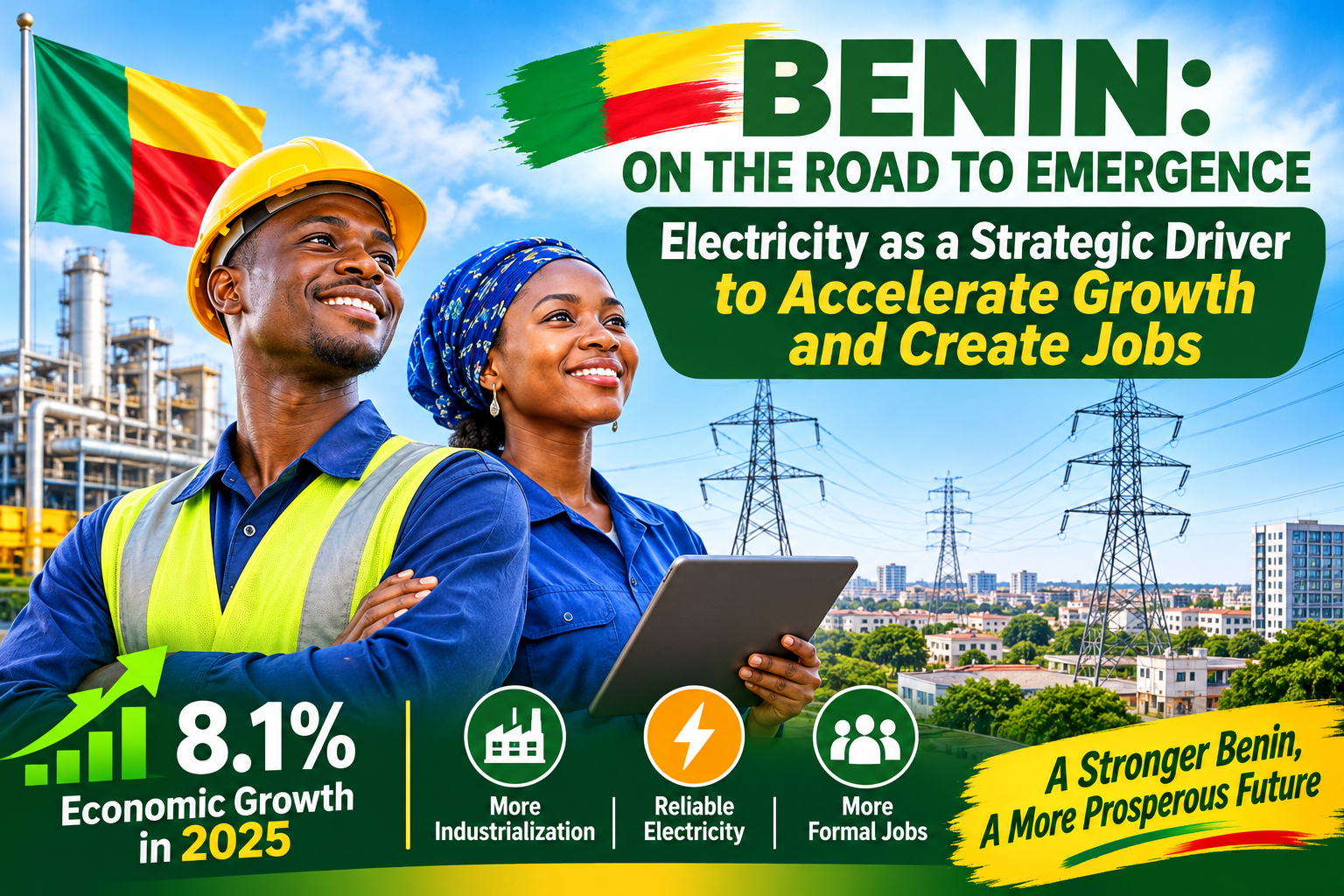
With an 8.1% economic growth rate in 2025, Benin has cemented its position as one of West Africa’s fastest-growing economies. Yet behind these impressive macroeconomic indicators lies a persistent challenge: the country’s growth has yet to translate into sufficient formal, stable, and well-paying jobs. This paradox, highlighted in the latest economic outlook, raises a critical question: how can Benin convert its economic momentum into meaningful employment opportunities for its people?
From Growth to Jobs: The Paradox of Benin’s Labor Market
The World Bank’s 2026 economic report on Benin delivers a stark warning: as of 2022, a staggering 96.3% of workers operated in the informal sector. Even more telling, eight out of ten jobs created between 2021 and 2024 were in self-employment or informal roles. Salaried employment accounted for just 19.8% of jobs in 2024 a figure that drops to a mere 9% among young workers. These numbers reveal a troubling reality: while Benin’s economy is expanding, the benefits of that growth are not reaching most citizens through formal employment.
The issue is not a lack of growth but the economy’s failure to convert that growth into productive, dignified jobs. A vendor selling goods on the street, for instance, lacks the stability, social protections, and financial resources of a salaried worker. Similarly, artisans operating in precarious conditions often struggle to expand their businesses, hire staff, or invest in better equipment. Industrialization, particularly through initiatives like the Glo-Djigbé Industrial Zone (GDIZ), offers a solution: in 2025, GDIZ employed 22,798 people a 28.8% increase from the previous year. Yet, for this progress to scale, systemic barriers must be addressed.
Electricity as the Linchpin of Competitiveness and Opportunity
The World Bank’s findings underscore a critical bottleneck: nearly half of Beninese businesses cite unreliable electricity as a major obstacle to their operations. The data is even more alarming: 86.1% of enterprises report frequent power outages. For manufacturers, these disruptions translate into lost production time, wasted raw materials, and missed delivery deadlines. Small businesses, already operating on tight margins, are often forced to rely on expensive diesel generators, further eroding their competitiveness.
The challenges extend beyond production. In 2024, transmission losses on Benin’s power grid reached 24.7%. Half of the country’s transmission lines and substations are over 25 years old, and reliance on heavy fuel oil due to limited natural gas supply drives up operational costs. These inefficiencies paint a clear picture: Benin’s energy crisis is not just about generating more electricity; it’s about ensuring that power is affordable, reliable, and accessible to businesses and households alike.
The Mission 300 Initiative: A Blueprint for Energy and Economic Transformation
Enter the Mission 300 initiative, a continent-wide effort led by the World Bank and African Development Bank, aiming to connect 300 million additional Africans to electricity by 2030. For Benin, the associated National Energy Pact represents a roadmap to bolster production capacity, modernize transmission and distribution networks, and attract private investment. Several projects are already underway to achieve this vision:
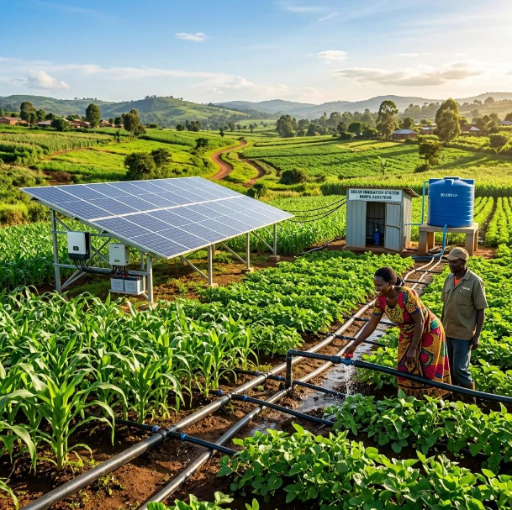
Solar expansion: Four new solar plants in Natitingou, Djougou, Bohicon, and Parakou are expected to add 50 MW of capacity, diversifying the energy mix.
Thermal power boost: The Onigbolo thermal plant, with a planned capacity of 128 MW, is set to enhance national supply.
Job creation potential: The World Bank estimates that fully implementing the Mission 300 agenda could generate or improve nearly 159,000 jobs in Benin by 2030.
Yet, these numbers remain potential rather than guarantees. To unlock their impact, Benin must address persistent issues such as governance inefficiencies, technical and commercial losses on the grid, and the high cost of energy supply. Quickening the pace of grid connections and ensuring transparent, efficient energy sector management will be essential.
Turning Energy Reforms into Lasting Prosperity
Benin has already proven its ability to sustain economic growth and attract strategic investments. The success of GDIZ demonstrates that industrialization can create tangible employment opportunities. The next step is to extend this momentum across the broader economy particularly to small and medium-sized enterprises (SMEs), agricultural processing units, and young entrepreneurs. Reliable electricity would enable these actors to reduce costs, scale up production, protect their equipment, and hire more workers.
The World Bank’s analysis points to a pivotal moment for Benin’s economy: shifting from a growth model measured solely by GDP figures to one that prioritizes productive jobs, rising incomes, and social mobility. In 2025, the country’s 8.1% GDP growth is a testament to its economic resilience. But the true measure of success in the years ahead will not be found in macroeconomic charts alone. It will be measured in the number of salaried jobs created, the productivity gains of businesses, the stability of the power supply, and the ability of young Beninese to secure decent livelihoods. Addressing the energy crisis is not just an economic imperative it is the key to unlocking a more inclusive and prosperous future.
By Élise Ntamag — Journalist