In the heart of West Africa, a critical question looms over the future of an entire generation: Can the Sahel construct resilient, sovereign schools when classrooms are closed, teachers are scarce, and instability tightens its grip on the region?
Niamey’s high-stakes education summit: uniting the Sahel against a silent crisis
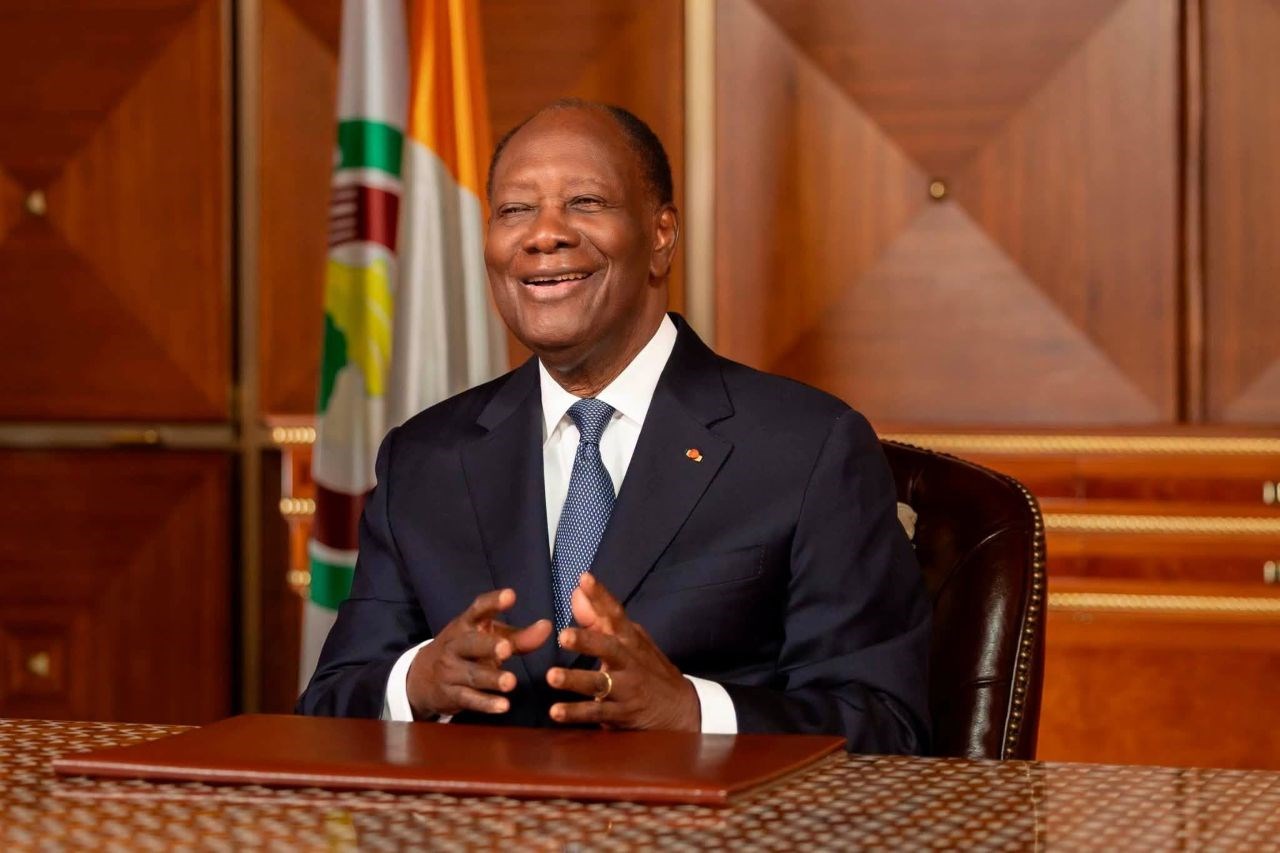
This week, Niamey hosts the inaugural Ministerial Conference on Education and Training for the Alliance of Sahel States (AES). The opening ceremony was led by Niger’s Prime Minister, Ali Mahamane Lamine Zeine, alongside members of the National Council for the Safeguard of the Homeland (CNSP), government officials, diplomats, and delegations from Mali and Burkina Faso. The goal is ambitious: laying the groundwork for an integrated, self-reliant, and resilient education system—one that prioritizes local development over external dependency.
Yet beneath the diplomatic rhetoric lies a harsh reality. The AES’s vision of “sovereign education” risks remaining a distant dream if classrooms continue to vanish and qualified teachers grow scarcer.
Teacher shortages: the hidden fracture in Sahel’s education system
The deficit of trained educators is more than a numerical gap—it is a structural wound. In Niger’s 2023–2024 school year, only 69,636 teachers served over 3 million students, averaging 43 learners per instructor. But quantity is only part of the problem.
According to data from the Ministry of National Education, Nigeria counted 105,869 teachers across all levels in May 2026 to cater to nearly 3.95 million students. Yet as Minister Élisabeth Shérif acknowledged, “Quality remains a distant target when 78.5% of public school teachers are contract workers, some without basic pedagogical training.”
The situation is mirrored in Burkina Faso and Mali, where insecurity forces teachers to flee remote areas, leaving entire communities without mentors. Without qualified educators, uniform standards of learning are unattainable—and the dream of a sovereign education system recedes further into the future.
Closed schools and displaced children: how violence erases learning opportunities
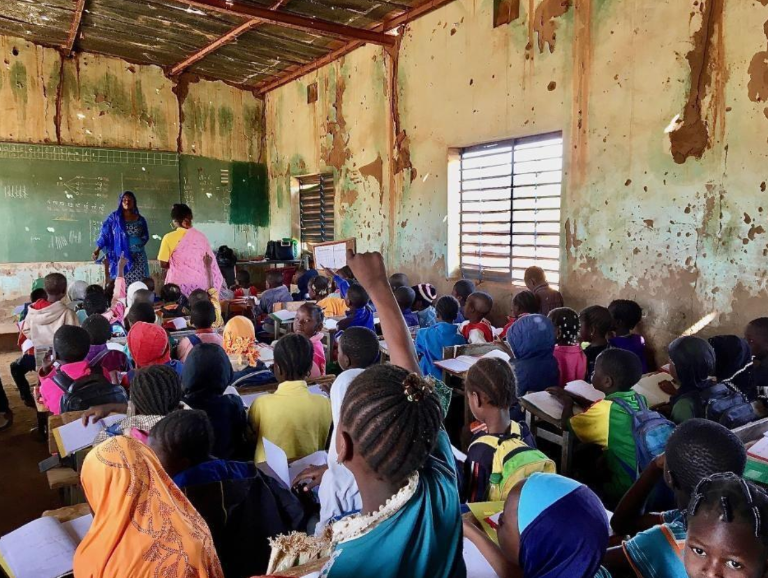
The shadow of terrorism stretches far beyond physical harm—it starves young minds of opportunity. In Burkina Faso alone, over 5,300 schools were shuttered by early 2024, displacing 820,000 students and 24,000 teachers.
Mali’s education cluster reported 2,444 non-functional schools in June 2026, affecting 733,200 children and 14,604 educators. In Niger, security constraints left 1,097 schools closed by the end of 2025, leaving 93,676 students—48% of them girls—without access to learning. The Tillabéri region bore the brunt, with 1,032 schools affected.
Each closed classroom represents not just lost time, but lost potential—children pushed into labor, early marriage, or radicalization when education fails them.
Population displacement: the ripple effect on education systems
Violence doesn’t just close schools—it uproots families. By 2026, over 2 million people were internally displaced in Burkina Faso, 414,524 in Mali, and 548,386 in Niger. As communities flee, they abandon schools, disrupt enrollment, and overwhelm host villages already struggling to accommodate newcomers.
For children, this means interrupted education, delayed graduation, and in too many cases, permanent exclusion from the classroom. For teachers, it means additional workloads and emotional strain as they adapt to overcrowded, under-resourced environments.
Building resilience: what sovereignty looks like beyond the summit
The AES’s education summit isn’t just about declarations—it’s a test of political will. To transform words into action, three priorities must emerge:
- Teacher training and retention: Rebuilding teacher training colleges, increasing incentives for educators in high-risk zones, and ensuring every teacher has access to professional development.
- Infrastructure recovery: Fast-tracking the reopening of closed schools, building temporary learning spaces in displacement camps, and securing classrooms against future threats.
- Inclusive education pathways: Developing flexible learning programs for displaced children, using technology to bridge gaps, and ensuring girls—especially in rural areas—remain central to the recovery plan.
Niger’s minister has made one thing clear: nearly five million children remain outside the education system. This is not just a statistic—it’s a generation at risk of being left behind in a world increasingly defined by knowledge and skill.
Education as the foundation of sovereignty
True sovereignty is not measured in borders or resources alone. It is forged in classrooms, where young minds are shaped, skills are nurtured, and futures are secured. The Sahel stands at a crossroads: one path leads to fragility and dependency; the other, to resilience and self-determination.
Niamey’s conference is more than a diplomatic event—it’s a moment of reckoning. Will the AES seize this opportunity to build schools where education is not a privilege, but a right? Or will the dream of sovereign education fade under the weight of unmet needs and unaddressed crises?
The answer will define the Sahel’s tomorrow—and the classrooms of today hold the keys to both.