Why Washington is sounding the alarm over Madagascar’s military ties with Moscow
As Madagascar deepens its defense cooperation with Russia, the United States has raised a critical question: is Antananarivo risking regional stability by replicating Moscow’s controversial Sahel security model in the Indian Ocean? The warning, delivered by a top US military official, underscores concerns that a flawed approach to counterterrorism could spread beyond Africa’s Sahel belt.
What exactly is the ‘Russian Sahel model’ and why does it worry the US?
The US has long criticized the security strategy Russia has implemented in Mali, Burkina Faso, and Niger—countries where military juntas have pivoted away from Western partners toward Moscow. While Russia’s Africa Corps and Wagner-linked forces have bolstered these governments’ military capabilities, violent extremist groups continue to inflict heavy casualties across the Sahel. Washington argues that this model, far from bringing lasting security, has only fueled instability.
During a November 2026 press briefing following a high-level tour of Madagascar and Mozambique, Lieutenant General John Brennan, Deputy Commander of US Africa Command (AFRICOM), made clear that Washington sees little merit in exporting this approach to the Indian Ocean region.
Key concerns raised by the US
- Ineffective counterterrorism outcomes: Despite increased Russian military support, attacks by jihadist groups remain frequent and deadly in the Sahel.
- Erosion of democratic governance: US officials note that partnerships with Russian-aligned regimes in the Sahel have coincided with democratic backsliding.
- Strategic misalignment: Washington fears that adopting this model could push Indian Ocean nations into deeper dependence on non-democratic actors.
How Madagascar became a focal point in US-Russia competition
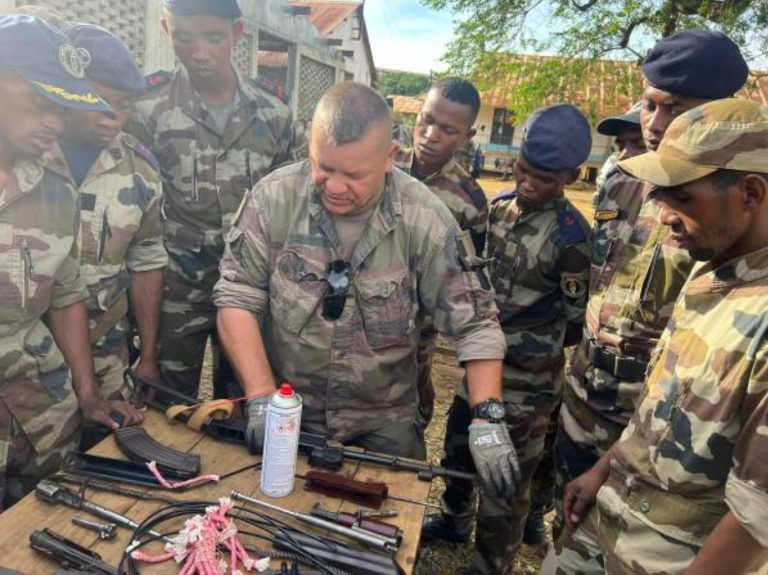
Since the 2025 political transition that brought Colonel Michaël Randrianirina to power, Madagascar has significantly expanded its ties with Russia. Military cooperation has accelerated, with Moscow supplying drones, small arms, and training through Russian instructors. The momentum peaked in early 2026 when the Malagasy president traveled to Moscow for talks with Vladimir Putin, followed by multiple defense and economic agreements signed at the October Russia-Africa Summit.
These developments have not gone unnoticed in Washington. AFRICOM’s recent visit to Antananarivo was framed as an effort to reassess US-Madagascar security cooperation and remind the island nation of the risks associated with aligning too closely with Moscow’s model.
Military and economic exchanges between Madagascar and Russia
- Delivery of military drones and small arms
- Russian military training programs for Malagasy armed forces
- Joint defense agreements signed during high-level summits
- Expanded economic cooperation in energy and infrastructure
The Indian Ocean: a high-stakes maritime corridor
Madagascar’s strategic location along the Mozambique Channel—one of the world’s busiest shipping lanes—makes it a key player in global trade and energy flows. The US has long viewed the Indian Ocean as a critical theater in countering transnational threats, including piracy and terrorism. But recent developments have introduced new risks.
According to US assessments, Islamic State-affiliated groups operating in northern Mozambique are adapting their tactics and expanding their maritime capabilities—raising fears of a growing threat to commercial shipping and regional stability. Washington has called for enhanced maritime surveillance, intelligence sharing, and military training in response.
Why the US is pushing back on Russian influence
While Washington has not threatened sanctions, it has signaled its intent to preserve influence in the Indian Ocean. By warning Madagascar against adopting the Sahel model, the US is attempting to steer the country toward partnerships that prioritize transparency, accountability, and long-term stability.
Yet, Antananarivo faces a delicate balancing act. It must navigate between deepening ties with Russia, maintaining historical relationships with Western partners, and safeguarding its national sovereignty.
Can Madagascar avoid the pitfalls of the Russian security model?
Despite US warnings, Madagascar retains the sovereign right to choose its military partners. However, the trajectory of its cooperation with Russia raises important questions about long-term security outcomes. Will the Malagasy government prioritize short-term military gains over sustainable peace? Can it resist the geopolitical pressures that come with deepening ties to Moscow?
The answers will shape not only Madagascar’s future but also the broader security landscape of the Indian Ocean—a region already caught in the crossfire of global power competition.
What’s next for Madagascar’s foreign policy?
As geopolitical rivalries intensify, Madagascar stands at a crossroads. The choices it makes today will determine whether it becomes a model of balanced diplomacy or a cautionary tale of strategic misalignment. One thing is certain: the island nation’s decisions will resonate far beyond its shores.