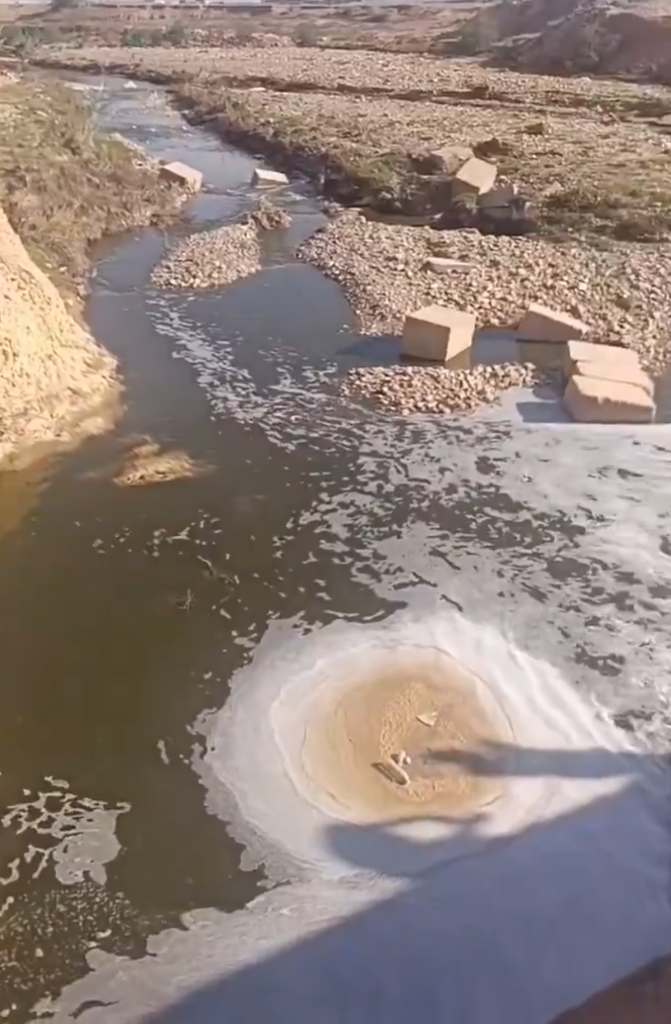
The latest flashpoint in the already strained Algerian-Morrosan relationship has emerged from an unexpected source: a contaminated river flowing through the critical agricultural and urban heartland of Algeria’s Tlemcen region.
How industrial runoff from Morocco is endangering Algeria’s water security
Algerian authorities have raised urgent concerns about the severe degradation of the Oued Mouilah, a key tributary in the Tlemcen basin. They attribute the contamination to industrial and domestic effluent originating in Morocco, traveling via the Oued Isly before crossing into Algerian territory. While environmental protection remains the stated priority, the accusation carries significant geostrategic weight, potentially reshaping the diplomatic and legal landscape between Algiers and Rabat.
Toxic traces found in Hammam Bougara dam’s water supply
The state-run water quality reports reveal alarming levels of nitrites, heavy metals, pharmaceutical residues, and microbiological contaminants in the waters feeding into the Hammam Bougara dam—a vital source for potable water in western Algeria. These findings have prompted urgent calls for remediation and triggered fears of long-term ecological damage, higher treatment costs, and increased health risks for local communities.
In response, Algerian environmental agencies have initiated emergency water treatments and intensified monitoring programs to safeguard public health while investigations continue. Still, officials warn that without sustained upstream action, the pollution may persist, undermining decades of water infrastructure investment in Tlemcen.
Is Rabat responsible? The scientific and legal tightrope Algiers must walk
While Algerian authorities have pointed publicly at Moroccan industrial zones as the likely source of the Oued Mouilah contamination, establishing clear attribution remains a complex scientific challenge. Determining the exact origin of pollutants demands rigorous hydrological sampling, trace chemical analysis, and a contested chain of custody across national borders.
The credibility of any formal accusation hinges on transparent, third-party verification. Without independently verified data and shared analytical protocols, the case risks becoming mired in competing narratives rather than fact-based resolution.
International mechanisms loom as Algeria weighs legal options
A growing chorus within Tlemcen’s provincial assembly has called for escalating the dispute to international forums, citing the urgent need for legally binding oversight of transboundary water pollution. Algeria maintains it may pursue recourse under international law, invoking principles of shared responsibility, environmental prevention, and state accountability enshrined in treaties such as the UN Watercourses Convention.
Yet the leap from diplomatic rhetoric to a formally lodged complaint remains uncertain. Until evidence is presented in a recognized international venue, the decision to pursue legal avenues remains a strategic consideration rather than an enacted policy.
A new tension in a relationship already at a breaking point
The Oued Mouilah controversy arrives against the backdrop of severed diplomatic ties between Algeria and Morocco since 2021. In a climate of deep mistrust, environmental disputes involving shared water resources can rapidly escalate from technical grievances to sovereignty issues, complicating already fragile bilateral relations.
Both nations face mounting water scarcity due to climate change, rising demand, and dwindling aquifers. When cross-border pollution is alleged, the stakes transcend local communities and enter the realm of national security and geopolitical positioning.
Despite the gravity of the situation, there is currently no indication of military escalation. Instead, the dispute appears to be unfolding primarily as an environmental emergency with potential diplomatic spillover—one that demands scientific rigor, transparent data sharing, and cooperative governance.
Water knows no borders—can Algeria and Morocco agree on a path forward?
Regardless of political tensions, the protection of Tlemcen’s water supply remains a shared imperative. Resolving the Oued Mouilah crisis will require a joint scientific commission, real-time hydrological monitoring, and a commitment to prevent future industrial contamination.
Without coordinated action, the river could become a new front in the Algiers-Rabat rivalry—a crisis not of ideology, but of survival. For the millions who depend on its waters, the question is not just who is responsible, but what must be done before the damage becomes irreversible.