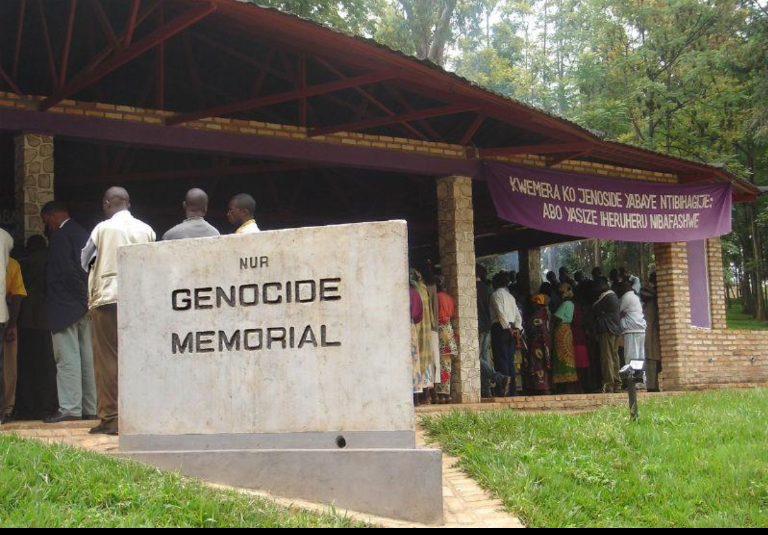
After more than three decades in exile, a dark chapter of Rwanda’s history is poised to reach its reckoning. Jean Léonard Teganya, a former medical student accused of playing a key role in the 1994 genocide, has been forcibly returned to Kigali on November 9, 2026. His arrival marks a pivotal moment for survivors and a test for Rwanda’s judicial system, which has long sought to close the case against one of its most elusive fugitives.
What accusations does Jean Léonard Teganya face?
Jean Léonard Teganya, now 55, stands accused of genocide and crimes against humanity in connection with the 1994 massacres in the former Butare prefecture, now part of Huye District in southern Rwanda. According to Rwanda’s National Public Prosecution Authority (NPPA), he was indicted as early as 2014 for allegedly directing groups of soldiers and militiamen to hunt down Tutsi patients and refugees seeking shelter in Butare University Hospital during the genocide.
Prosecutors allege his involvement with the MRND—the former ruling party—and the infamous Interahamwe militia. Witness testimonies presented in U.S. court documents also link him to sexual violence and extrajudicial killings. These allegations, however, will now be scrutinized in a Rwandan court, where the burden of proof lies on the prosecution to establish his individual responsibility.
A fugitive’s journey across continents
Teganya fled Rwanda in July 1994, crossing through what is now the Democratic Republic of Congo, Kenya, and India before settling in Canada in 1999, where he applied for asylum. His request was denied due to evidence suggesting his involvement in atrocities in Butare. After years of legal battles, a deportation order was issued against him.
In August 2014, Teganya entered the U.S. from Canada and was later arrested in Maine. He claimed asylum, but the outcome was a criminal indictment for immigration fraud and perjury. A federal jury in Boston convicted him in April 2019 on two counts of immigration fraud and three counts of perjury, leading to a 97-month prison sentence in July 2019. It’s crucial to note that this conviction pertains solely to immigration violations—not to genocide or crimes against humanity.
Rwanda takes the lead: what happens next?
Teganya’s forcible return to Rwanda shifts the jurisdiction of his case from U.S. immigration courts to Rwandan criminal tribunals. As he was handed over to Rwandan authorities upon arrival, he now faces interrogation before prosecutors formally file charges. This transfer underscores a growing trend: the U.S. has expelled or extradited eight genocide suspects to Rwanda since 2007—a testament to international cooperation in tracking down fugitives of the 1994 genocide.
For survivors and victim families, his return symbolizes the slow but relentless march toward accountability. It serves as a stark reminder that neither geography nor time can erase the pursuit of justice for the gravest international crimes. The ball now lies in the hands of Rwanda’s judiciary, which must conduct a fair trial, weigh the evidence, and determine Teganya’s guilt or innocence based on the law.
Key questions the trial must answer
- What was Teganya’s direct role? Did he merely comply with orders, or did he actively orchestrate violence?
- Can witness testimonies from over 30 years ago be corroborated? Hearsay or documented evidence will play a critical role.
- Will procedural fairness prevail in a system still healing from its own trauma? Rwanda’s courts face immense pressure to deliver justice without succumbing to vengeance.
A turning point for Rwanda’s judicial legacy
The case against Teganya is more than a legal proceeding; it’s a reflection of Rwanda’s commitment to confronting its past. Since the 1994 genocide, the country has rebuilt not only its institutions but also its pursuit of justice. The National Public Prosecution Authority and the Gacaca courts have sought to address impunity, though controversies persist over their methods.
Teganya’s trial will be closely watched—both within Rwanda and internationally—as a gauge of the country’s judicial maturity. It also raises ethical questions: How does a nation balance the need for retribution with the principles of a fair trial? Can reconciliation coexist with punishment?
As the world watches, one thing is certain: Rwanda is writing the next chapter in its quest for justice. And for Jean Léonard Teganya, the long road from exile to accountability has finally reached its destination.