Why the Gulf of Guinea Is the Key to Africa’s Future Defense Strategy
As global security threats evolve across West Africa, a landmark military exercise is about to put regional cooperation to the ultimate test. Scheduled for November 2026, GEX 2026 brings together Côte d’Ivoire, Gabon, and France in a high-stakes multinational drill unlike any before. But behind the coordinated maneuvers and interoperability drills lies a critical question: can this collaboration redefine Africa’s security architecture for years to come?
The answer could reshape not only regional defense capabilities but also the balance of international partnerships on the continent. With geopolitical shifts accelerating and transnational threats intensifying, GEX 2026 isn’t just a training event—it’s a strategic statement.
Two Theaters, One Mission: How the Exercise Is Structured
GEX 2026 unfolds in two sequential phases, each designed to test different aspects of military coordination across land, sea, and air.
Phase 1: Operation FANGHA 2026
Location: Côte d’Ivoire
Dates: November 7–14, 2026
Scale: Over 1,180 Ivorian troops, supported by French and Gabonese units
Phase 2: Exercise WAIYA 2026
Location: Gabon
Dates: November 24–29, 2026
Scale: Around 100 Gabonese soldiers, alongside French and Ivorian forces
The two-stage format ensures that critical skills—inter-service coordination, cross-border logistics, and integrated command—are tested across diverse operational environments. Observers from Benin, Guinea, Liberia, and Senegal further emphasize the exercise’s regional focus.
More than a show of force, GEX 2026 is a carefully designed platform to break down silos between military branches and national armed forces.
What’s Really at Stake: Beyond Drills and Demonstrations
At its core, the exercise challenges three key assumptions about modern African security:
- Interoperability: Can troops from different nations communicate, coordinate, and execute under shared protocols?
- Resilience: Can forces adapt to crises that ignore national borders—such as piracy, arms trafficking, and insurgent spillover?
- Autonomy: Can participating nations move beyond dependency on foreign partners and build self-sustaining defense capabilities?
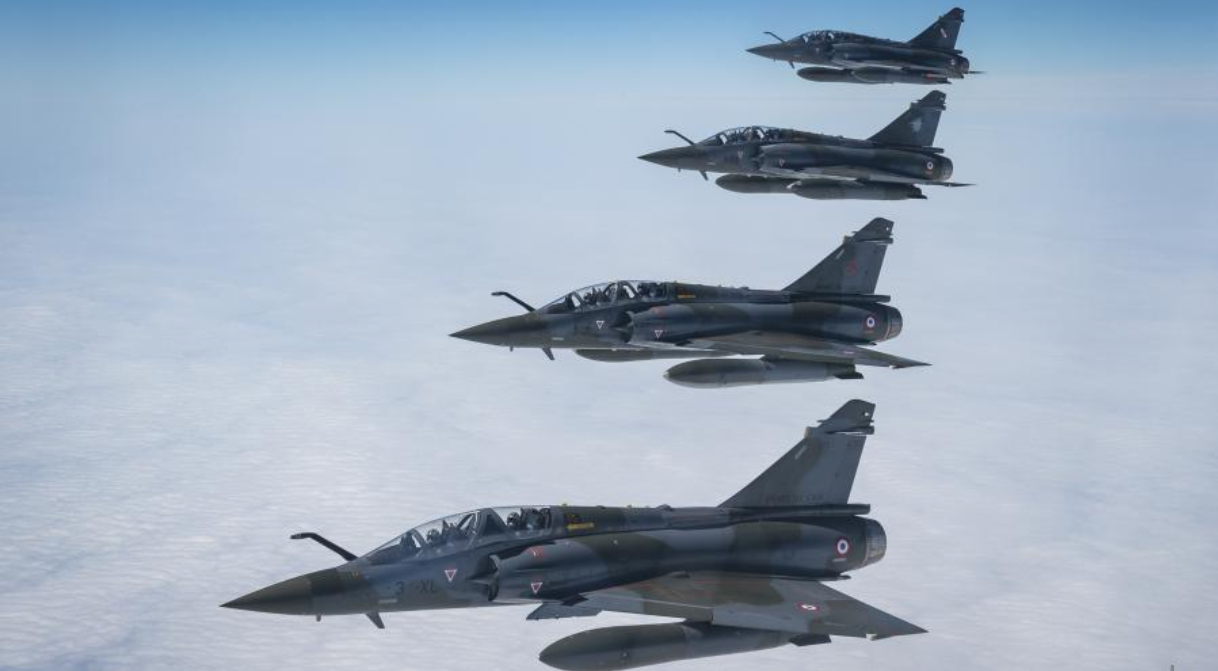
The French contribution underscores the stakes. Assets like the Mistral amphibious assault ship and Mirage 2000 fighter jets are not just tools—they’re symbols of a shifting military strategy. After scaling back permanent bases in the Sahel, France is reimagining its African presence through targeted, scalable engagements.
The Gulf of Guinea: Africa’s Most Pressured Maritime Frontier
The selection of Côte d’Ivoire and Gabon is strategic. Both nations sit on the Gulf of Guinea—a zone generating over $100 billion in annual maritime trade, yet increasingly vulnerable to piracy, illegal fishing, and militant activity.
West Africa’s coastal economies rely heavily on oil exports, fishing industries, and port infrastructure. Any disruption—whether from a hijacked tanker or a coordinated attack on a LNG facility—could destabilize entire nations. The presence of armed groups near northern borders amplifies the risk of cross-border violence.
By training in this region, GEX 2026 isn’t just practicing defense—it’s preparing for real-world contingencies where economic survival and national security intersect.
Maritime Security as a Priority
The drill integrates naval, amphibious, and air components to simulate responses to:
- Hostage rescue at sea
- Protection of critical infrastructure (ports, offshore platforms)
- Interdiction of illicit vessels
- Coordination with civilian maritime authorities
Such scenarios reflect a growing consensus: Africa’s future security depends on robust maritime governance.
Is France Reimagining Its Role—or Simply Adapting?
GEX 2026 arrives at a pivotal moment. Following withdrawals from Mali, Burkina Faso, and Niger, and the handover of Port-Bouët in Côte d’Ivoire, France is transitioning from a posture of permanent basing to one of partnership-driven cooperation.
This shift is not about abandoning Africa. It’s about aligning with willing partners—countries that share France’s interest in regional stability and have the political will to invest in joint security.
Côte d’Ivoire and Gabon are not passive recipients. Both nations see this exercise as a pathway to upgrade their militaries, expand international training opportunities, and position themselves as anchor states in the Gulf of Guinea.
The question remains: can this model replace outdated paradigms of foreign military dominance with a new era of equitable, sustainable collaboration?
Lessons from the Drill: What Success Looks Like
Even before the final salute, GEX 2026 offers early indicators of what a successful partnership could deliver:
- Shared intelligence: Real-time data fusion across national systems
- Standardized procedures: Common doctrines for crisis response and joint operations
- Training pipelines: Sustained officer exchanges and technical training programs
- Regional spillover: Potential expansion to additional observers like Togo or Ghana
Yet challenges loom. Language barriers, differing procurement standards, and varying operational cultures could erode trust if not managed proactively.
The Role of Non-State Actors and Civil Society
Long-term success will depend not only on military readiness but on inclusive governance. Local communities, port authorities, and private sector stakeholders must be integrated into security planning to ensure legitimacy and effectiveness.
The Big Picture: Can GEX 2026 Change the Game?
The Gulf of Guinea may soon become the most watched theatre in African defense. With piracy incidents rising by 30% in the past two years and militant activity creeping toward coastal zones, the timing of GEX 2026 is no coincidence.
If successfully executed, the exercise could mark the dawn of a new military cooperation model—one rooted in mutual benefit, shared risk, and African leadership.
But if the partnership remains superficial or dominated by external agendas, the Gulf of Guinea could remain a zone of vulnerability—despite the best-laid plans.
One thing is clear: the soldiers participating in FANGHA and WAIYA are not just preparing for a drill. They are writing the next chapter of West African security.