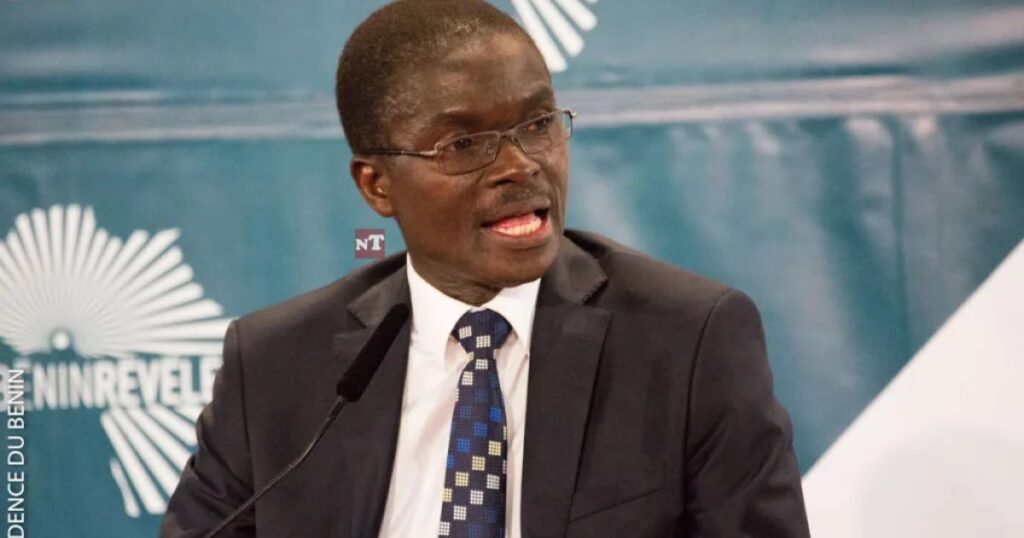
The establishment of the Senate in Bénin sparked constructive exchanges during a recent forum on the rule of law and political transitions in Africa, held in Cotonou. The event, organized by the Institute of Justice and Peace Artisans (IAJP/Co), brought together political stakeholders to explore the significance of this institutional innovation.
The former minister and deputy Lazare Maurice Sehouéto took the floor to defend the Senate as a vital pillar for strengthening democracy and ensuring balanced governance. Addressing concerns raised by the former deputy Kamel Bio Sika Ouassagari regarding the upper chamber’s potential powers, Sehouéto emphasized the importance of grounding debates in legal texts rather than speculative apprehensions.
Why the Senate matters for democratic resilience
Sehouéto highlighted that Bénin’s adoption of a bicameral system aligns with a broader democratic tradition. Several nations have turned to this model to navigate periods of institutional fragility, ensuring stability through shared governance and oversight mechanisms.
Historical parallels to support the argument
To illustrate his point, the speaker referenced two prominent examples where upper chambers played crucial roles in stabilizing political systems:
- France: The Fifth Republic’s Senate was introduced to curb the ministerial instability that plagued earlier regimes.
- Germany: Following World War II, the Bundesrat was established as a safeguard to uphold the rule of law and prevent authoritarian backsliding.
Urging a fact-based political dialogue
Sehouéto cautioned against premature judgments and generalized skepticism about the Senate’s early days. He stressed that the institution’s primary goals are to foster national unity, depoliticize conflicts, and secure a sustainable development trajectory for Bénin.
The former lawmaker concluded by calling on all political figures and civil society to engage in rigorous, evidence-based discussions—free from distortions or caricatures. He framed the Senate not as a source of division, but as a unifying force designed to elevate the nation’s democratic standards.
You may also like
Senegal: how Sonko’s playful jab at Sadio Mané over 2029 is reshaping the political conversation
Senegal’s shadow funds: How unchecked spending drains public trust and budgets
Bénin: le Sénat tient sa séance inaugurale sous la conduite de Patrice Talon
Gabon : la participation citoyenne au cœur de la Ve République
Is Chad truly experiencing a political easing of tensions?