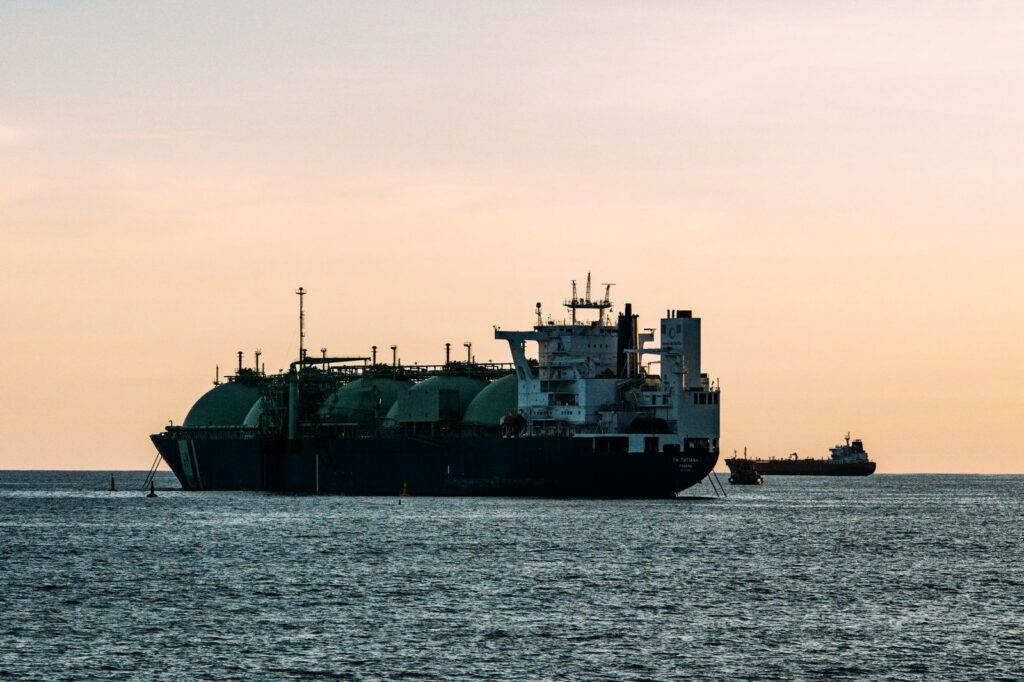
The significant Grand Tortue Ahmeyim (GTA) gas project, jointly operated by the American firm Kosmos Energy across the maritime border of Senegal and Mauritania, is once again a focal point. The Texas-based company has released new details regarding the ramp-up of this transnational field, which commenced its initial commercial production in early 2025. This development is being closely monitored in Dakar, where Prime Minister Ousmane Sonko has emphasized the strategic control of extractive resources as a key policy tenet of his administration.
A cross-border project vital for Dakar and Nouakchott
Initiated after several years of negotiations between the two capitals, the GTA project exploits a substantial gas deposit situated precisely on the shared maritime frontier. The agreed revenue-sharing model is an equal split between Senegal and Mauritania, a cooperative structure rarely observed in the West African extractive industry. Kosmos Energy leads the development alongside bp, the long-standing operator of the concession, while national companies Petrosen for Senegal and the Société Mauritanienne des Hydrocarbures (SMH) represent their respective states’ participation.
The first phase of the project relies on a floating liquefaction unit (FLNG) designed to process gas for export to international markets. The initial target capacity is approximately 2.3 million tonnes of liquefied natural gas (LNG) annually. Kosmos reports that production is steadily advancing towards its nominal plateau, following the successful technical commissioning last year and the subsequent dispatch of initial cargo shipments.
Kosmos Energy navigates Senegalese political expectations
Since the ascension to power of the Bassirou Diomaye Faye – Ousmane Sonko duo in March 2024, the project’s trajectory has been under intense scrutiny in Dakar. The Senegalese head of government has consistently articulated his intention to renegotiate or audit contracts inherited from the previous administration, which he deems imbalanced and detrimental to the state. This stance has introduced a period of uncertainty for international operators, with Kosmos and bp foremost among them.
The recent communication from the American group aims specifically to provide reassurance regarding the operational timeline. Kosmos underscores the stability of its partnership with authorities in both countries and confirms ongoing technical discussions concerning subsequent development phases. Nevertheless, the company has somewhat tempered certain ambitions, as several financial analysts have noted a discrepancy between initial objectives and the actual volumes produced during the early months of operation.
Crucially, the successful ramp-up of the GTA field is expected to generate significant budgetary revenues for both nations. For Senegal, projections anticipate several hundred billion CFA francs in annual income once full capacity is achieved. These funds are earmarked to bolster the intergenerational fund and the national budget, two fundamental mechanisms within Dakar’s natural resource management framework.
Phase 2, local content, and energy sovereignty
Beyond the initial phase, attention is now shifting towards the project’s expansion. GTA’s Phase 2, long discussed as a means to elevate capacity to roughly 3 million tonnes annually, remains contingent on an agreement among industrial partners and governments. Kosmos has indicated that studies are progressing, though without a firm calendar commitment at this juncture. The prevailing international LNG prices and the operator’s stated debt reduction strategy also factor into this complex equation.
For both Dakar and Nouakchott, the question of local content remains a sensitive issue. The Senegalese government has expressed a strong desire to see more national enterprises integrated into the value chain, encompassing everything from industrial subcontracting to logistical services. Ousmane Sonko has also raised the possibility of directing a portion of the gas production towards domestic supply, particularly to fuel thermal power plants and alleviate the country’s energy import costs.
However, the scope of action for authorities is constrained by existing contracts and the imperative to maintain the attractiveness of the MSGBC sedimentary basin. Several adjacent blocks are still undergoing exploration, and the approach adopted towards Kosmos and bp will serve as an important signal to potential investors. Senegal’s credibility regarding its gas ambitions is being determined as much in the FLNG’s control room as it is within the ministerial offices in Dakar.
You may also like
Olympe Bhêly-Quenum at 100: how the literary world is reacting and what lies ahead
Mali reacts to Goïta’s independence day address: what the war-and-dialogue pledge means now
Rosenior fallout: Strasbourg fans, Ligue 1 panel and the road ahead
Atonfack Guemo’s vigilance appeal sparks nationwide debate: what Cameroonians are saying now
Mali’s 514 billion FCFA Russian mercenary contract sparks public outcry and doubts over Bamako’s next move