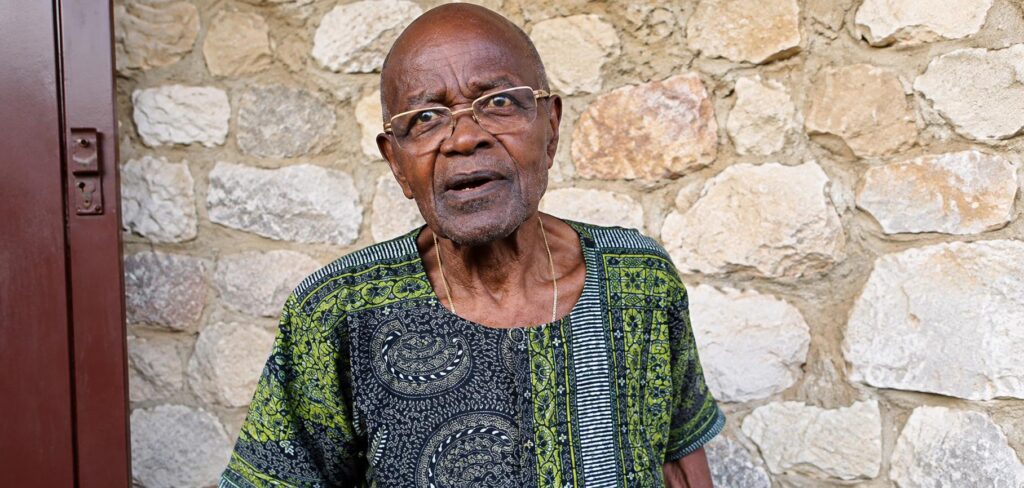
A century of letters: the reactions pouring in for Olympe Bhêly-Quenum
The Beninese and African literary community is marking a rare milestone. Born on 20 September 1926 in Ouidah, the writer, journalist and literary critic Olympe Bhêly-Quenum has now crossed the threshold of one hundred years. His passage through a century of life has triggered a wave of tributes and fresh debate about the place of his work in the literary canon, as observers ask what his legacy will mean for the generations still to come.
From Gléxwé to the global stage: the roots of a singular voice
Born in Gléxwé (Ouidah), the historic heart of Vodoun culture and spirituality, Bhêly-Quenum grew up in the household of a mother who served as a Great Priestess of Vodoun, within a noble family deeply woven into the history of the Kingdom of Dahomey. That early immersion in ritual, oral tradition and social hierarchy left an indelible mark on everything he would later write, where the sacred, social realism and African mysticism constantly intersect.
Milestones that shaped a literary century
After studying in Benin and later in France, Bhêly-Quenum established himself on the literary scene with a series of works that critics now regard as foundational. Each one opened a different window onto the African experience.
- Un piège sans fin (1960) – His first landmark novel, a poignant drama about fate and the human condition, which became a standard text studied in schools and universities across the continent.
- Le Chant du lac (1965) – Awarded the Grand Prix Littéraire d’Afrique Noire in 1966, this novel explores the tension between progress, the dismantling of myths and ancestral beliefs around Lake Nokoué.
- La Naissance d’Abikou (1998) – A literary journey into the mythical figure of the spirit-child in Yoruba and Fon cosmology.
The journalist who built bridges for African culture
Beyond fiction, Bhêly-Quenum fought a pioneering battle for African cultural journalism. As director and editor-in-chief of the celebrated magazine La Vie Africaine, and later as founder of L’Afrique Actuelle, he acted as an intellectual bridge between writers of the continent and the wider world, tirelessly arguing for the revaluation of African heritage.
What comes next: a living legacy under discussion
As the doyen of Beninese letters turns one hundred, the conversation is shifting from celebration to consequence. Scholars, readers and young writers are asking how his themes — fate, tradition, spiritual identity — will continue to speak to a continent in rapid transformation. His centenary is not just a moment of reflection; it is a prompt for renewed engagement with a body of work that refuses to age, a pen without end that keeps inspiring new generations of writers.
You may also like
Mali reacts to Goïta’s independence day address: what the war-and-dialogue pledge means now
Rosenior fallout: Strasbourg fans, Ligue 1 panel and the road ahead
Atonfack Guemo’s vigilance appeal sparks nationwide debate: what Cameroonians are saying now
Mali’s 514 billion FCFA Russian mercenary contract sparks public outcry and doubts over Bamako’s next move
Molodo ambush fallout: Mali’s public debate shifts as Africa Corps credibility crumbles