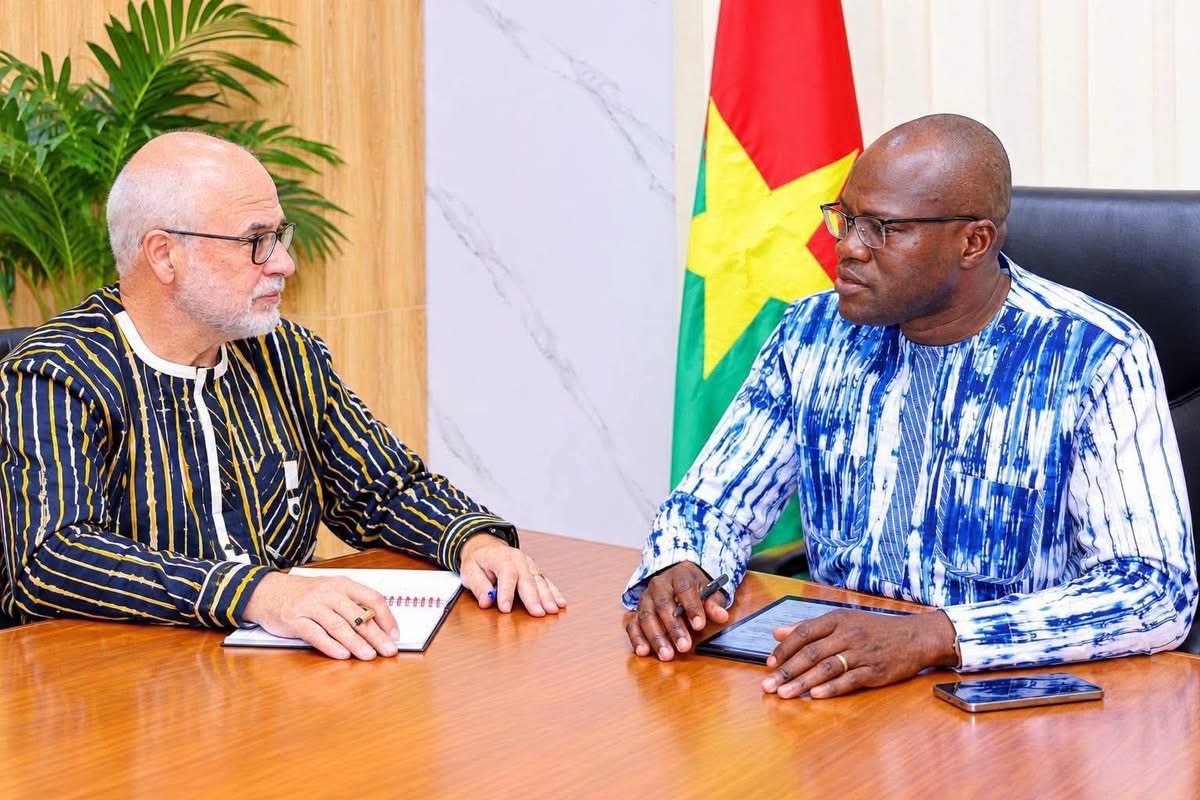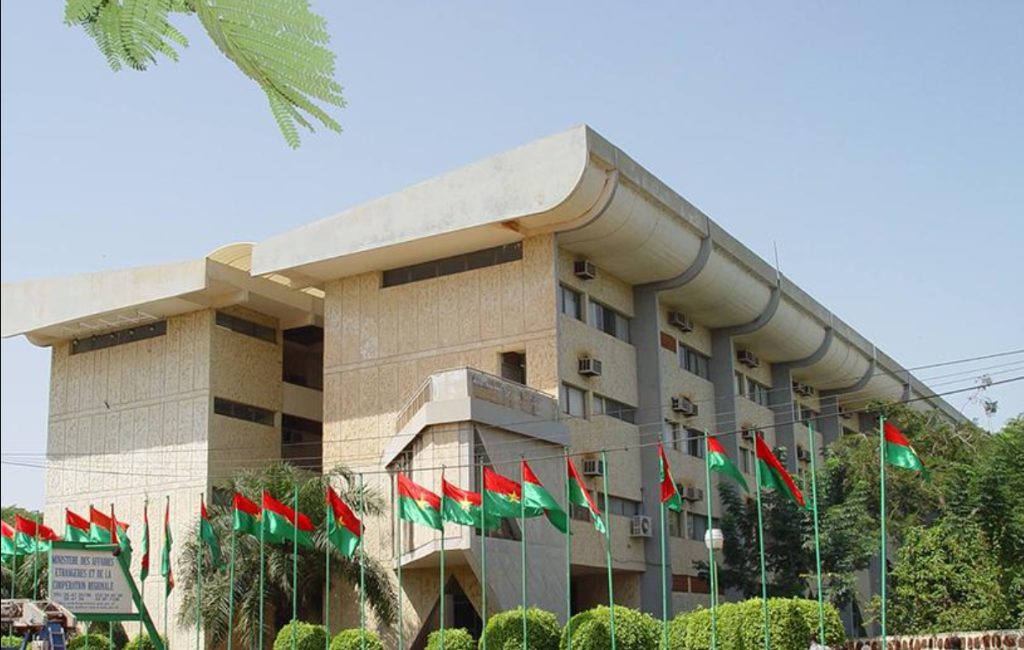
As Burkina Faso reasserts its commitment to breaking free from external economic dependencies and reclaiming national sovereignty, the country now faces a critical crossroads. A landmark technical agreement reached on November 4, 2026, paves the way for a potential $87.67 million (49.6 billion FCFA) financing package from the International Monetary Fund (IMF). Yet this move forces an uncomfortable question to the surface: How can Ouagadougou reconcile its bold political rhetoric with the realities of international financial cooperation?
The proposed funding—divided into $65.38 million under the Extended Credit Facility (ECF) and $22.29 million through the Resilience and Sustainability Facility (RSF)—remains contingent on the IMF Executive Board’s approval, with a decision expected by mid-January 2027. While this injection could offer a much-needed lifeline to Burkina Faso’s strained public finances, it also reignites a longstanding debate: Can a nation truly achieve economic independence while relying on an institution synonymous with structural adjustment and conditional lending?
The IMF’s programs extend far beyond capital infusions, embedding strict macroeconomic benchmarks, structural reforms, and regular fiscal reviews into any agreement. For Burkina Faso, these discussions center on deficit reduction, tax revenue mobilization, public finance governance, and safeguarding vulnerable populations—all while aligning with the West African Economic and Monetary Union’s (WAEMU) target of a 3% budget deficit by 2027, a goal Burkina Faso currently misses with preliminary estimates hovering around 3.3%.
The contradiction between political narrative and economic necessity
Since the ascendancy of Captain Ibrahim Traoré, Burkina Faso’s government has positioned sovereignty as the linchpin of its national agenda. The push to regain control over natural resources, reduce reliance on traditional partners, and prioritize domestic financing mechanisms has become a defining feature of its policy framework. Yet, ironically, the pursuit of IMF financing seems to stand in stark opposition to this declared vision.
The government’s dilemma reflects a global paradox: Can a nation simultaneously assert its economic freedom while engaging with a global financial architecture that operates on interdependence? The answer, experts argue, lies not in avoiding external partnerships but in strategically navigating them to serve national priorities.
As one analyst puts it, “Sovereignty isn’t about isolation; it’s about leverage. The real test will be whether these funds empower Burkina Faso to set its own economic course—or if they merely entrench the very dependencies the government claims to reject.”
Mining wealth as a potential game-changer
The irony deepens when considering Burkina Faso’s gold reserves, the backbone of its economy. With mining production and exports surging, gold has become a vital revenue stream, cushioning public finances and boosting foreign exchange earnings. The government has furthered this momentum by establishing a sovereign wealth fund for the mining sector—a move applauded for its potential to foster domestic financial autonomy.
Yet, gold alone cannot guarantee sustainability. Transparent governance, equitable revenue redistribution, and strategic reinvestment into productive sectors are essential to transform mineral wealth into lasting development. As officials engage with the IMF, the question lingers: Will these funds complement domestic resource strategies—or overshadow them?
Public accountability: the missing link
The success of Burkina Faso’s IMF engagement hinges on more than fiscal targets. It demands political legitimacy. Citizens and stakeholders will scrutinize not just the inflow of capital but its purpose and impact. Will these resources fund critical infrastructure, social programs, or debt servicing? And crucially, will Ouagadougou be transparent about trade-offs and compromises made in the negotiation process?
The IMF’s influence extends beyond balance sheets—it shapes policy landscapes. For a government that champions economic independence, every concession made to IMF demands must be justified to the public as a step toward, not away from, self-determination. As one economist notes, “True sovereignty is proven by how a nation wields even its constrained choices.”
Beyond the FMI funding: the path to durable autonomy
The IMF financing, while significant, is but a single chapter in Burkina Faso’s broader economic narrative. The real victory will lie in diversifying financing sources, strengthening domestic institutions, and ensuring that no single financial partnership dictates the nation’s developmental trajectory. This includes:
- Leveraging regional alliances to reduce reliance on any single institution;
- Accelerating structural reforms to enhance public sector efficiency and accountability;
- Instituting fiscal safeguards to prevent future crises from derailing development goals.
Ultimately, Burkina Faso’s relationship with the IMF should not be framed as a surrender of sovereignty—but as a tactical move within a grander strategy. The nation’s leaders must demonstrate that these funds are not a crutch, but a catalyst. That every policy adjustment aligns with long-term resilience. And that the pursuit of financial independence does not end with a check from Washington, but begins there.
The world will watch closely—not to judge whether Burkina Faso accepts the IMF’s terms, but to assess whether it uses them to its advantage.