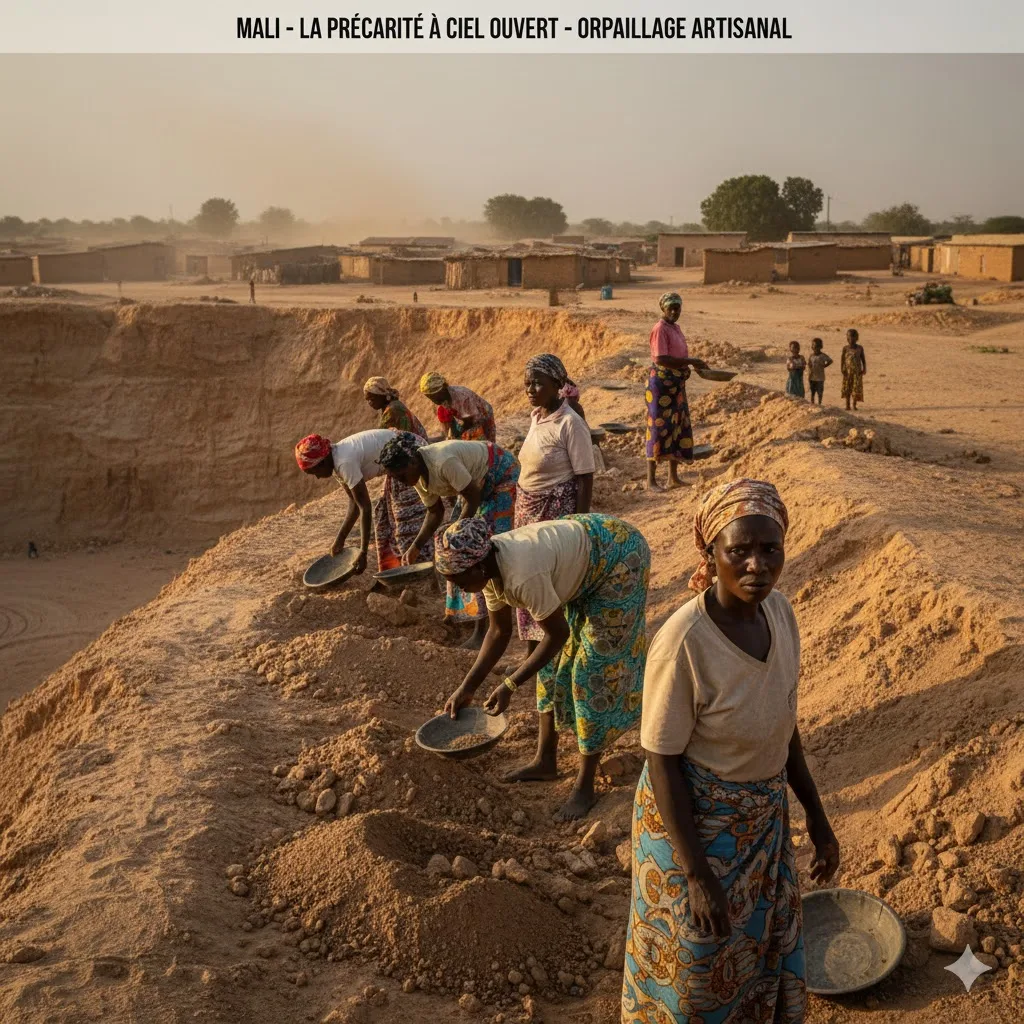

Six women lost their lives on January 9, 2026, in Kéniéty, Kéniéba district, after a devastating mine collapse. Behind this heartbreaking incident lies a harsh truth: extreme poverty forces mothers to risk their lives daily just to survive.
Mothers risking everything to feed their children
Women working in Mali’s unstable artisanal mining sites don’t do so by choice—they do it out of sheer desperation. Driven by the absolute need to feed their children and cover basic household expenses, they endure conditions that defy human endurance. In the Kayes region, it’s common to see women laboring for over 12 hours under scorching sun, often extracting only a few grams of gold.
The relentless grip of poverty pushes them into the most dangerous zones of mining sites. Frequently excluded from the most profitable tunnels by male miners, these women are forced to work in abandoned pits or structurally compromised old mines. These “leftover” areas—deemed too unstable by others—become their graves when walls collapse under erosion.
The harsh reality of extreme vulnerability
The dangers extend far beyond fatal collapses. Due to their economic fragility, these women face a dangerous mix of health and social risks. They handle toxic substances like mercury without protection, exposing themselves to irreversible illnesses. Their desperate search for gold also makes them vulnerable to gender-based violence and exploitation on site.
The tragedy in Kéniéty, where six women—including two married—were buried alive while scraping the walls of an old Chinese mine for gold, perfectly illustrates this cycle. Despite swift local rescue efforts, the weight of the earth proved stronger than hope.
The urgent need for sustainable economic solutions
For residents of Dialafara, managing post-mining landscapes has become a public safety crisis. When mining companies abandon regions, leaving gaping craters behind, they effectively beckon disaster for the poorest populations. Systematic site backfilling after extraction is now a critical demand to prevent women from risking their lives in these death traps.
Beyond securing infrastructure, the focus must shift to empowerment. Transition authorities, through social services, are urged to enhance these women’s capabilities and guide them toward alternative income-generating activities. Without real alternatives to gold mining, poverty will continue to claim lives in Mali’s treacherous mines.