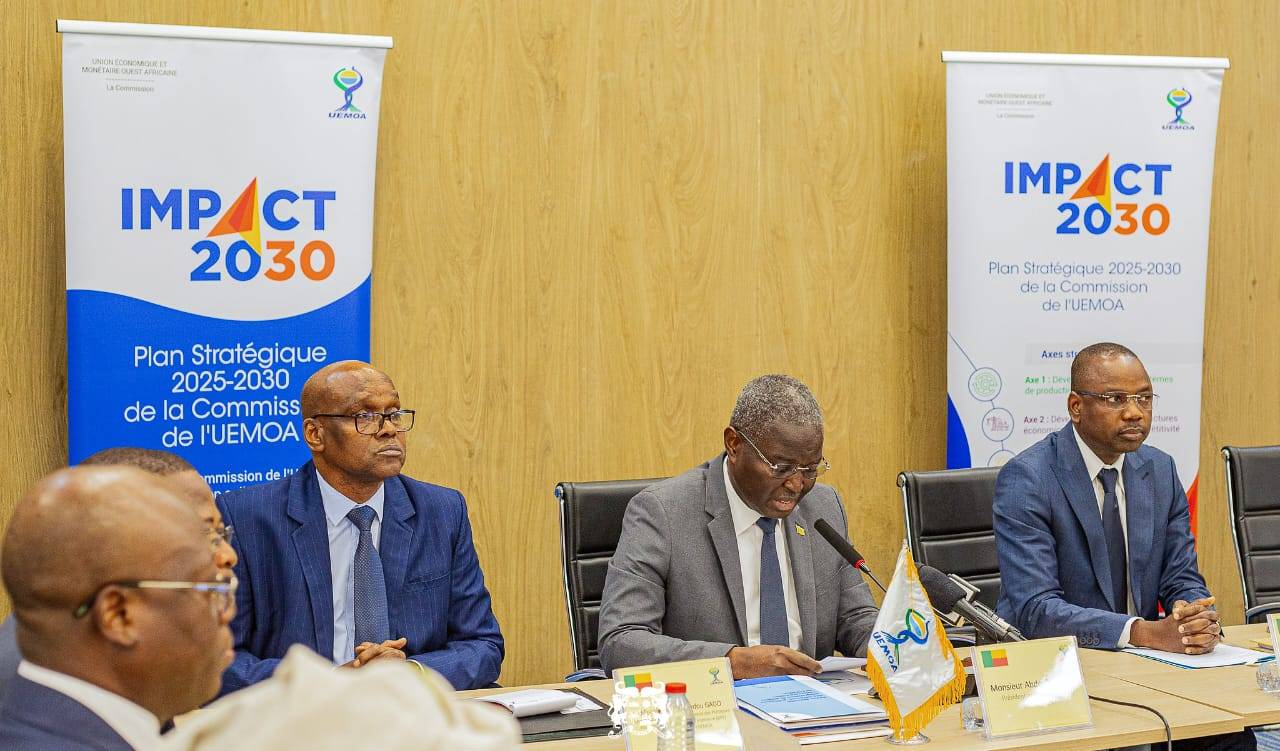
On Thursday, July 23, 2026, the Ministry of Economy and Finance in Cotonou hosted the annual 2026 Review of regional reforms, policies, programs, and projects under the West African Economic and Monetary Union (UEMOA). After a thorough assessment of 145 regulatory texts, Benin achieved a 73% implementation rate—a figure exceeding the target threshold of 70%. This milestone underscores the country’s unwavering commitment to fostering economic integration within the West African subregion.
An institutional gathering at the heart of UEMOA integration
The alignment of national legislations with UEMOA’s community law remains the cornerstone of integration within the union. Each year, the Annual Political Review serves as a concrete benchmark to evaluate member states’ dedication to enforcing decisions adopted at the highest levels. This year’s edition brought together representatives from the UEMOA Commission and Beninese ministries, sectoral agencies, and technical committees in Cotonou. The overarching goal? To meticulously scrutinize every transposed and applied text while pinpointing administrative or technical bottlenecks that could hinder the union’s momentum.
A three-pillar framework for evaluation
The 2026 assessment relied on a comprehensive analytical grid covering 145 community texts, as highlighted by Mr. Abdoulaye Diop, President of the UEMOA Commission. The review aimed to precisely gauge the level of transposition of legal acts originating from both the Council of Ministers and the Conference of Heads of State and Government.
The evaluation was structured around three critical pillars essential for the subregion’s economic advancement:
- Economic governance and convergence: Focused on harmonizing budgetary frameworks, strengthening multilateral surveillance, and ensuring transparent public financial management.
- Common market integration: Centered on facilitating the free movement of persons, goods, services, and capital, alongside simplifying business establishment procedures.
- Sectoral policies: Aimed at aligning national initiatives in key areas such as transport, energy, agriculture, environmental sustainability, and digital transformation.
73% compliance: surpassing the benchmark
With the conclusion of the review, the results were clear: Benin achieved a 73% overall implementation rate. According to the UEMOA Commission’s benchmark, the 70% mark is the critical threshold signifying significant state efforts in transposition. By exceeding this target, Cotonou reaffirms its role as a diligent participant within the union. This score reflects the consistency of reforms implemented in recent years while also highlighting targeted opportunities for improvement in specific sectors.
Voices from leadership: praise and forward momentum
Following the presentation of results, political discussions provided a platform for both parties to share their perspectives on the integration process and chart a path forward.
Mr. Abdoulaye Diop, President of the UEMOA Commission, emphasized that this review is far more than an audit—it is a strategic transformation lever. He acknowledged the strong commitment of Beninese authorities and expressed confidence that the next review would see significant progress in areas still requiring attention.
Mr. Aristide Medenou, Benin’s Minister of Economy and Finance (in charge of Cooperation), praised the meticulous work of the country’s administrative teams. He attributed the achievement to a robust and ongoing mechanism for monitoring community texts, coupled with a collective mobilization across all relevant ministries. The minister highlighted how this institutional meeting enables the identification of regulatory and administrative bottlenecks, the exchange of best practices, and the adoption of concrete solutions to accelerate the transposition of pending directives.
Remaining challenges and future outlook
While the overall outcome is commendable, the remaining 27% gap represents a priority agenda for the coming months. Transposing complex sectoral policies demands enhanced interministerial coordination. Reaffirming the government’s commitment to advancing reforms, Mr. Medenou outlined a roadmap for the upcoming period, with the goal of presenting notable progress in identified areas during the next annual review.
A promising trajectory for West African integration
By surpassing the 73% mark in this 2026 evaluation, Benin demonstrates that rigorous governance and continuous institutional follow-up can turn abstract regional commitments into tangible legal and economic realities. In a context where the UEMOA faces significant global and regional economic challenges, Cotonou’s disciplined budgetary practices and regulatory alignment not only bolster the country’s credibility on the international financial stage but also contribute to building a more seamless and competitive subregional market.