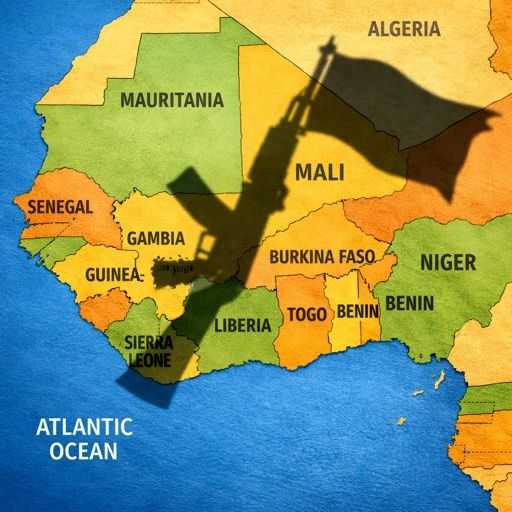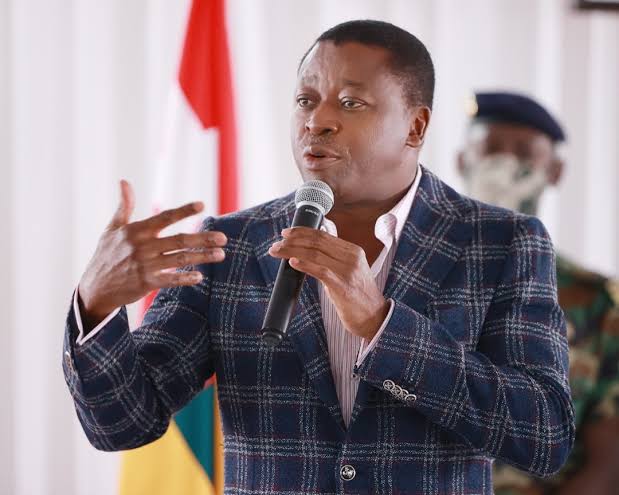
In the northern reaches of Togo, a quiet yet intense strategic rivalry is taking root. Information from security circles points to the active presence of more than 300 personnel from the Russian African Corps—the structure established by Moscow to succeed the Wagner Group. Simultaneously, Turkey is deepening its security footprint in the country, notably through actors linked to the private military contractor SADAT.
Should these developments be fully confirmed, they would signal a fundamental shift in the defense posture of Togo. Instead of seeking targeted, temporary military assistance, the nation is increasingly becoming a strategic battleground for competing foreign powers.
While Moscow and Ankara present their involvement as assistance in counter-terrorism and stabilization efforts in the north, a deeper struggle for influence is unfolding. Access to key decision-makers, lucrative contracts, intelligence gathering, military training, and strategic positioning are all at stake in a region where external powers are eager to anchor themselves.
This raises a crucial question: who is gaining influence in Togo, at what cost, and what guarantees do Togolese citizens have?
Are the national armed forces being sidelined?
This growing influx of external players raises a fundamental question about the role of the Togolese Armed Forces.
Togo possesses a structured national army, staffed by experienced officers who have trained in various military academies abroad. Therefore, the expanding reliance on foreign security entities cannot simply be blamed on a lack of domestic capability.
Instead, the political choices behind this strategy require close scrutiny.
When a state delegates critical portions of its security to external actors, it risks fostering a dependency that extends far beyond the military sphere. The provider of military hardware becomes indispensable; the provider of intelligence gains direct access to decision-making circles; and those who train local units can shape operational doctrines.
In the long run, national sovereignty is not merely defined by the size of an army, but by its capacity to make independent defense decisions.
This is where the domestic debate in Togo becomes deeply concerning.
The primary issue is not whether Togo should partner with Russia, Turkey, France, or any other state. A sovereign nation has every right to diversify its partnerships to serve its national interests. The real problem lies in the lack of transparency, democratic oversight, and balance among these alliances.
What are the terms of these contracts? How long do they last? What is the cost to the taxpayer? What authority is granted to foreign personnel, and under whose chain of command do they operate?
These questions are vital when private military firms and foreign entities operate in regions where local populations are directly exposed.
The danger of outsourcing national defense
Outsourcing security carries a significant risk: it can gradually erode the very national institutions it is supposed to strengthen.
While a foreign power can rapidly deploy personnel, equipment, or specific tactical capabilities, it cannot serve as a permanent substitute for a cohesive national defense strategy.
Without sustained domestic investment in the Togolese army, national intelligence, officer training, border surveillance, and the development of vulnerable regions, the reliance on external partners threatens to become structural.
This could trap Togo in a damaging cycle: greater dependence on foreign forces hinders the development of domestic capabilities, which in turn necessitates even more external reliance.
Such an outcome would be highly contradictory for a state that continuously asserts its commitment to national sovereignty.
The threat of JNIM as a justification
The threat of armed groups in northern Togo is real and must not be underestimated. Insurgents active in the Sahel have repeatedly shown their ability to exploit porous borders, fragile rural communities, and economic grievances.
However, counter-terrorism must not be used as a catch-all justification for unchecked security policies.
This argument requires careful examination, particularly since the actual presence of the Group for the Support of Islam and Muslims (JNIM) on Togolese soil must be distinguished from its broader regional influence. The existence of a cross-border threat does not automatically mean that a permanent foreign military footprint is the only viable response.
A robust security policy should integrate intelligence, border control, regional cooperation, professionalization of domestic forces, economic development in marginalized areas, and civilian protection.
A border secured solely by force, yet surrounded by poverty, unemployment, and institutional neglect, will always remain highly vulnerable.
The hidden financial cost of foreign partnerships
One of the most neglected aspects of this debate is the financial burden.
Foreign military partnerships are expensive. Salaries, equipment, logistics, infrastructure, security contracts, maintenance, and technical assistance require substantial funding.
Yet, because these expenditures fall under the umbrella of national security, they are often shrouded in secrecy.
This is precisely why parliamentary and public oversight is indispensable.
Togolese citizens have a right to know how public funds are allocated. They also have the right to ask whether these security expenditures are actually translating into safer communities.
A sophisticated military apparatus cannot be deemed a success if the local population still lacks basic healthcare, clean water, education, infrastructure, and economic opportunities.
Geopolitical maneuvers versus daily struggles
The contrast between high-level diplomatic negotiations and the daily reality of Togolese citizens is stark.
While the administration focuses on consolidating ties with various foreign powers, the everyday concerns of the population are far more immediate: purchasing power, employment, the cost of basic goods, healthcare, quality education, housing, water, electricity, and prospects for the youth.
Social grievances do not vanish simply because a security threat exists.
On the contrary, experiences across the region demonstrate that poverty, regional neglect, and weak public services provide fertile ground for instability.
Investing in the populations of the north is not just social policy; it is a core security strategy.
An unemployed youth in an area neglected by the state represents a far greater strategic vulnerability than any budget line.
Democracy constrained by security logic
Alongside security concerns, the political trajectory of the country is causing growing anxiety.
For several years, restrictions on civic space, bans on public demonstrations, and tensions surrounding institutional reforms have fueled the perception of an increasingly locked political system.
Recent constitutional amendments and the new institutional framework have sparked intense debate regarding the concentration of power and the actual role of public suffrage.
In this environment, the expansion of the security apparatus requires close monitoring.
A democracy cannot be governed indefinitely by security logic alone. When all forms of dissent are treated as threats to stability, the administration risks confusing political opposition with security dangers.
This is a dangerous trajectory that must be avoided.
A military to defend the nation, not a regime
The fundamental role of a national army is clear: to defend territorial integrity, protect citizens, and preserve national sovereignty.
It must never be transformed into a tool for preserving a specific political system.
The distinction is critical.
An army that defends the state protects the institutions of the Republic, whereas a force used primarily to safeguard political power protects a regime.
The risk for Togo is that these two distinct roles are beginning to merge.
The introduction of foreign actors into the security framework does not resolve this issue. In fact, it may complicate it further if the priority shifts toward regime survival rather than building a national defense architecture subject to public accountability.
Sovereignty in the face of global competition
Togo holds a highly strategic geographic position in the Gulf of Guinea, serving as a gateway to West Africa. This explains the interest shown by various global powers.
However, the strategic interests of foreign nations must not dictate Togo’s national policy.
The country should be capable of cooperating with multiple partners without becoming dependent on any single one.
It must be able to acquire equipment without surrendering its decision-making autonomy, receive foreign training without sidelining its own officers, and combat terrorism without using security as a shield for lack of transparency.
Most importantly, it must remain accountable to its own citizens first.
An urgent need for political and social reform
The primary threat to Togo is not merely the potential advance of armed groups.
It is the danger of constructing a state where the security apparatus expands rapidly while democratic institutions weaken, where military spending is hidden from public debate, and where foreign partnerships take precedence over national capacity.
What is the value of costly military cooperation if citizens do not feel any safer?
What is the benefit of active diplomacy if the basic needs of the population remain unaddressed?
What is the worth of political stability if it is achieved by permanently shrinking democratic space?
The leadership faces a defining strategic choice.
It can continue to multiply security partnerships, play foreign powers against one another, and expand the security state.
Or it can invest in genuine national sovereignty: a professional and independent military, democratically controlled institutions, transparent contracts, a credible judicial system, and economic development designed to address the root causes of instability.
The issue is not the presence of Russia, the interest of Turkey, or the ongoing cooperation with Western partners.
The problem arises when foreign and security policies become ends in themselves, while the urgent needs of the population are treated as secondary concerns.
By focusing too heavily on geopolitical balancing acts, the administration risks losing sight of what matters most: a country’s sovereignty is not measured by the number of foreign powers competing on its soil, but by the ability of its institutions to serve its people.
As Togo increasingly becomes an arena for competition between Moscow, Ankara, and other capitals, the Togolese people are left with a simple question: who is really being protected, the country or the regime?