UN warns Mali’s democratic backslide and growing repression
The United Nations High Commissioner for Human Rights has raised the alarm over Mali’s deteriorating political climate, where democratic institutions are weakening under an increasingly authoritarian regime.
Legal reforms pave the way for prolonged military rule
Since seizing power in 2020, the Malian junta has implemented sweeping legal changes that centralize authority under the current leader, General Assimi Goïta. Volker Türk, the UN Human Rights Chief, emphasized that these reforms effectively close the door to democratic elections in the foreseeable future. In his statement, he urged immediate action to restore fundamental freedoms for the Malian people.
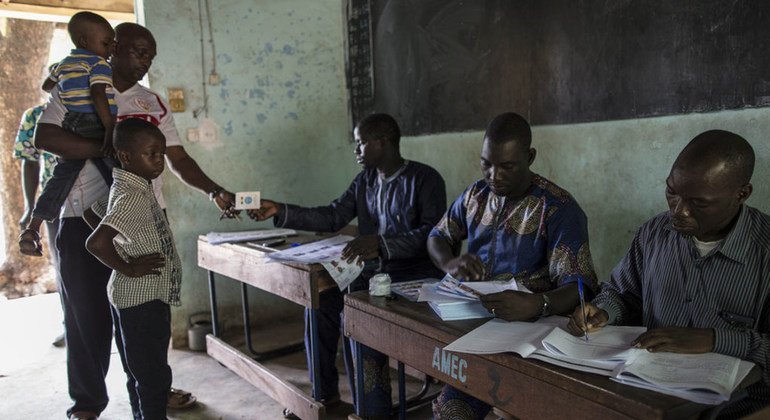
Nearly five years after the ousting of former President Ibrahim Boubacar Keïta—a coup widely condemned by the UN Security Council—the promised transition to civilian rule remains unfulfilled. No presidential elections have been held in Mali since Keïta’s election in 2018. Recent legislation, passed on July 8, now grants General Goïta the power to extend his mandate indefinitely “until the country is pacified.” This followed a presidential decree dissolving all political parties and organizations, a move Türk condemned as a violation of citizens’ rights to participate in public affairs, vote, and run for office.
Widening crackdown on dissent
The institutional erosion has been accompanied by intensified security measures. Opposition figures, such as former Prime Minister Moussa Mara, have faced arrest under charges like “undermining state credibility” and “opposing legitimate authority.” Mara was detained on August 1 for expressing solidarity with political prisoners via a social media post, a case Türk described as emblematic of the regime’s misuse of law to silence critics.
Reports indicate a surge in arbitrary arrests across Malian society, with individuals from diverse backgrounds facing similar legal persecution, further stifling dissent.
Civilian toll amid jihadist threats
Mali continues to grapple with deadly attacks from extremist groups, including the Group for the Support of Islam and Muslims (GSIM), an Al-Qaeda affiliate, and the Islamic State’s West Africa Province. These threats have provided justification for military operations involving the Malian army and Russian paramilitary groups like the Africa Corps, which replaced Wagner.
However, these operations have disproportionately impacted civilians. According to the UN Human Rights Office, there has been a sharp rise in extrajudicial executions, forced disappearances, and arbitrary detentions since April. The High Commissioner warned that the indefinite suspension of elections, combined with widespread repression, risks entrenching Mali in a cycle of political stagnation and violence.
International concern over democratic erosion
Analysts and rights groups argue that Mali’s trajectory reflects a broader trend in the region, where military-led governments are consolidating power by delaying elections and suppressing opposition. The UN’s condemnation underscores the urgent need for accountability and the restoration of democratic norms to prevent further instability.