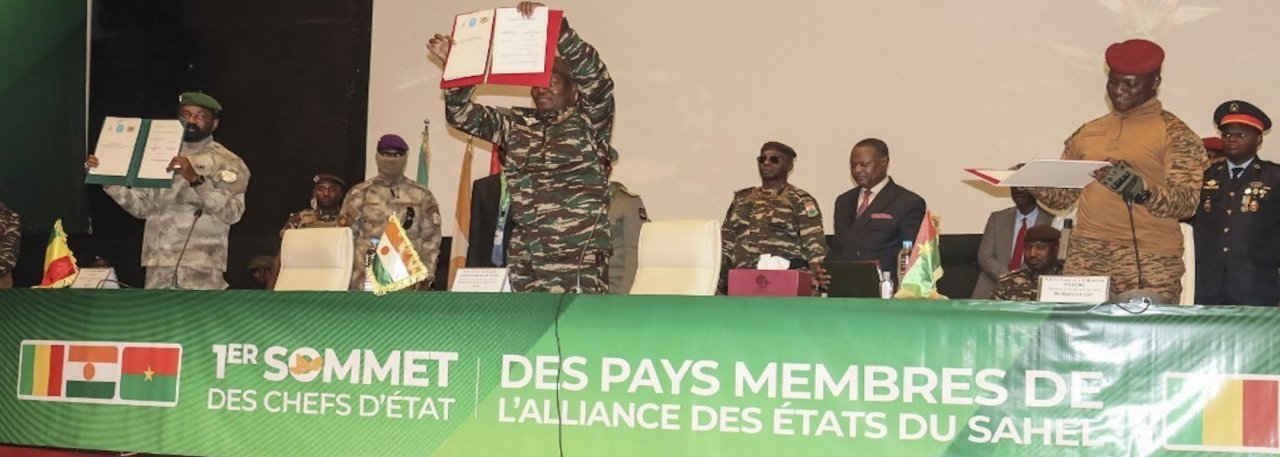
The Global Initiative Against Impunity (GIAI), a coalition including the International Federation for Human Rights (FIDH), the Coalition for the International Criminal Court (CCPI), Redress, Trial International, and Women’s Initiatives for Gender Justice (WIGJ), has expressed deep concern over the announced departure of Burkina Faso, Mali, and Niger from the Rome Statute. This move represents a significant reversal, undermining decades of Africa’s pioneering role in the global struggle against impunity. It threatens the stability of the International Criminal Court (ICC) and the broader framework of international law at a time when global solidarity is vital.

The legal timeline of the withdrawal
While the three members of the Alliance of Sahel States (AES) declared their immediate departure on September 22, the legal process follows specific regulations. Under Article 127 of the Rome Statute, a state must submit a formal written notice to the United Nations Secretary-General. The exit only becomes official one year after this notification. Until that period concludes, Burkina Faso, Mali, and Niger remain bound by their treaty obligations, including the requirement to cooperate with the ICC. Furthermore, this decision does not nullify ongoing legal actions regarding crimes committed before the withdrawal takes full effect.
Several critical cases involving the situation in Mali—originally referred to the Court by the Malian government in 2012—are currently active. The reparations phase for the Al Mahdi case is nearing completion; he was sentenced in 2016 for the intentional destruction of historical and religious sites in Timbuktu. Additionally, a ruling on reparations is expected soon in the Al Hassan case, following his 2024 conviction for war crimes and crimes against humanity. An active arrest warrant also remains in place for Iyad Ag Ghaly, the alleged leader of the militant group Ansar Dine.
From legal leadership to isolation
Africa’s contribution to the establishment of the ICC in 1998 was fundamental. Many nations across the continent were among the first to ratify the Rome Statute, often turning to the Court when domestic systems could not provide justice. This commitment ensured that victims of the most heinous atrocities had an international safety net. The current move to withdraw contradicts this legacy of leadership, potentially leaving victims with fewer avenues for accountability.
This development follows the January 2025 exit of these three nations from the Economic Community of West African States (ECOWAS). These repeated withdrawals signal a decline in human rights protections and increase the isolation of countries currently grappling with severe security crises and terrorism. Without the oversight of regional and international bodies, victims are left increasingly vulnerable.
“Choosing to leave the ICC significantly weakens the protections available to victims, for whom the Court is often the final hope for accountability,” noted Drissa Traoré, Secretary General of the FIDH. “In regions facing complex crises, local courts often lack the political support or the capacity to effectively prosecute crimes against humanity and war crimes.”
Challenges facing the international justice system
The decision by Burkina Faso, Mali, and Niger comes as the ICC faces mounting external pressure. Recently, Hungary also signaled its intent to leave the Rome Statute, a move widely viewed as a blow to the global fight against impunity. While the Court has faced historical criticism regarding its focus, it has significantly expanded its reach, with active investigations in Ukraine, Palestine, Afghanistan, Venezuela, and the Philippines.
The recent legal actions against high-ranking officials, including former President Rodrigo Duterte, demonstrate that the ICC’s mandate is becoming increasingly universal. However, this growing influence also makes the institution a target for political backlash.
“Member states must demonstrate resilience and reaffirm their dedication to the Court and the rights of victims everywhere,” stated Alix Vuillemain, Executive Director of Women’s Initiatives for Gender Justice. “At a moment of heightened attacks on the institution, the goal should be universal participation, not a retreat into impunity.”
Protecting global standards of accountability
The ICC serves as a vital pillar of international law, complementing national efforts rather than replacing them. The Rome Statute established essential principles: the removal of immunity for heads of state, the principle of complementarity, and the right of victims to seek reparations. Abandoning these standards risks eroding legal protections at the national level and stalling decades of progress.
The GIAI calls upon all signatory states to the Rome Statute to strengthen their support for the ICC. As violence escalates in parts of Africa and across the globe, maintaining a court of last resort is more important than ever for the protection of human rights.