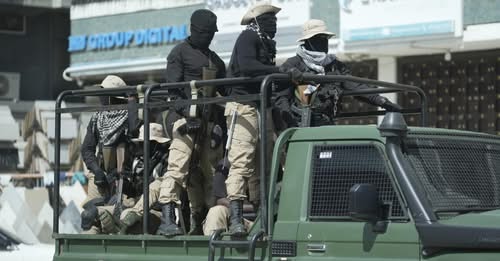
The Tanzanian government’s official investigation into the post-election unrest of October 2025 has ignited fierce debate after revealing a death toll of 518. The long-awaited report, unveiled in Dar es Salaam six months after the disputed presidential vote, attempts to quantify the bloodshed but has instead deepened divisions between authorities and critics.
An official account under scrutiny
The government-appointed commission delivered its findings in a charged atmosphere, attributing the fatalities primarily to “uncontrolled escalations” during unauthorized protests. While acknowledging the scale of the tragedy, officials emphasized that most deaths resulted from clashes between demonstrators and security forces, as well as intercommunal violence. The report also implicated certain public figures in stoking tensions, framing their rhetoric as a catalyst for the unrest.
Discrepancies fuel skepticism
The government’s figure of 518 clashes sharply with opposition and human rights groups, which contend the true toll far exceeds that number. Opposition leaders have dismissed the report as a deliberate undercount, alleging thousands more deaths and accusing authorities of concealing forced disappearances.
International NGOs, citing satellite imagery and ground-level testimonies, argue the crackdown was not a series of isolated incidents but a coordinated campaign of repression. Their findings challenge Dar es Salaam’s narrative of sporadic violence, instead portraying a systematic effort to suppress dissent.
Diplomatic maneuvering or truth-seeking?
The glaring disparity between official and independent estimates has thrust the issue into the spotlight. By publishing a lower death toll, the government appears to navigate a delicate line: acknowledging some culpability to ease international pressure while avoiding accountability for alleged crimes against humanity.
“This report is not about truth—it’s about rehabilitating the regime’s image on the global stage,” a local civil society leader commented, speaking on condition of anonymity. The statement encapsulates widespread skepticism that the commission’s findings prioritize political optics over accountability.
A nation divided, a future uncertain
As Tanzania grapples with the fallout, calls for an independent international inquiry grow louder. Without a transparent reckoning of the death toll and the identities of those responsible, analysts warn the wounds of 2025’s violence may never fully heal. The country now stands at a crossroads, where competing narratives threaten to perpetuate the cycle of distrust and division.
You may also like
Senegal’s December 2 deadline: how a possible assembly dissolution could hit wallets and stability
Senegal’s 2026 budget revision: how the deficit surge hits households, businesses and the Pastef majority
Benin’s €544,042 UNAIDS funding: the tangible consequences for patients, communities and the economy
Senegal-Azerbaijan pact in New York: what it means for jobs, trade and cooperation
What Luxembourg’s 9.8 billion FCFA port training pledge means for Benin’s workers and businesses