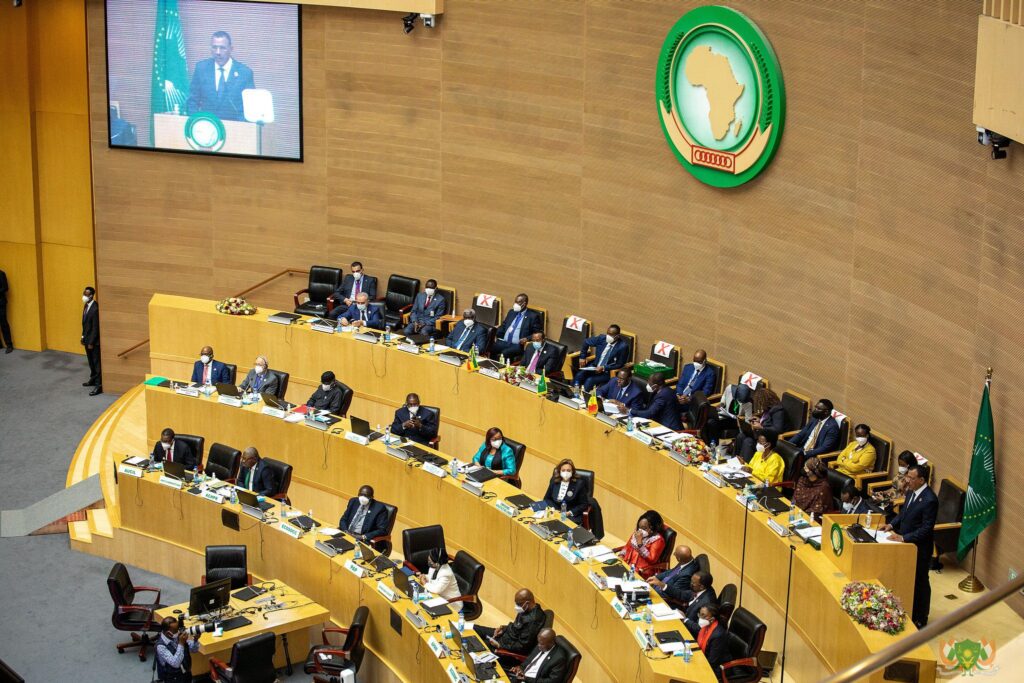
Marrakech – Morocco has once again demonstrated its unwavering commitment to Mali by voicing strong condemnation of the recent coordinated terrorist and separatist attacks that targeted multiple cities across the West African nation. Speaking before the African Union Peace and Security Council (AU PSC), Morocco’s delegation made its position unmistakably clear, denouncing the assaults on both civilian and military targets with resolute firmness.
The Moroccan representatives extended heartfelt condolences to the families of the victims and the Malian people, reaffirming the Kingdom’s full support for Mali’s sovereignty, security, and territorial integrity. They also called for urgent mobilization of financial resources to enable a swift and effective response, in close collaboration with Malian authorities.
This latest statement builds on Morocco’s immediate reaction following the attacks. A high-ranking diplomatic source in Rabat stated on the day of the assaults that “the Kingdom of Morocco condemns these heinous and cowardly acts in the strongest terms,” pledging continued backing for Mali’s government in its fight against terrorism and separatism across the country and the broader Sahel region.
escalating violence and shifting alliances in Mali
The attacks, unprecedented in their scale and coordination, were carried out by jihadist groups affiliated with al-Qaeda alongside Tuareg separatists from the Front for the Liberation of Azawad (FLA). Among the hardest-hit cities were Bamako, Kati, Kidal, and Gao.
Tragically, General Sadio Camara, Mali’s Defense Minister, was killed in a suicide bombing at his residence in Kati. Meanwhile, General Assimi Goita, leader of Mali’s military junta, has remained out of public view since the attacks. The strategic city of Kidal fell under rebel control, prompting the withdrawal of Russian Africa Corps mercenaries under a negotiated agreement with the armed factions.
Algeria’s alleged role in Mali’s destabilization
While Morocco has taken a clear stance in solidarity with Mali, international observers are increasingly pointing to Algeria as a key instigator behind the recent surge in violence. Analysts suggest that the coordinated assaults may not have occurred in a geopolitical vacuum but rather represent a calculated response to Bamako’s decision, just two weeks prior, to withdraw recognition of the self-proclaimed SADR and formally endorse Morocco’s sovereignty over the Western Sahara.
This strategic realignment struck at the core of Algeria’s regional influence, undermining decades of diplomatic leverage built around the Western Sahara issue. The Mouradia Palace viewed Bamako’s move as a direct challenge to its authority, prompting a sharp and punitive reaction.
Algeria has long been accused of harboring separatist factions and interfering in Mali’s internal affairs. Reports indicate that Algiers has systematically bankrolled, armed, and provided sanctuary to armed groups, mirroring its support for the Polisario Front in the Western Sahara. Observers warn that the same destabilizing tactics now appear to be directed against Mali.
a coordinated campaign of destabilization
The coordinated attacks coincided with a synchronized propaganda offensive by Algeria’s media apparatus. Semi-official and state-linked outlets rapidly amplified separatist narratives, exaggerated military casualties, and spread unverified claims about key officials. This information warfare campaign sent a clear message: defying Algeria’s regional dominance comes at a severe cost.
The propaganda blitz unfolded in stark contrast to Algeria’s own domestic policies, where authorities impose strict censorship on security threats. International reports have highlighted active terrorist threats in regions like Blida, yet Algerian state media maintains a total blackout on such incidents. This duality underscores a cynical strategy: suppressing terrorism at home while weaponizing it abroad as a tool of geopolitical pressure.
Bamako’s decision to abrogate the 2015 Algiers Accord—citing ongoing hostile actions by Algeria—effectively dismantled Algiers’ primary instrument of influence over Mali. For years, Algeria had used the accord to maintain armed groups as a lever of control over Bamako. With that leverage neutralized, Algeria’s response has been a deliberate escalation through proxy warfare, disinformation, and territorial destabilization.
Morocco’s principled alternative to regional coercion
Morocco has consistently advocated for a different approach to regional security, one rooted in mutual respect and partnership rather than coercion. During a joint press conference with Burkina Faso’s Foreign Minister in Rabat in mid-2024, Foreign Minister Nasser Bourita articulated this vision, stating, “Morocco rejects the logic of those who seek to lecture and blackmail Sahel nations.”
Bourita emphasized that Morocco operates on the principle of confidence in the region’s ability to address its own challenges, offering expertise and support without imposing political conditions. “They do not need guardians, they need partners,” he declared. This stance starkly contrasts with Algeria’s approach, which analysts describe as rooted in coercion disguised as fraternal solidarity.
You may also like
Senegal’s 2026 budget revision: how the deficit surge hits households, businesses and the Pastef majority
Benin’s €544,042 UNAIDS funding: the tangible consequences for patients, communities and the economy
Senegal-Azerbaijan pact in New York: what it means for jobs, trade and cooperation
What Luxembourg’s 9.8 billion FCFA port training pledge means for Benin’s workers and businesses
Burkina Faso: shrinking civil service payroll exacts a heavy toll on households and local economies