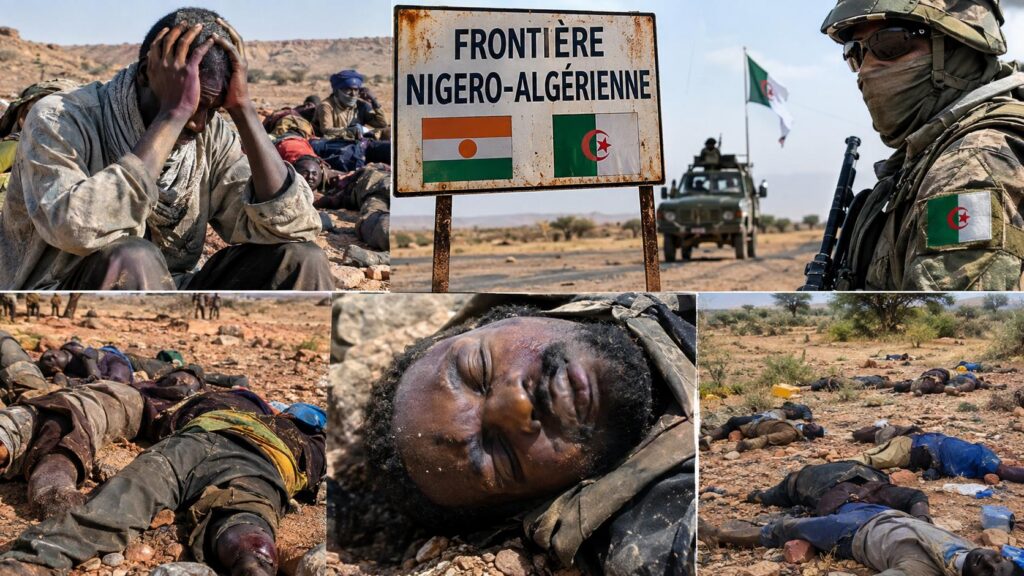
Forty-eight bodies in the sand
A Russian-built Mi-171 helicopter belonging to the Algerian air force swept in low over an artisanal gold panning camp on the edge of the Niger–Algeria border and opened fire on the makeshift shelters and parked vehicles scattered below. When the shooting stopped, 48 people lay dead. Every one of them was a civilian.
The site sits in a remote stretch of the Sahara that has long pulled in hundreds of young fortune-seekers from Niger and from neighbouring countries. The terrain offers almost no cover, and the strike came in broad daylight, so the miners had nowhere to take shelter once the aircraft began its pass.
How the raid unfolded
Witnesses at the scene described a helicopter circling at low altitude before the guns started. The wounded were then hauled over rough desert tracks toward the closest health posts, reaching them hours later in critical condition. Algiers regularly presents its southern aerial patrols as counter-terrorism and anti-smuggling work. This time, the people under fire were unarmed informal labourers chasing a living from the sand.
Niamey’s silence and the sovereignty question
An air raid by a foreign power on, or immediately beside, Nigerien soil would normally set off an open diplomatic crisis and loud official protests. Nothing of the sort has happened. General Abdourahamane Tiani and his junta have stayed conspicuously quiet, and that quiet is being read as embarrassment at best.
An alliance that costs lives
Across the region, observers see the strike as having gone ahead with the tacit approval — perhaps even the blessing — of the men who took power in Niamey. Having cut loose from its traditional partnerships, the military government is hunting for legitimacy and regional backing wherever it can be found, and Algiers has become one of its most useful partners. The price of that relationship, critics say, is being paid in territorial integrity and in Nigerien lives. Algeria, for its part, wants its southern margins secured at any cost and is exploiting the vacuum to dictate terms on the other side of the frontier.
A military hollowed out from within
This foreign intervention lands on an army that is already unsteady. The Nigerien armed forces are still absorbing the shock of the coup attempt that was foiled on the night of 28 to 29 August, an episode that laid bare deep fractures running through both the high command and the ranks.
The aftermath of the August putsch attempt
Since then, an unprecedented wave of desertions has been bleeding the military dry. The reasons cited by those who walk away are consistent:
- Disillusionment with the political direction the junta has taken
- Exhaustion in the face of a steadily worsening security picture
- An outright refusal to be associated with abuses or with internal score-settling
Officers and ordinary soldiers alike are abandoning their posts. The result is a security apparatus too weakened to cover the sheer vastness of the national territory, which leaves the field open to neighbouring armies and to armed non-state groups.
Outrage grows among Nigerien families
Inside Niger, bewilderment is hardening into anger. The families of the dead and civil society organisations are demanding answers. How can a government that has placed “national sovereignty” at the very centre of its rhetoric stand by while a foreign army kills its civilians and never once call it to account?
By turning a blind eye to the Algerian operation and by struggling to hold its own troops together, the junta in Niamey is exposing its limits. This border tragedy marks a grim turning point for a country where the pursuit of gold can now get you killed and where sovereignty increasingly looks like nothing more than a slogan for the cameras.
You may also like
Burkina Faso: the Sankara family and a state bidding for a revolutionary legacy
Gao: 167 civilians executed and over 127 motorbikes torched by Africa Corps near the Niger river
Somaïr and Niger’s uranium collapse: technical failure behind a logistics smokescreen
Why Niger’s soldiers are walking away from Tiani’s army
Behind the sovereignty talk, AES states owe 7,727 billion CFA francs on the regional market