Can Senegal’s government pass its 2026 budget amid rising tensions with its former allies?
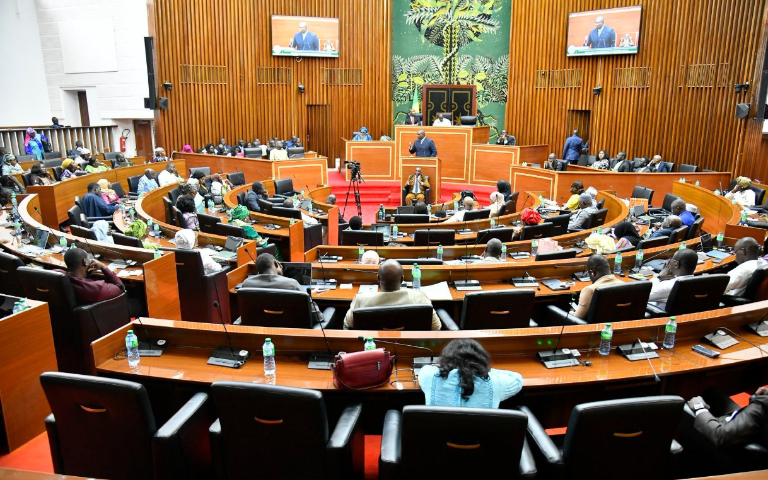
Senegal’s political landscape has reached a critical inflection point. On November 3, 2026, the National Assembly delivered a stinging rebuke to President Bassirou Diomaye Faye’s government by rejecting the 2026 rectified budget bill. The vote—109 in favor of dismissal, 20 against, and 3 abstentions—sent shockwaves through the corridors of power and exposed deepening fractures within the ruling coalition.
This wasn’t just a procedural setback; it was a deliberate challenge to an executive already grappling with economic pressures. The assembly’s rejection of the bill, initiated through a procedural question by Pastef lawmaker Amadou Ba, effectively froze the government’s financial planning without a single substantive discussion on the budget’s content. The move signals that the government can no longer take parliamentary support for granted—even on critical economic measures.
How a broken alliance is reshaping Senegal’s political calculus
The roots of this impasse trace back to May 2026, when Ousmane Sonko stepped down as prime minister. Since then, the relationship between the presidency and the Pastef-led parliamentary majority has deteriorated rapidly. Once united by a shared political vision, the two leaders now embody divergent visions for governance, with Sonko asserting control over the legislature while Faye presides over the executive.
The consequences are now impossible to ignore. Unlike traditional cohabitation scenarios, this conflict lacks clear constitutional frameworks. Instead, Senegal faces a de facto power struggle in which neither side yields ground easily. The president commands the government, but the assembly—dominated by his former political ally—refuses to rubber-stamp his initiatives. The rejection of the 2026 budget is the most visible symptom of this institutional standoff.
Economic risks emerge as fiscal priorities clash with political defiance
Beyond political theater, the budget dispute carries heavy economic stakes. The government proposed reducing total revenue projections from 6,188.8 billion to 5,848.7 billion CFA francs and increasing expenditures to 7,583.9 billion CFA francs, pushing the deficit to 7.6% of GDP from the original 5.4%. Critics, however, argue that the cuts aren’t justified, particularly the slashing of 555 billion CFA francs in investment credits for strategic development projects.
Parliamentarians from Pastef have raised concerns over transparency in fiscal decisions—especially regarding energy subsidies, family security grants, and public spending priorities. The Ministry of Economy and Finance, headed by Cheikh Diba, claims it has provided sufficient data to address these concerns. Yet, the assembly’s rejection in committee suggests that trust has eroded, and scrutiny has become a tool of political leverage rather than constructive oversight.
Fiscal credibility at risk under mounting macroeconomic pressures
The budget deadlock comes at a precarious moment for Senegal’s macroeconomic stability. Ongoing negotiations with the International Monetary Fund (IMF) hinge partly on the country’s ability to demonstrate fiscal responsibility and policy coherence. A delayed or rejected budget could undermine investor confidence, strain liquidity, and delay disbursements of essential funds.
Domestically, delayed payments to contractors, suppliers, and public service providers risk disrupting critical sectors, from infrastructure to healthcare. The longer the impasse persists, the more acute these consequences become—not just for policymakers, but for everyday citizens whose livelihoods depend on public services.
What’s next for Senegal’s divided institutions?
There are no easy exits in sight. The government must now chart a path forward—whether through revised fiscal proposals, negotiated compromises, or constitutional recourse. Meanwhile, Pastef lawmakers appear determined to assert their constitutional authority, transforming budget oversight into a platform for political messaging.
The November 3 vote wasn’t just about numbers on a balance sheet. It was a referendum on governance itself. As Faye and Sonko navigate this uncharted terrain, Senegal stands at a crossroads: can two leaders from the same movement coexist without paralyzing the state? Or is this the beginning of a deeper institutional realignment? One thing is certain—the outcome will shape the country’s economic trajectory and political future for years to come.
A fragile democracy under pressure
Senegal’s democratic resilience is being tested. The 2026 budget rejection exposes a democracy straining under the weight of internal division. While the constitution provides for checks and balances, it was never designed for a scenario where allies become adversaries within the same institutions.
This moment demands statesmanship from both sides. Without it, the country risks drifting into protracted uncertainty—one that threatens not only fiscal stability, but the very stability of its institutions. The question facing citizens and investors alike is not just whether a new budget will pass, but whether Senegal can preserve the integrity of its governance in the process.