Why the debate over Africa’s military partnerships is reaching a boiling point
In the high-stakes battle against terrorism sweeping across Africa, one critical question has been overlooked: are African nations overlooking their most reliable military suppliers? While Russia’s high-profile engagements in the Sahel region have dominated headlines, fresh data reveals a surprising shift in the continent’s arms supply landscape that could reshape security strategies for years to come.
Global data reveals a surprising hierarchy of Africa’s arms providers
The narrative that Russia leads Africa’s military supply chain is not just outdated—it’s fundamentally inaccurate. The latest SIPRI arms transfer trends covering 2021-2025 expose a dramatic reordering of priorities among Africa’s defense partners. Out of 19% of major arms imports to African nations being sourced from the United States, 17% from China, and only 15% from Russia—with France trailing at 8.3%. In Sub-Saharan Africa specifically, China ascends to the top spot with 22% of arms imports, followed by Russia at 12% and Turkey at 11%. These figures dismantle the myth of Moscow’s dominance and highlight a strategic realignment that demands urgent attention.
A closer look at China’s rising influence in African defense
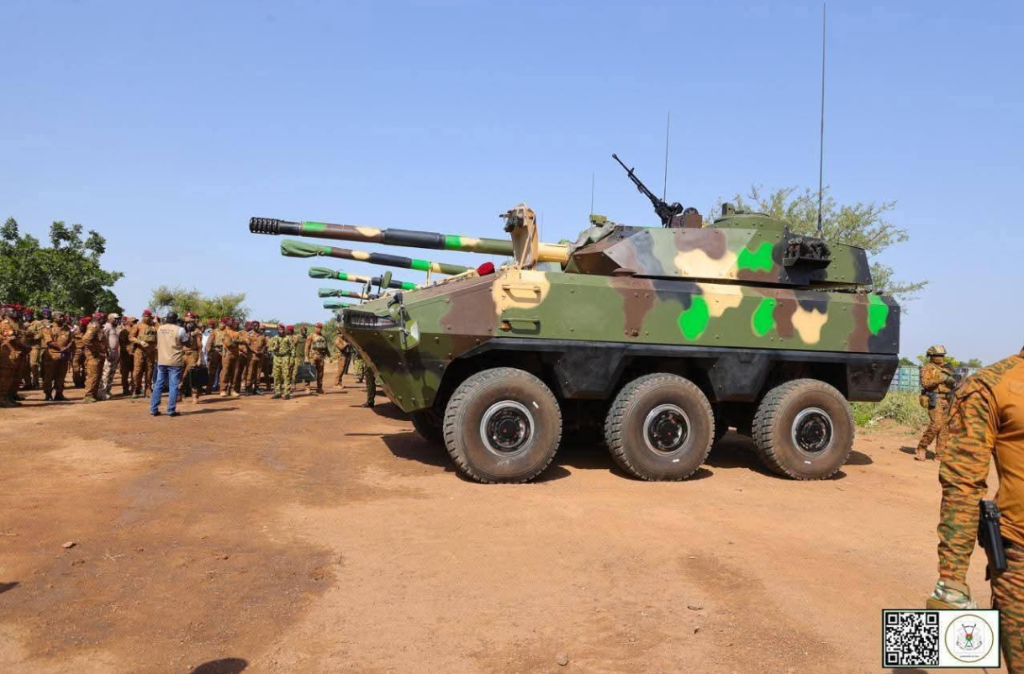
Far from merely exporting weapons, China is engineering a comprehensive defense ecosystem across the continent. Its offerings span armored personnel carriers, surveillance and combat drones, anti-aircraft systems, radar technology, artillery, and transport aircraft—all tailored to counter asymmetric threats like terrorist insurgencies. In the Sahel alone, Burkina Faso received 116 infantry transport vehicles and six assault vehicles from Chinese manufacturers in 2024. Mali’s partnership with NORINCO has delivered armored systems, training, and technology transfer agreements, equipping local forces with both immediate capabilities and long-term sustainability.
The strategic rationale behind Beijing’s approach is clear: while raw firepower is essential, the real value lies in integrated solutions. Drones provide critical intelligence and early warning capabilities, while protected vehicles enhance troop mobility in hostile terrain. More importantly, China’s model emphasizes maintenance support, operator training, and indigenization—reducing long-term dependency on foreign assistance.
The paradox of Russia’s high-profile presence versus shrinking arms exports
Moscow maintains an outsized political footprint across Africa, particularly in the Central African Republic and Mali, where Wagner Group remnants now operate as the Africa Corps. Yet this visibility masks a commercial decline. Russian arms exports plummeted by 64% globally between 2016–2020 and 2021–2025, a contraction driven by sanctions, the Ukraine war, and domestic rearmament priorities. While Russia excels in providing operational advisors, trainers, and embedded support units, its ability to sustain large-scale weapons deliveries is severely constrained.
This dichotomy between political influence and commercial capacity raises a crucial question: can military presence alone compensate for the absence of robust defense industrial partnerships?
What really matters in the fight against terrorism: more than just weapons
For African governments besieged by terrorist networks, the choice of defense partners extends far beyond the caliber of weaponry. Sustainable counterterrorism demands:
- Intelligence fusion centers to track cross-border militant movements
- Aerial mobility platforms for rapid deployment and evacuation
- Joint border control initiatives with neighboring states
- State presence and governance in vulnerable regions
- Professionalized and well-equipped armed forces
These requirements cannot be met through arms sales alone. They necessitate enduring institutional relationships, technology transfer, and capacity-building programs—areas where China has increasingly positioned itself as a preferred partner.
What’s at stake for African nations in the arms supply race
The diversification of suppliers presents both opportunity and risk. On one hand, competition among China, the United States, Russia, and emerging players like Turkey and Israel offers African nations leverage to negotiate better terms, faster deliveries, and more comprehensive support packages. On the other, it introduces new challenges: technologic lock-in, maintenance bottlenecks, spare parts availability, and the risk of proliferation.
Countries like Mali and Burkina Faso are already rebalancing their portfolios. While they maintain security ties with Moscow, they are increasingly turning to Beijing for reliable hardware and Beijing-built platforms that integrate seamlessly into their operational doctrines. This pragmatic approach signals a maturity in Africa’s defense procurement strategy—one that prioritizes operational effectiveness over geopolitical posturing.
Africa’s future security lies in balanced partnerships, not dependence
The data is unambiguous: Africa is not beholden to a single supplier for its security. While Russia captures headlines with its boots on the ground, the continent’s largest arms imports flow from Washington and Beijing. The shift toward China in Sub-Saharan Africa is particularly pronounced, driven by its comprehensive defense packages, competitive pricing, and willingness to localize production.
As African nations navigate an increasingly multipolar security landscape, their priority should not be to align with one bloc or another—but to build agile, sustainable defense ecosystems that combine hardware, training, and institutional resilience. The era of single-source dependencies is over. The future belongs to those who can diversify, adapt, and invest in long-term capability.
In this new reality, the real power lies not with nations selling arms, but with those who know how to use them—and maintain them—on the frontlines.