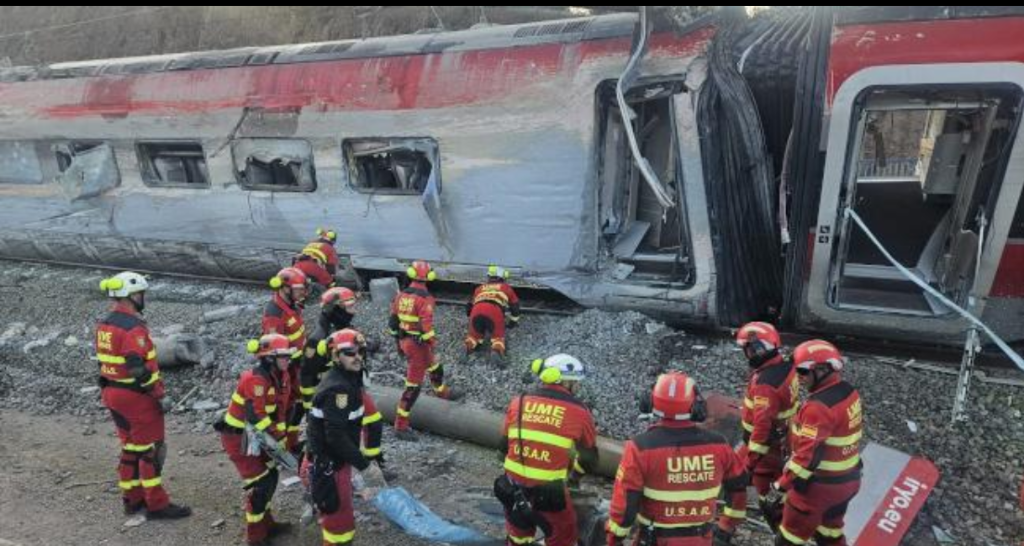
The catastrophic collision between two high-speed trains near Toledo has left Spain grappling with a devastating human toll. At least 46 people lost their lives, while 179 others were injured in the crash that has sent shockwaves across the nation and reignited fierce debates about railway safety.
What happened in the Toledo high-speed rail disaster?
The tragedy struck on a critical rail corridor linking Madrid to Andalusia, near the town of Urda in the Toledo province. According to early reports, a Renfe-operated high-speed train collided with a stationary Iryo train, triggering a violent crash that derailed multiple carriages. Some wagons were reportedly propelled off the tracks, crashing onto a nearby embankment, which significantly hampered rescue operations.
The exact sequence of events remains unclear, but the scale of the disaster has raised immediate concerns. With hundreds of passengers on board both trains, rescue teams faced immense challenges in evacuating survivors from the mangled wreckage. First responders—including firefighters, medical teams, and civil protection personnel—were deployed at lightning speed to extract trapped individuals and stabilize the most critical cases.
Why are Spaniards demanding answers?
As the nation reels from the shock of this preventable tragedy, families of the victims and survivors are demanding transparency. The Spanish public is left wondering: how could two trains operating on a modern high-speed line collide, particularly in broad daylight?
The incident has reignited long-standing concerns about Spain’s rail infrastructure, sparking urgent questions about:
- Potential failures in railway signaling systems
- Gaps in traffic management and coordination between operators
- Possible inadequacies in safety protocols for high-speed rail travel
- Whether human error played a role in the disaster
While preliminary hypotheses suggest possible issues with signaling or communication between control centers and train drivers, investigators caution against jumping to conclusions. The official probe will scrutinize everything from technical glitches to procedural oversights to determine whether this catastrophe could—and should—have been avoided.
How Spain’s rail safety is coming under scrutiny
This collision isn’t an isolated incident. It follows a series of past rail accidents in Spain that have sparked public outrage and calls for systemic reform. While each tragedy has its unique circumstances, the recurring themes of safety lapses and infrastructure concerns have prompted broader questions:
Is Spain’s high-speed rail network as foolproof as it claims to be? Are current maintenance standards sufficient to prevent future disasters? Could stricter regulations and advanced technologies have averted this catastrophe?
The government now faces immense pressure to provide concrete answers—not just to the families of those affected, but to the millions of passengers who rely on Spain’s rail system daily. The findings of this investigation could reshape the future of rail safety in the country.
The road to recovery: what happens next?
For now, the focus remains on two critical fronts:
First, the victims and families: The emotional and logistical toll of this disaster is immense. Hospitals across Toledo and surrounding regions are working around the clock to treat the wounded, while authorities prioritize identifying the deceased and notifying relatives. The grief and shock are palpable, with many families still waiting for news about loved ones.
Second, the investigation: A meticulous technical examination will attempt to reconstruct the moments leading up to the collision. Data from train recordings, signal logs, and infrastructure assessments will be analyzed to uncover any failures—whether technical, operational, or human—that contributed to the tragedy.
The outcome of this probe will be decisive. It could not only assign blame but also drive the implementation of sweeping changes to prevent a repeat of this horrific event. Until then, Spain remains on edge, awaiting the truth behind one of its deadliest rail disasters.