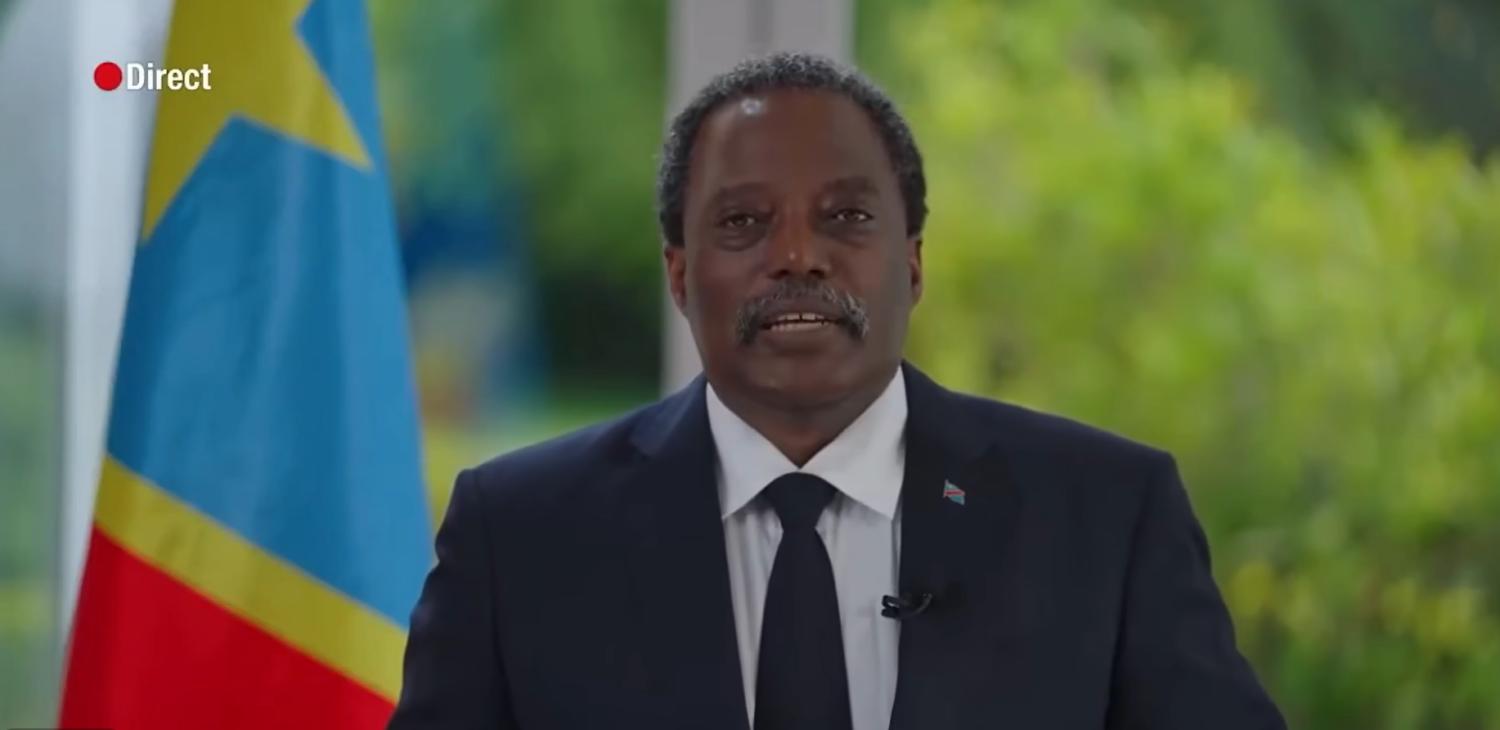
By officially assuming leadership of the Front for the Refoundation of the Nation (FRN) on October 12, 2026, former Democratic Republic of Congo (DRC) President Joseph Kabila has not only reentered the political arena but ignited a powder keg. This alliance, uniting the M23 rebels and the former Alliance Fleuve Congo, provides a veneer of legitimacy to a rebellion already backed by Rwanda. Is this a strategic masterstroke or a reckless gamble that could plunge Africa’s second-largest country into chaos?
The Kabila legacy: from rebellion to power to rebellion again
Joseph Kabila’s political journey began in the shadow of conflict. In 1996, his father, Laurent-Désiré Kabila, launched a rebellion supported by Rwanda to overthrow then-President Mobutu Sese Seko. The elder Kabila seized power in 1997 but quickly distanced himself from his Rwandan backers, sparking the Second Congo War. He was assassinated in 2001, leaving his 29-year-old son to inherit a presidency mired in instability.
For nearly two decades, Joseph Kabila navigated the treacherous waters of Congolese politics, balancing power between Kinshasa, regional militias, and Rwanda’s regional ambitions. Now, by siding openly with the very Rwandan proxies he once fought, he is attempting to elevate a localized insurgency into a nationwide insurrection. But at what cost?
From militia to movement: How Kabila transformed a rebel group’s image
The M23, long viewed as a Tutsi militia serving Rwanda’s interests in eastern DRC, lacked the political gravitas to challenge Kinshasa. Enter Joseph Kabila. His entry into the FRN coalition has done more than provide military backing—it has given the rebellion a face. Observers argue that this move positions the M23 not as a mere proxy force but as a genuine opposition movement with national aspirations.
Geopolitical analyst Pascal Le Pautremat describes this alliance as a symptom of deeper systemic issues: « Behind the violence in eastern DRC lies a network of institutionalized thugs and international collusion, where powerful actors prioritize resource extraction over peace. »
The FRN, now led by Kabila, is no longer just a rebel group—it’s a political force with a stated goal: to topple current President Félix Tshisekedi. This escalation turns a regional conflict into a national crisis, one that could drag the DRC into another cycle of bloodshed.
DRC’s fragile giant: A treasure trove under siege
The DRC is a geographic titan, spanning over 2.3 million square kilometers—nearly 90 times the size of Rwanda. Yet, despite its vast mineral wealth—gold, coltan, cobalt, zinc, and manganese—the country remains politically fragile. Eastern provinces like North Kivu and Ituri are epicenters of this mineral wealth, which fuels global demand from China to Western markets.
Rwanda, with no significant mineral deposits of its own, has long exploited these resources through proxies like the M23. As one analyst put it, « The tragedy of DRC is that its riches don’t fuel its development—they fuel foreign greed. Rwanda, for instance, exports coltan it doesn’t produce, all while Kinshasa struggles to govern a nation that is both vast and vulnerable. »
This predation thrives in chaos. Eastern DRC is a patchwork of over 150 armed groups—militias, criminal gangs, and even Ugandan-linked jihadists like the ADF-Nalu—each vying for control over mineral-rich zones. The irony? These areas are often the most secure for extraction, protected by armed factions while civilian populations bear the brunt of violence.
Who pays the price? The human cost of a forgotten war
The DRC’s eastern provinces have long been dubbed the « rape capital of the world », a title earned through decades of unchecked violence. Nearly 150 armed factions—some ethnic militias, others criminal enterprises—operate with impunity, turning villages into battlegrounds and women and children into targets.
By lending his name and political weight to the FRN, Joseph Kabila is not just reshaping the conflict—he’s escalating it. Analysts warn that this alliance risks unleashing a new wave of violence, one that will disproportionately harm civilians already caught in the crossfire of geopolitical ambitions.
The question now is whether the DRC’s giant, standing on feet of clay, can withstand another storm—or if this latest gamble by Kabila will push it toward irreversible collapse.