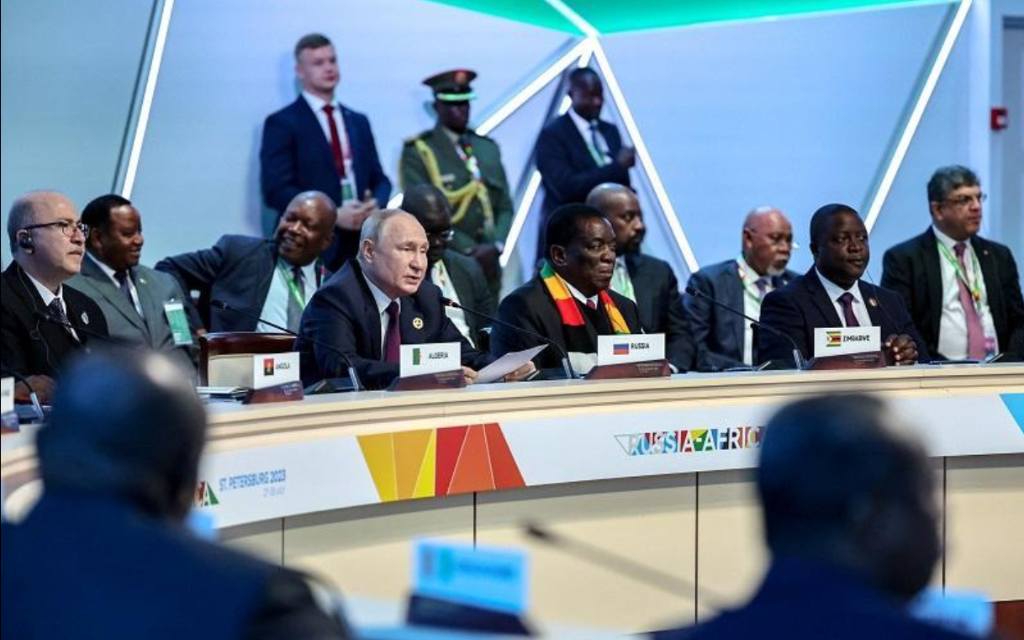
The third Russia-Africa Summit, held in Moscow on October 28-29, 2026, has spotlighted a striking contrast within the Alliance of Sahel States (AES). While Mali’s transitional leader Assimi Goïta arrived in person, the presence of Burkina Faso’s Ibrahim Traoré and Niger’s Abdourahamane Tiani remains uncertain. This discrepancy raises critical questions about the cohesion and diplomatic future of the Sahel bloc.
The Malian president stands alone at the summit
Assimi Goïta’s arrival in Moscow on October 26 marked the country’s participation as the sole head of state from the AES. Official reports confirmed his meetings with Vladimir Putin and his role in bilateral discussions, underscoring Mali’s diplomatic momentum. In contrast, Burkina Faso sent its Prime Minister Rimtalba Jean Emmanuel Ouédraogo to represent Ibrahim Traoré, who was initially expected but did not arrive.
The situation in Niger adds further complexity. Despite earlier announcements by Russian authorities confirming Abdourahamane Tiani’s participation, as of October 28, no official confirmation of his presence in Moscow had been reported. While his absence cannot be definitively stated, the uncertainty surrounding his absence fuels speculation about the Sahel bloc’s unity.
Other African leaders choose high-level but non-presidential representation
The summit’s attendance extends beyond the Sahel, with 48 of Africa’s 54 countries represented. However, not all countries sent their heads of state. Algeria’s participation was led by Prime Minister Sifi Ghrieb, while the Bénin delegation included Vice President Mariam Chabi Talata. Uganda and Rwanda followed suit, with their vice presidents and prime ministers attending in place of the presidents. These choices reflect strategic decisions about visibility and engagement levels.
South Africa notably sent a high-level administrative delegation led by Zane Dangor, Director-General of the Department of International Relations, instead of President Cyril Ramaphosa. These variations in representation do not necessarily indicate political divergence but rather a calculated approach to participation.
AES under scrutiny: leadership and partnership in flux
For the AES, the contrast between Goïta’s presence and the delegated representation of Burkina Faso and Niger is more than symbolic. It questions the bloc’s ability to project a unified front on issues such as security cooperation, economic partnerships, and political alignment with Moscow.
The summit’s agenda includes critical discussions on trade, energy, agriculture, investment, and security. Russia has also proposed a new 2027-2029 cooperation program, adding urgency to the need for clear commitments. While diplomatic photographs and bilateral meetings make headlines, the real test will be whether these engagements translate into tangible benefits for Sahel states.
What this means for Sahel-Russia relations
The absence or reduced presence of some AES leaders does not automatically signal a rupture within the alliance. However, it does highlight the challenges of maintaining cohesive representation amid domestic and regional pressures. For Mali, Goïta’s prominent role could strengthen its position as the Sahel’s primary interlocutor with Moscow, but the long-term stability of the AES will depend on broader consensus and consistent engagement from all members.
The summit’s outcomes will reveal whether the Sahel bloc can leverage its collective influence—or if the absence of key leaders signals deeper fissures in its diplomatic strategy.