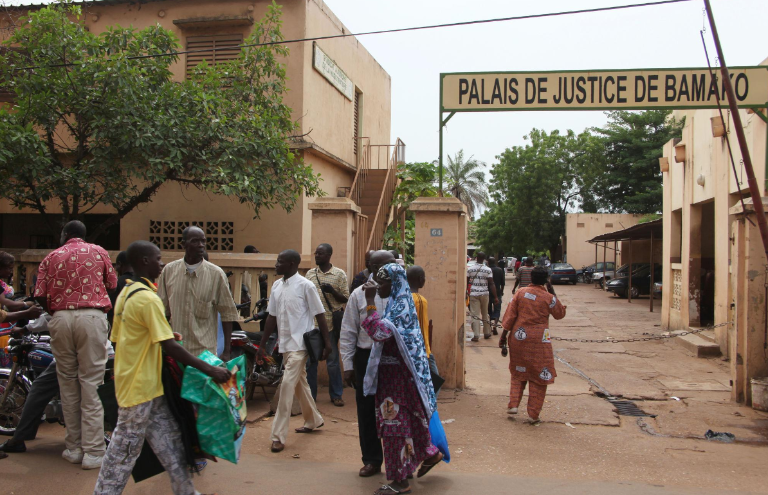
The 10-year prison sentence handed to Bamako’s former district mayor has ignited a fierce legal battle over who controls disputed land near the city’s airport. Adama Sangaré, once a powerful figure in Mali’s capital, continues to challenge his conviction, arguing that the accusations stem from administrative decisions rather than criminal acts. As his legal team prepares an appeal, the case raises critical questions about the boundaries between political governance and judicial accountability in Mali’s land sector.
At the heart of the controversy are land allocations in the Bamako-Sénou airport area, a zone long contested between government authorities, local officials, and affected communities. The prosecution accused Sangaré of orchestrating illegal land subdivisions, falsifying documents, and misappropriating public funds—allegations he and his lawyers vehemently deny. The defense insists his actions were within the scope of his official duties, shifting the debate from criminal responsibility to administrative oversight.
Was the conviction based on flawed legal jurisdiction?
The defense’s most potent argument questions whether Mali’s criminal courts were the right venue to judge what it calls administrative irregularities. Sangaré’s legal team argues that decisions regarding land allocations—even if flawed—should have been reviewed under administrative law, not penal law. They point to a previous ruling by the Supreme Court as evidence that prosecutors overstepped their bounds by treating municipal decisions as criminal offenses.
‘This is not a criminal matter,’ argued one of Sangaré’s attorneys during closing statements. ‘These were policy choices made under intense political pressure, not malfeasance.’ The prosecution countered that the alleged irregularities—including unapproved land transfers and inflated demolition costs—constituted clear violations of public finance and property laws.
The contested instructions: Did the former president authorize the deals?
Sangaré’s defense introduced a contentious narrative during the trial: he claimed he followed verbal instructions from Ibrahim Boubacar Keïta, Mali’s president from 2013 to 2020, to allocate land near the airport. According to witnesses, these allocations were part of a broader effort to resettle internally displaced people from northern Mali amid rising security threats.
But the prosecution dismissed this defense outright. Prosecutors argued that even if such instructions existed, they would not justify circumventing legal procedures for land allocation. ‘Obedience to orders is not a blanket defense,’ read the indictment. ‘Public office carries a duty of legal compliance.’
Financial stakes: A multimillion-franc dispute over demolition fees
The prosecution presented evidence alleging that Sangaré and co-defendants misused public funds through a series of land sales and exemptions. Key figures in the case include 49.39 million FCFA in edility fees and over 483.9 million FCFA in demolition-related costs attributed to irregular allocations near the airport.
Sangaré denied any personal financial gain, stating that fee waivers were within his authority as mayor. He also claimed he had no control over demolition funds, which he said were managed by state agencies. Yet the court ordered him to repay 483.9 million FCFA in damages, along with 50 million FCFA in moral damages to the state—a ruling he has vowed to challenge on appeal.
A wave of convictions: Who else was found guilty?
The case did not target Sangaré alone. Three former sub-prefects—Daha Keïta, Ibrahim Koïta, and Adam Aïché Traoré—each received 10-year sentences. Former Bamako Commune VI mayor Souleymane Dagnon, absent during the trial, was handed a 20-year sentence, while another defendant, Sékou Keïta, was acquitted entirely. The prosecution had initially sought 15 years for most defendants and 20 for Dagnon, signaling the severity with which authorities viewed the alleged offenses.
What comes next? The appeal that could redefine Mali’s land justice
With the defense announcing its intention to appeal the verdict, the case is far from closed. The appeals process will scrutinize not only the conviction itself but also the legal reasoning behind the original judgment. This raises broader questions: Can municipal leaders be held criminally liable for policy decisions that are later deemed illegal? Where does administrative discretion end and criminal negligence begin?
The outcome of this appeal could set a precedent for how Mali handles disputes over public land—especially in high-value areas like Bamako-Sénou. It may also influence future corruption cases involving local officials across West Africa, where land governance and political accountability frequently intersect.
More than a verdict: A warning for Mali’s land sector
Regardless of the appeal’s outcome, the case has already exposed systemic weaknesses in Mali’s land administration. Reports of opaque allocations, irregular documentation, and political interference have fueled public distrust in land governance. For activists and legal experts, the Sangaré case underscores the urgent need for transparent, equitable land policies that protect public assets while respecting the rights of those displaced by development.
As the legal battle intensifies, one thing is clear: the verdict will resonate far beyond the courtroom, shaping the future of land governance in Mali for years to come.