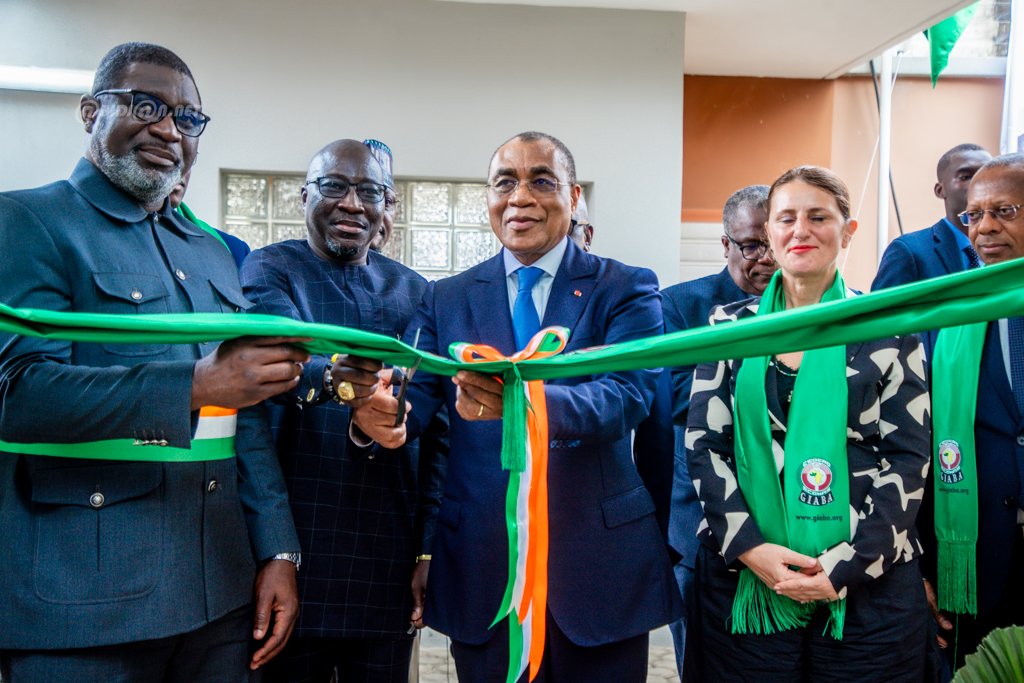
Modern facility inaugurated to bolster regional financial crime prevention
The Minister of Economy, Finance and Budget, Adama Coulibaly, presided over the official inauguration of the new headquarters for the Intergovernmental Action Group against Money Laundering in West Africa (GIABA) in Abidjan’s Deux-Plateaux district on August 12, 2026.
« Today’s handover of these fully equipped premises marks a critical milestone in Côte d’Ivoire’s commitment to supporting GIABA’s mission against financial crime, » Coulibaly stated. « This state-of-the-art facility will serve as a hub for knowledge exchange, fostering collaboration among experts dedicated to combating money laundering and terrorist financing. »
Côte d’Ivoire and GIABA formalized their partnership in 2014 through a headquarters agreement signed in Yamoussoukro, aligning with a 2010 ECOWAS decision to establish two regional centers—one in Lagos for Anglophone nations and another in Abidjan for Francophone and Lusophone countries.
The Ivorian government has since accelerated its compliance efforts, successfully implementing the Financial Action Task Force (FATF) action plan ahead of schedule. Coulibaly commended the progress, urging all stakeholders to intensify their efforts in dismantling financial networks used by criminals.
« This initiative reflects the trust placed in GIABA and underscores Côte d’Ivoire’s dedication to strengthening regional mechanisms against cross-border financial crimes, » said Edwin Harris Junior, GIABA Director General. He extended gratitude to President Alassane Ouattara and the Ivorian government for their unwavering support in solidifying GIABA’s institutional presence.
New center to drive regional collaboration
General Idrissa Touré, head of Côte d’Ivoire’s Financial Intelligence Unit (CENTIF), emphasized the facility’s role in fostering research, cooperation and action. « This center will become a regional powerhouse for training, documentation and awareness, serving Francophone and Lusophone states, » he noted.
The inauguration brought together officials from the Ministries of Foreign Affairs, Justice, Planning and Development, alongside representatives from Liberia, UNDP and UNICEF.
You may also like
Moussa Kaka’s disappearance in Niger: the far-reaching consequences for citizens, the press and West Africa’s economy
Lyon’s goalless stalemate with Chelsea: the real-world fallout for fans, clubs and the women’s game
Eastern DRC peace mediation: what the latest Tshisekedi letter to Gnassingbé means for civilians and local businesses
Mali: JNIM ambush on Russian Africa Corps convoy near Niono — what it means for civilians and local trade
Mali’s poverty crisis: how hunger and hardship are reshaping daily life for millions