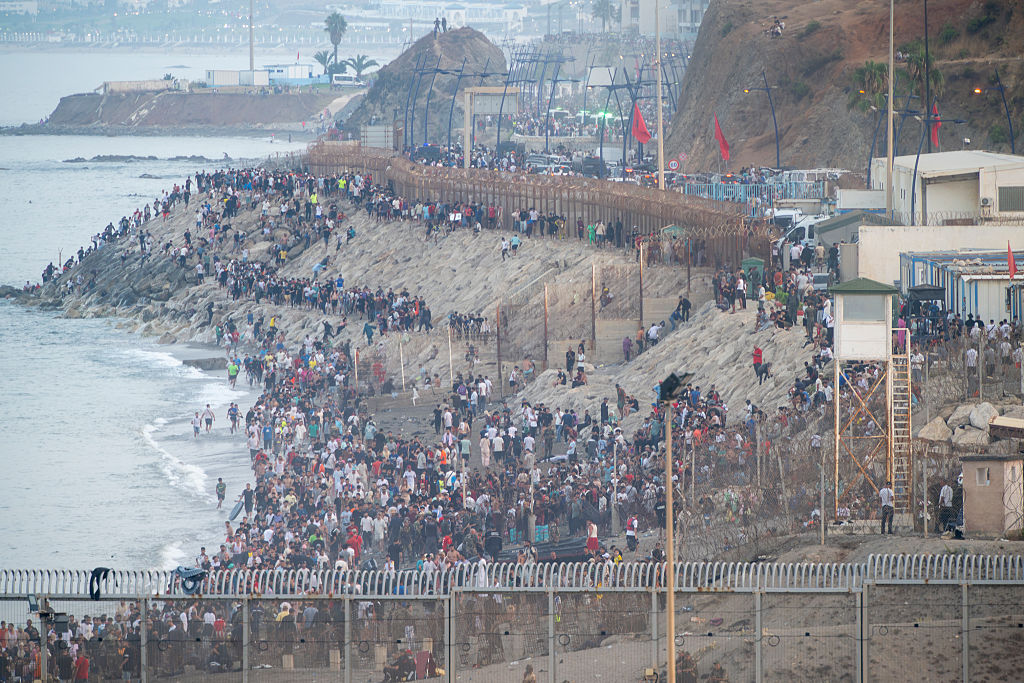
Morocco maintains stance on Ceuta amid rising tensions with Spain
A former Spanish ambassador to Morocco has warned that Spain is facing a severe migration crisis at Ceuta, partly driven by unresolved territorial disputes involving the North African enclaves.
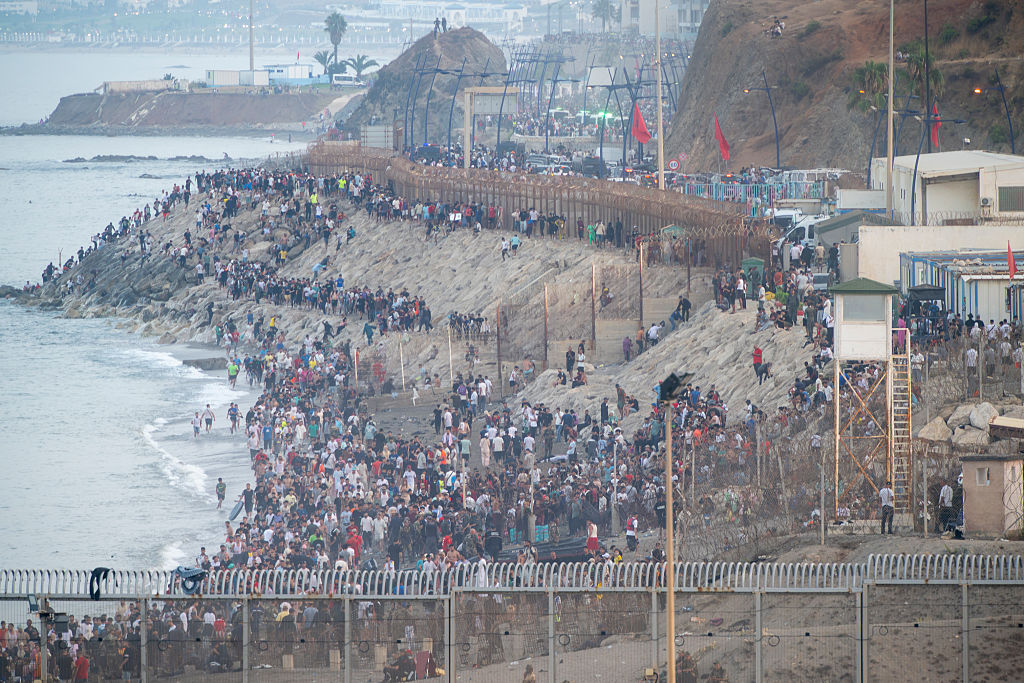
More than 72,000 migrants arrived in Ceuta, a small Spanish city in North Africa, in late July, triggering political shockwaves across Spain and Europe. This influx has reignited long-standing territorial disputes between Morocco and Spain over Ceuta and Melilla.
Jorge Dezcallar, a former Spanish ambassador to Morocco and former director of Spain’s intelligence services (CNI), stated that Rabat has never abandoned its claims over Ceuta and Melilla. He suggested that Morocco is testing the waters at a time when it perceives the Spanish government as weak.
The left-leaning Spanish government, led by Prime Minister Pedro Sánchez, is grappling with multiple corruption scandals involving high-ranking officials and close associates. Its pro-immigration policies and strong criticism of the United States have also strained relations with key European partners.
Persistent territorial claims
Moroccan officials and state-aligned media have repeatedly emphasized their sovereignty over Ceuta and Melilla, territories that have been under Spanish control for centuries—long before Morocco emerged as a modern state.
« This issue remains unresolved. Every time we meet with Spanish officials, we raise the matter, » declared Justice Minister Abdellatif Ouahbi during a recent interview.
« We firmly stand by our territories… It is a question that will be resolved through negotiation and patience, » he added.
Spanish Defence Minister Margarita Robles swiftly responded, stating, « Let there be no doubt: Ceuta and Melilla are Spanish, and they are non-negotiable. » She made these remarks during a visit to Ceuta, a rare trip by a Spanish foreign minister in modern democratic history, seen by some as an attempt to avoid further straining relations with Morocco.
King Felipe VI of Spain has never visited Ceuta or Melilla, underscoring the sensitivity of the issue.
Roots of the recent crisis
While both Madrid and Rabat attribute the recent surge in migration to human trafficking networks exploiting a July ruling by Spain’s Supreme Court that temporarily halted immediate deportations of migrants arriving by sea, Dezcallar suggested there may have been some level of permissiveness or negligence on Morocco’s part.
He also cautioned that Spain lacks the necessary resources to prevent such influxes, noting that this is not the first time such a crisis has occurred.
A history of diplomatic strain
Diplomatic tensions reached a peak in 2021 when Spain permitted the hospitalization of Sahrawi leader Brahim Ghali. In retaliation, Morocco allowed nearly 10,000 migrants to enter Ceuta in what Defence Minister Robles described as an act of blackmail.
Dezcallar remarked, « One can forgive an error once, but not twice… I cannot believe the government was unaware, » referencing warnings from Ceuta authorities about a gradual increase in irregular arrivals in the days prior.
Intelligence sources recently alerted to a potential new surge of migrants into Ceuta by August 15, as calls to storm the city proliferate on social media. Police unions and the Civil Guard have also confirmed these threats.
Dezcallar concluded with a stark warning: « Anyone who thinks Morocco will abandon its claims over Ceuta and Melilla is mistaken. »
You may also like
Air Sénégal suspends all Dakar-Paris cabin crew amid parcel-carrying probe
Moussa Kaka’s disappearance in Niger: the far-reaching consequences for citizens, the press and West Africa’s economy
Lyon’s goalless stalemate with Chelsea: the real-world fallout for fans, clubs and the women’s game
Eastern DRC peace mediation: what the latest Tshisekedi letter to Gnassingbé means for civilians and local businesses
Mali: JNIM ambush on Russian Africa Corps convoy near Niono — what it means for civilians and local trade