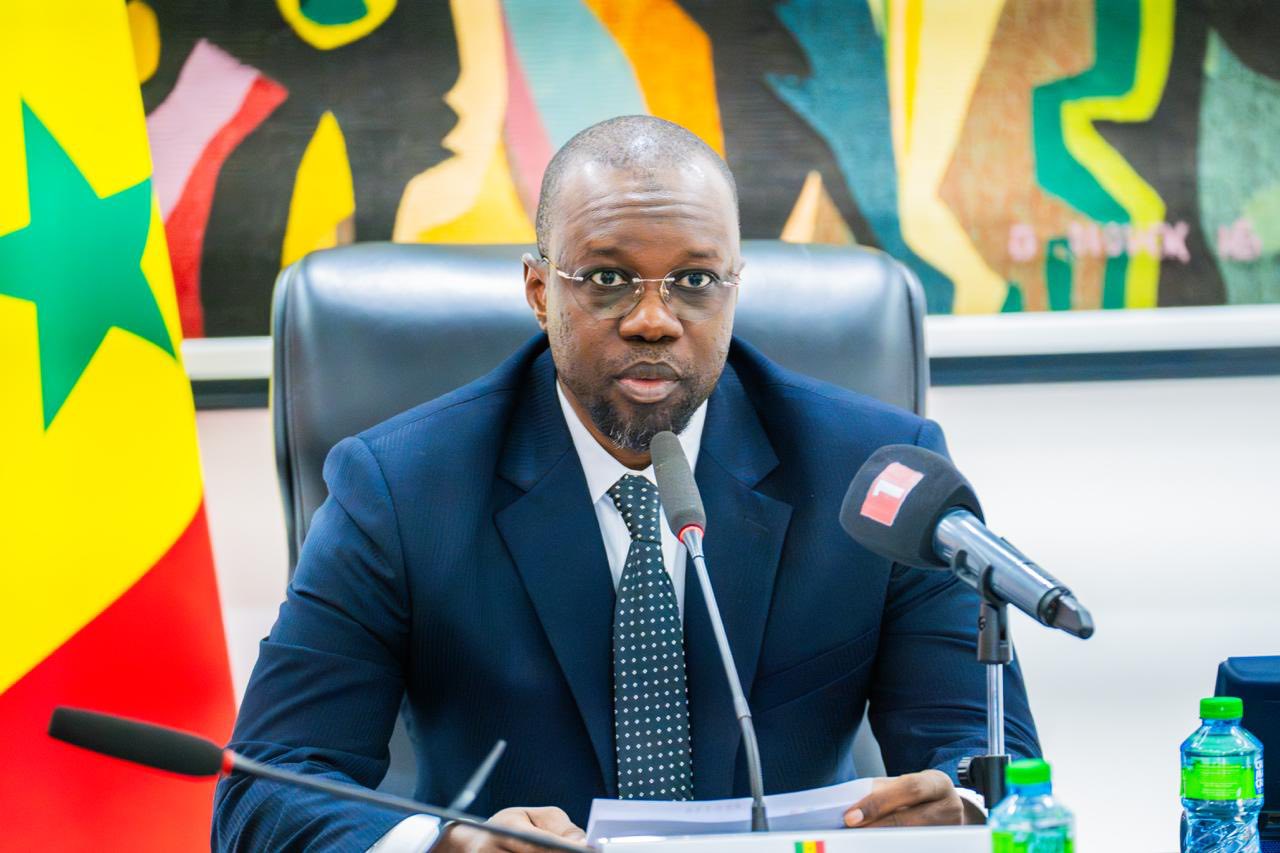
Senegal’s Prime Minister Ousmane Sonko has sharply criticized the lack of judicial action over mismanaged public funds during a high-level interministerial meeting on infrastructure. Speaking on the heels of Justice Minister Yassine Fall’s presentation, he questioned the efficacy of ongoing financial audits when no prosecutions have followed.
The Prime Minister’s remarks came as Minister Fall outlined structural weaknesses and mismanagement within the justice system’s oversight of infrastructure projects. Sonko seized the moment to challenge the minister directly, questioning whether current efforts were meaningful or merely performative.
« Madame la ministre, what exactly is justice doing? » he queried. « I sometimes wonder if all this is necessary. Can people really do as they please and remain untouched? The system remains intact, billions have been squandered, and yet no legal consequences have materialized. »
He went on to condemn what he described as a culture of impunity, where public funds are diverted without accountability. « In this country, you can do whatever you want and still walk free, » Sonko stated. « Those responsible for bleeding billions of public money continue to move freely across the nation. That is unacceptable. »
Sonko emphasized that the current administration was elected to enforce responsibility, not to allow financial crimes to persist unchecked. « We cannot keep asking Senegalese citizens to refinance the same projects while the same individuals profit from billions and face no consequences, » he asserted.
The Prime Minister also raised concerns about the integrity of the justice system itself. « If the judiciary itself is compromised, » he said, « how can we trust that these cases will ever be resolved? » He insisted that transparency and accountability must be prioritized to maintain public trust.
Minister Fall’s response
Minister Yassine Fall responded by assuring Sonko that her department is actively pursuing accountability, despite structural challenges. « We are working tirelessly to ensure that those responsible are held to account, » she stated. « With time and divine will, we will deliver results that reflect the aspirations of the Senegalese people. »
Sonko, however, remained unconvinced. While acknowledging the need for new prison infrastructure through renegotiations, he stressed that this should not overshadow the urgency of assigning blame and delivering justice. « Responsibility must be assigned, and sanctions must follow—whether for ministers, directors-general from the previous or current administration, » he insisted.
He called for a comprehensive public accounting of every case, warning that no single magistrate or official should monopolize oversight. « These cases do not belong to any one individual, regardless of their position, » he declared. « They belong to the Senegalese people. »
Sonko concluded with a stern warning: « We will raise our voices louder because these dossiers are not the property of judges, ministers, or the President. They belong to every citizen of Senegal. »