Gabon detention of Bilie By Nze sparks legal and political debate
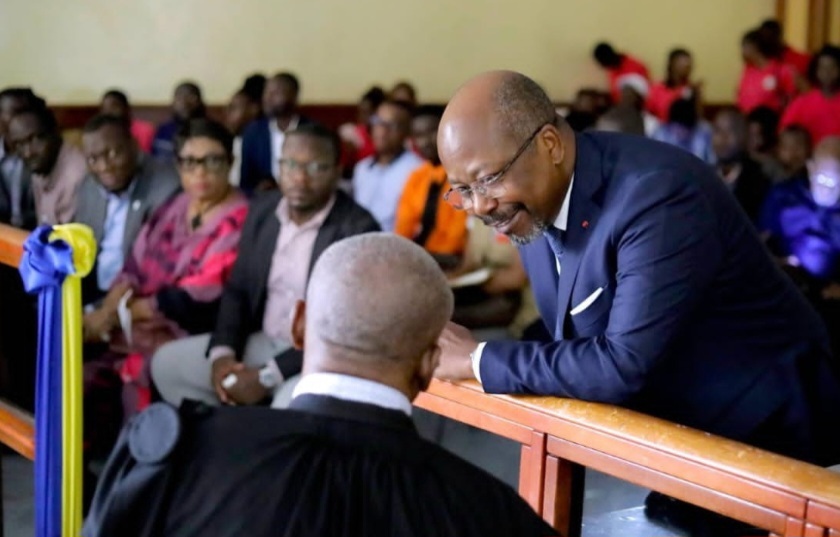
Libreville, June 3, 2026 – The continued detention of former Prime Minister and opposition leader Alain-Claude Bilie By Nze has intensified debates over judicial independence and the fairness of legal procedures in Gabon. The Court of Appeal in Libreville has upheld his incarceration at the central prison since April 16, 2026, rejecting a defense motion to nullify the proceedings.
While the case appears to involve common law offenses, it has evolved into a critical test for the balance between justice, politics, and fundamental rights. The defense argues that the alleged acts of breach of trust and fraud, dating back to 2008, are legally time-barred, as the statute of limitations would have expired in 2018.
Questionable procedures and alleged violations
Legal representatives of Bilie By Nze have raised concerns about procedural irregularities, including alleged flaws in the indictment and inadequate legal representation during the initial 24 hours of detention. According to one of his lawyers, the circumstances surrounding his arrest and detention constitute a serious breach of fair trial guarantees and Gabon’s international human rights commitments.
A politically charged judicial case
The timing of this case is particularly sensitive, as Bilie By Nze remains a prominent figure in Gabon’s opposition. Once a key figure in the administration of former President Ali Bongo Ondimba, he is now a leading critic of the current regime led by President Brice Clotaire Oligui Nguema, elected in 2025. The opposition has widely condemned his detention as politically motivated, framing the case as an indicator of the rule of law in post-election Gabon.
In a public statement, President Oligui Nguema emphasized the separation of powers, asserting that the judiciary operates independently and that the executive branch has no involvement in the matter. This assertion has done little to quell broader concerns about the integrity of the judicial process.
A litmus test for judicial independence
The Court of Appeal’s decision to deny provisional release and dismiss the nullity claim places Gabon’s judiciary under intense scrutiny. The defense’s arguments—rooted in the statute of limitations and alleged procedural flaws—have sparked broader debates about transparency and rigor in high-profile cases. Beyond the question of Bilie By Nze’s guilt or innocence, the case raises fundamental issues about the credibility of institutions tasked with upholding the law.
In a nation undergoing institutional restructuring, every judicial decision involving a prominent political figure is closely watched as a test of democratic maturity. The outcome of this case will weigh heavily on public trust in the justice system and the stability of Gabon’s political landscape. The challenge for Gabon’s judiciary is to demonstrate that it can deliver fair, transparent, and internationally compliant rulings—even in cases with significant political implications.