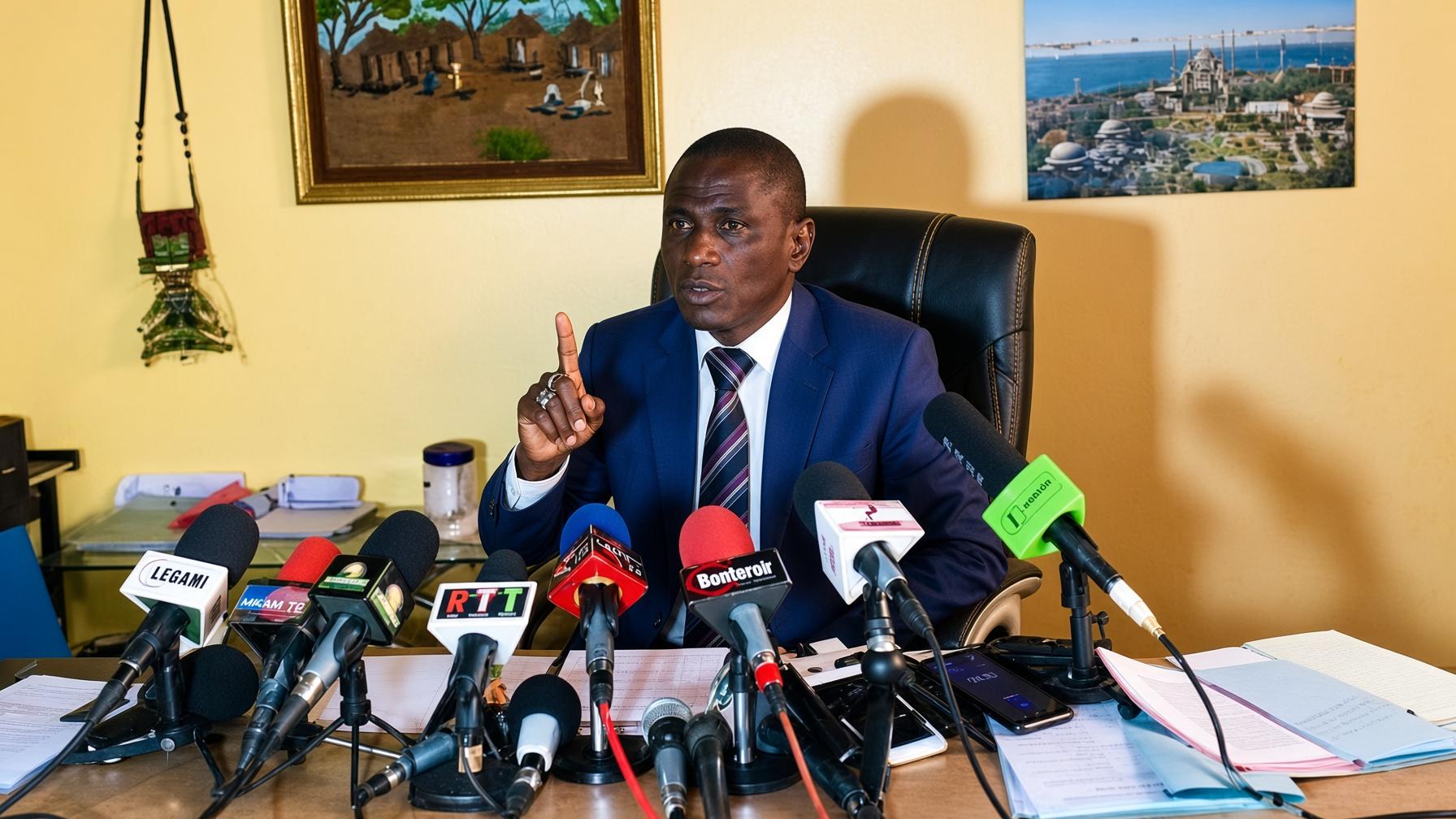
The president of the National Human Rights Commission (CNDH), Paul Nsapu, has just delivered a stark assessment of the state of human rights in the Democratic Republic of the Congo (DRC). Speaking at a live debate in Kinshasa, he drew a sharp distinction between the capital and the eastern provinces, revealing two drastically different realities across the country.
Systemic violations in Kinshasa: chronic neglect of fundamental rights
In areas under the direct control of the Kinshasa government, Nsapu identified widespread violations affecting civil and political rights, as well as economic and social rights. These include the right to work, healthcare, and education—rights that have been systematically eroded by decades of poor governance, institutional failure, and a persistent lack of development. According to him, these structural issues stem from the cumulative failures of successive administrations, which have consistently failed to improve the daily living conditions of the Congolese population.
« These violations are not the result of isolated incidents, but reflect a deep-rooted systemic problem, » he emphasized. « The lack of progress in infrastructure, public services, and economic opportunities has created a fertile ground for human rights abuses across the board. »
Eastern DRC: where the most basic rights are under daily assault
The situation in the eastern provinces—particularly in North Kivu, South Kivu, and parts of Ituri—is far more alarming. Here, Nsapu described a « hardened core » of human rights violations, where the most fundamental rights, such as the right to life and security, are routinely trampled upon. He pointed to the ongoing presence of foreign armed groups, including Rwandan military forces and their allied militias, operating with near impunity in areas beyond the control of the central government.
« In the east, we are witnessing a deliberate and systematic denial of the most basic human rights, » he stated. « Civilians are caught in the crossfire of armed conflict, with no protection from the state. The right to life is not guaranteed; the right to security is nonexistent. This is a humanitarian crisis of the highest order. »
Nsapu also highlighted the role of armed groups in exacerbating the violence, noting that their activities have led to mass displacement, widespread sexual violence, and the recruitment of child soldiers. The lack of a strong state presence in these regions has allowed these abuses to persist unchecked, leaving communities vulnerable and desperate for protection.
A call for urgent action
In light of these findings, Nsapu urged the government to take immediate steps to address the crisis in the east, including strengthening state security forces, ensuring the protection of civilians, and holding perpetrators of human rights abuses accountable. He also called for greater international support to help stabilize the region and provide humanitarian assistance to those affected by the conflict.
« The human rights situation in the DRC is a stain on our collective conscience, » he concluded. « We must act now to prevent further suffering and ensure that the rights of every Congolese citizen are respected. »