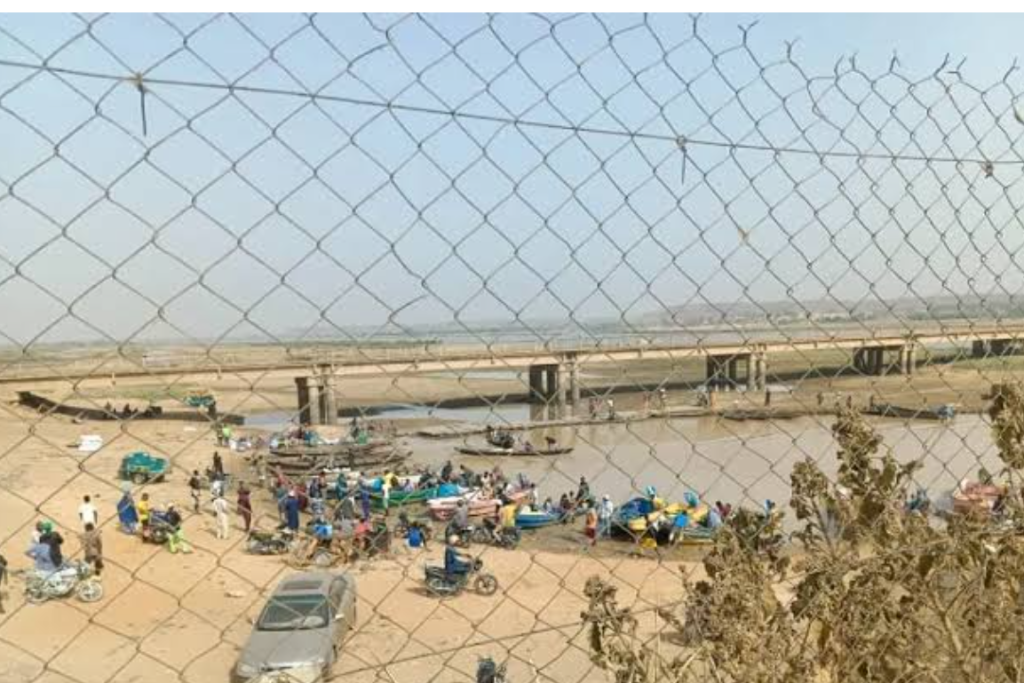
The International Monetary Fund (IMF) has delivered a stark warning: Niger’s prolonged border closures have cost the state a staggering 117 billion West African CFA francs in lost public revenue. This financial hemorrhage underscores a harsh reality—while political tensions dominate regional discourse, the economic fallout is devastating communities across West Africa. Customs and tax revenues, the lifeblood of public finances in the Sahel, have plummeted. By severing trade routes that once linked coastal ports to landlocked markets, military-led governments in the region sought to assert geopolitical dominance. Instead, they’ve triggered a fiscal collapse that threatens the very foundations of state sovereignty they claim to uphold.
a financial abyss: 117 billion cfa lost to political brinkmanship
The IMF’s assessment leaves no room for doubt: the paralysis of cross-border trade with Niger has created a budgetary black hole of 117 billion CFA francs. This staggering figure exposes the scale of the economic disaster unfolding across West Africa since the region’s political upheavals. Revenue streams that once fueled public services—education, healthcare, infrastructure—are evaporating. By choking the arteries of commerce that connect Sahelian markets to global supply chains, transitional authorities have gambled away their own financial stability. The result? A crippling liquidity crisis that leaves governments scrambling to fund even basic public services. The irony is stark: in the name of defending national interests, these regimes have weakened the very institutions they vow to protect.
from market stalls to household budgets: inflation tightens its grip
The IMF’s dry economic indicators mask a human crisis unfolding in real time. On the ground, the impact is visceral. Markets that once brimmed with affordable staples now groan under the weight of soaring prices. Rice, cooking oil, sugar, and cement—essential goods for millions—have seen their costs spiral due to supply chain disruptions and rerouted transport. Small traders, the backbone of local economies, are being crushed under the weight of inflated logistics costs, while informal sectors teeter on the brink of collapse. The hardest hit? The most vulnerable. By disrupting short-distance cross-border trade, governments have dismantled the microeconomic ecosystems that once sustained entire communities. Today, families face impossible choices between putting food on the table and covering other basic needs.
security narratives as a smokescreen for economic failure
When confronted with these economic realities, the communications strategy of the Alliance of Sahel States (AES) remains unchanged. Officials consistently frame the crisis as a consequence of external security threats or structural weaknesses, citing the closure of bridges and roads as necessary measures for national defense. Yet the pattern is unmistakable: security rhetoric serves as a convenient smokescreen. It diverts attention from the glaring failures of economic governance and the inability of transitional authorities to stabilize public finances. By framing border closures as an act of patriotic resistance, these governments obscure their own policy missteps. The militarization of trade decisions and the rupture of ties with traditional partners have not delivered the promised prosperity. Instead, they’ve fostered an environment of economic uncertainty, stifled private investment, and forced states into a precarious cycle of financial dependence.
the path forward: pragmatism over ideology
Ideological intransigence has reached its limits in the face of cold, hard numbers. A deficit of 117 billion CFA francs cannot be resolved with fiery speeches or blame-shifting toward international actors. Economies operate on immutable principles: the free flow of goods and people is the engine of Sahelian growth. By turning borders into political battlegrounds, military regimes have weakened the region at its most critical juncture. To avert a social collapse, the immediate and permanent reopening of trade routes must take precedence. Pragmatic dialogue with regional economic bodies and the removal of trade barriers are no longer optional—they are existential imperatives. The fate of millions hangs in the balance, and they can no longer afford to foot the bill for their leaders’ political posturing.