Late last February, the United States State Department formalized a five-year bilateral memorandum of understanding with Burkina Faso. This agreement, valued at 147 million dollars, is designed to bolster the efforts of Ouagadougou in its fight against HIV/AIDS.
In mid-February, Washington also signaled its recognition of Niger’s sovereignty during a telephonic discussion with the transitional Prime Minister, Ali Mahamane Zeine.
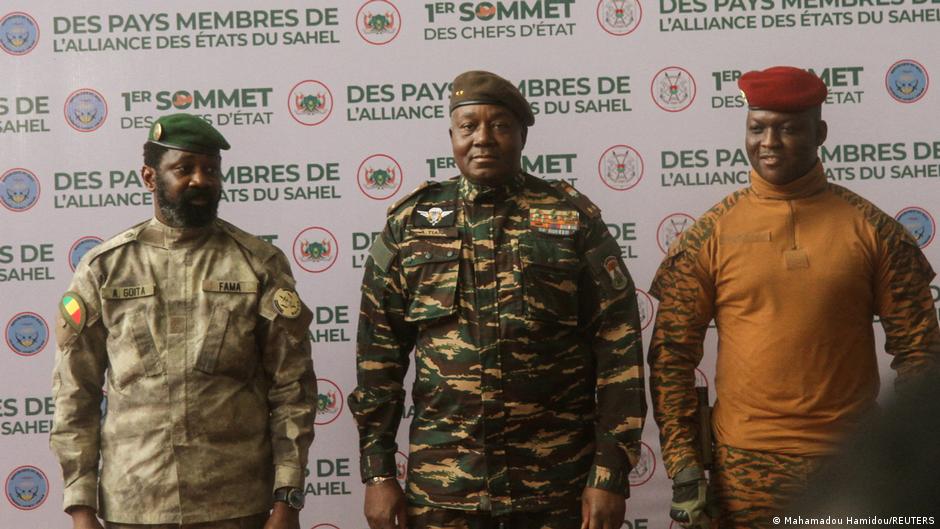
More recently, Joao Cravinho, the European Union’s special envoy for the Sahel, visited Bamako, even as diplomatic relations between the Malian authorities and the EU remain strained. These moves raise questions about a possible realignment between Western powers and the military governments in the Sahel region.
Francis Kpatindé, a West Africa specialist and lecturer at Sciences-Po Paris, provides an in-depth look at these shifting dynamics.
The EU’s diplomatic outreach in the Sahel
Recently, the EU envoy Joao Cravinho visited the capitals of the Alliance of Sahel States (AES) to advocate for a fresh approach. Does this mark the start of a genuine reconciliation?
Francis Kpatindé: One must remain cautious, as the Sahel has been full of surprises lately. While there might be a slight movement or a flicker of change, I wouldn’t call it a full reconciliation yet. The bond between Western powers—specifically European nations—and Sahelian countries remains either tense or very restricted.
Strategic interests and humanitarian support
Following its interactions with Niger and Mali, Washington is now showing interest in Burkina Faso through a new health-focused agreement. Is this a significant sign?
Francis Kpatindé: It is indeed a notable indicator. These Western nations are providing specific types of economic and humanitarian aid. Furthermore, their militaries continue to offer security training focused on counter-terrorism. Western powers realize that if they completely disengage, they will eventually face the consequences of regional instability. It would be negligent for them to abandon these countries simply because they are seeking greater autonomy. There is also a clear interest in natural resources: Niger possesses uranium, while Burkina Faso and Mali are rich in gold.
A shift toward bilateral diplomacy
It appears the European Union is moving away from a broad regional strategy to focus on individual country relationships. Do you agree?
Francis Kpatindé: Definitely. For instance, Germany still maintains positive relations with several countries in the region and is welcomed in many Sahelian nations. Not every country in the region wants to follow the path set by France, which is understandable given France’s history as the former colonial authority in Mali, Niger, and Burkina Faso. Consequently, France may use other EU member states as intermediaries. The presence of nations like Germany or Hungary creates diplomatic openings and bridges, allowing Paris to maintain a minimal level of contact with the Sahelian states.