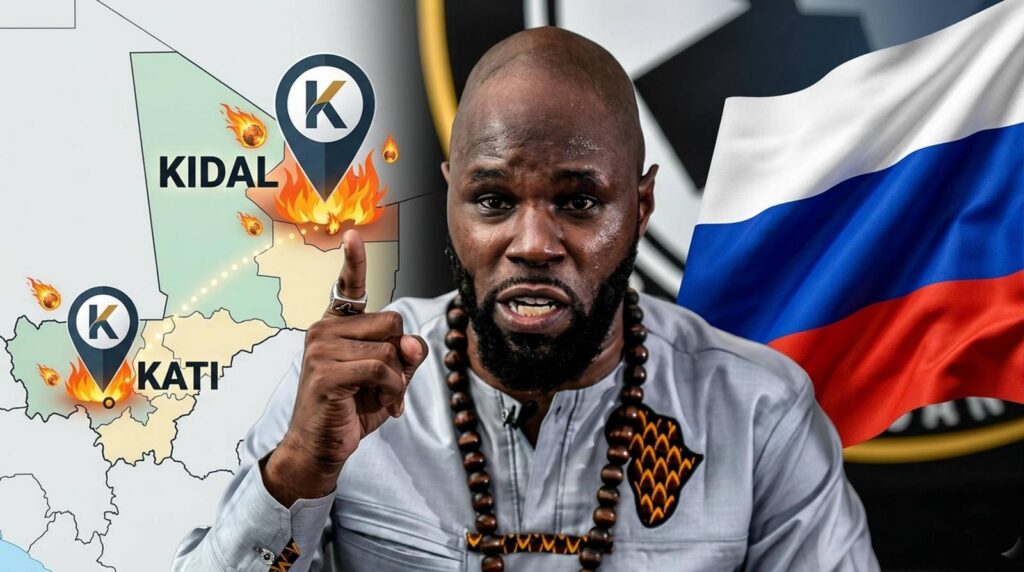
In the heart of Bamako, the capital of Mali, the sound of explosions shattered the illusion of invincibility. On a Saturday morning in April 2026, the narrative of a swift victory through Russian-backed security measures collapsed under the weight of coordinated attacks. The assaults in Kati and Kidal exposed the stark reality: the much-touted partnership with Russia is faltering, leaving the nation grappling with uncertainty.
Once hailed as a game-changer, the Russian military support promised to liberate Mali from armed groups in record time. Yet, the reality on the ground tells a different story. Military convoys reduced to smoldering wrecks, fortified camps under relentless pressure, and the persistent threat of insurgent activity paint a grim picture. The strategy, heavily promoted as a turnkey solution for Mali’s security woes, has failed to deliver even the smallest territorial gains.
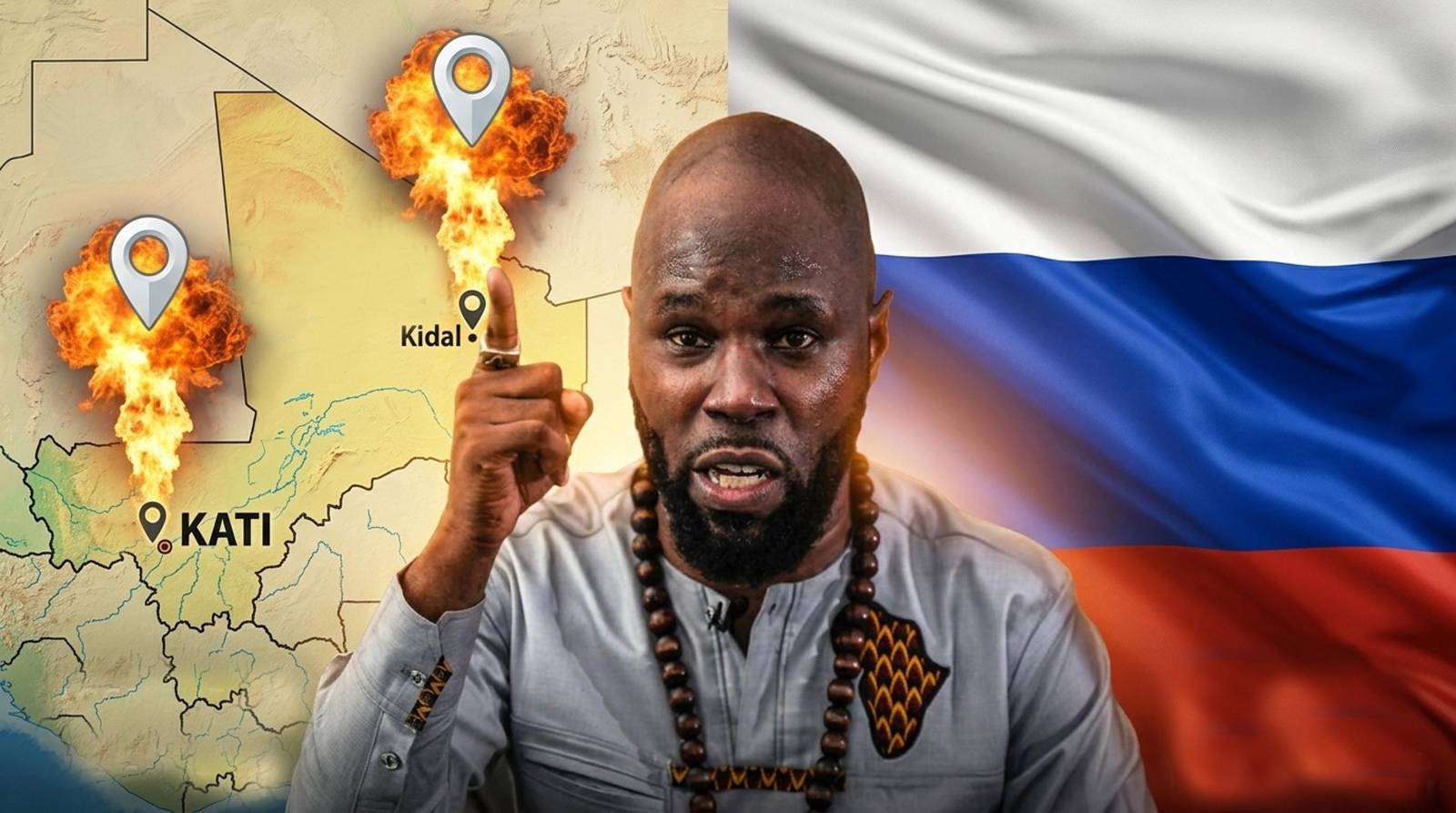
Kemi Seba’s credibility cracks under scrutiny
At the forefront of this shifting dynamic is Kemi Seba, the prominent panafricanist figure who once championed the Russian alliance as a bold move against Western influence. Despite his fiery public rhetoric, private conversations reveal a starkly different perspective. WhatsApp leaks have exposed Seba’s candid views on Russia’s motives, describing Moscow’s approach as purely opportunistic.
In these recordings, Seba doesn’t mince words. He labels the Russian strategy as one driven by self-interest, likening their involvement to a new form of colonialism. His admission underscores a growing realization: Russia, like its predecessors, is not in Mali to provide security but to extract value. Seba’s shift from a staunch advocate to a critical observer highlights the fragility of his own narrative, leaving his followers disillusioned.
the harsh truth: security as a failed commodity
The consequences of this failed partnership extend far beyond political posturing. Civilians and soldiers bear the brunt of the chaos. The promise of stability has evaporated, replaced by a harsh reality where security is treated as a negotiable commodity. Each failed operation chips away at the credibility of those who sold the Russian alliance as Mali’s salvation.
For Bamako, the reckoning is unavoidable. The Russian troops, once expected to work miracles, have instead exposed the limitations of a purely military solution. Meanwhile, influencers like Seba scramble to distance themselves from their past endorsements, framing their criticism as foresight rather than failure. Yet, the damage is done. The Malian people, caught in the crossfire, face an uncertain future with no clear path to safety in sight.
You may also like
Senegal’s December 2 deadline: how a possible assembly dissolution could hit wallets and stability
Senegal’s 2026 budget revision: how the deficit surge hits households, businesses and the Pastef majority
Benin’s €544,042 UNAIDS funding: the tangible consequences for patients, communities and the economy
Senegal-Azerbaijan pact in New York: what it means for jobs, trade and cooperation
What Luxembourg’s 9.8 billion FCFA port training pledge means for Benin’s workers and businesses