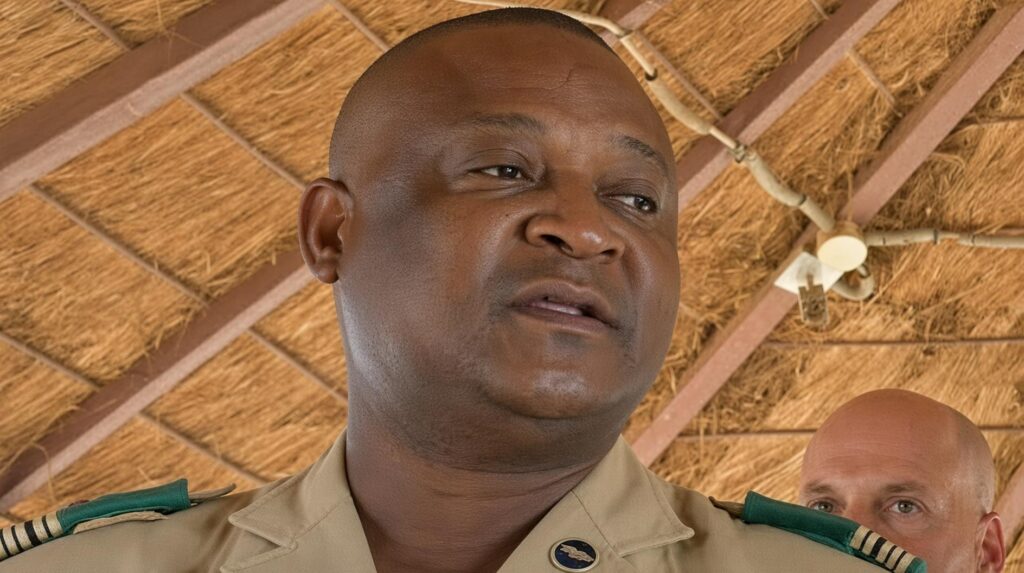
How much of Niger’s elite counterterrorism capability can be traced back to one officer’s American schooling? That is the question that runs through the career of Major General Moussa Salaou Barmou, and the answer carries real weight for Niger security as a whole. Inside the country’s military command, Barmou is widely described as one of the Sahel’s most battle-tested tacticians. His political visibility surged during the events of July 2023 in Niamey, but the operational credibility behind that visibility was built earlier, through instruction delivered by some of the most demanding institutions of the United States armed forces.
Why the question of doctrine matters so much
Niger sits at the centre of a region where armed groups move across porous borders and where every tactical decision has consequences far beyond the battlefield. In that context, the training of the officers who design and lead elite units is not a footnote — it is a strategic variable. Barmou’s case is instructive precisely because his education combined theory and practice in a way that shaped how Niger’s special forces were later conceived, staffed and deployed.
Fort Moore and the National Defense University: the two pillars of a doctrine
The general’s academic and military record reflects a passage through the upper tier of American military education.
- Fort Moore, formerly Fort Benning, in Georgia: he completed the programme of the U.S. Army Infantry School, a benchmark institution for infantry tactics, assault techniques and hardening troops for close-quarters combat.
- The National Defense University in Washington: holding a diploma from its College of International Security Affairs, Barmou developed expertise in strategic planning, counterterrorism and the analysis of asymmetric threats.
That double immersion — conceptual and hands-on — allowed him to absorb a military doctrine built on speed of reaction, the autonomy of small units and the tight integration of intelligence assets.
From the American model to the birth of Niger’s special forces
The skills acquired in the United States did not stay on paper. They translated into concrete decisions on Nigerien ground.
Standing up an elite command
As commander of Niger’s special forces, Barmou structured the unit along the lines of the U.S. Special Operations Command. He imposed demanding selection standards, rapid interception drills and heavy reliance on small, mobile patrols.
Joint counterterrorism operations
Working directly alongside American personnel deployed at the Agadez base, known as Base 201, and in Niamey, he helped orchestrate complex counterinsurgency operations in the Lake Chad basin against Boko Haram, and in the three-border zone against groups affiliated with the Islamic State.
A rare channel to Washington
His fluency in American military codes made him a natural and privileged interlocutor for the Pentagon. During the delicate negotiations that followed the 2023 coup, it was this credibility — and the rigour of his training — that helped keep a direct line of discussion open with American diplomacy.
What is at stake for Niger security and the transition
Alongside General Abdourahamane Tiani within the CNSP, Moussa Salaou Barmou served as Chief of Defence Staff, redrawing Niger’s security map and the arrangements of the Alliance of Sahel States before the military command was restructured in September 2026. The stakes of his trajectory are twofold: whether a doctrine imported from West Africa’s partner of long standing can hold against a shifting insurgency, and whether that same doctrine gives Niger leverage in a region where alliances are being rewritten. Within the Nigerien armed forces, his legacy remains that of an officer who managed to adapt modern warfare methods and American pragmatism to the tactical realities of the Sahel.
You may also like
Can Abidjan’s two-day open house actually launch young Ivorians into work?
Chad’s Klessoum pardon: will the release of 150 inmates truly reshape justice and family life?
Togo: media crackdown puts businesses and citizens on edge
What the Niger reshuffle really means for citizens, businesses and the economy
Niger’s information crackdown: the real cost for citizens, businesses and the economy