Poland’s Baltic frontier under siege: can its new security shield withstand Russia’s covert assaults?
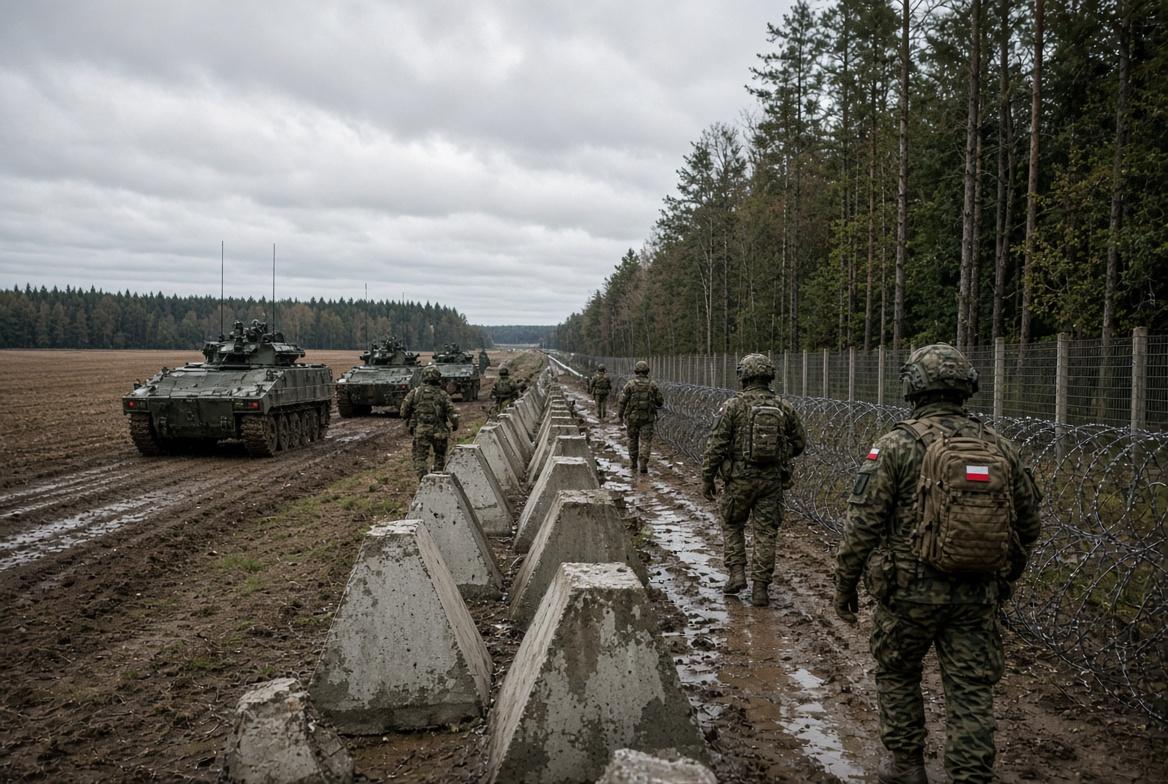
As NATO’s eastern flank becomes the latest battleground in Europe’s shadow conflict with Moscow, Poland has launched an unprecedented security operation along its northeastern border with the heavily militarized Kaliningrad exclave. This decisive move comes in response to a surge in suspicious drone overflights, digital intrusions, and allegations of migration weaponization—all tactics emblematic of Russia’s hybrid warfare playbook. The question now looms large: can Warsaw’s fortified border withstand the Kremlin’s relentless pressure?
Military and counterterrorism grid: a sophisticated security matrix
What began as routine border patrols has evolved into a multi-layered security shield. Polish authorities have deployed a coordinated force comprising border guards, national police, elite counterterrorism units, and regular army battalions along the 200-kilometer frontier. The operation isn’t just about visibility—it’s a systematic lockdown designed to neutralize infiltration risks and protect critical infrastructure. Power grids, transport hubs, and communication networks in northern Poland have been placed under enhanced surveillance, reflecting the high stakes of Russia’s asymmetric warfare strategy.
The urgency of this deployment is underscored by recent incidents:
- Drone incursions: Repeated unauthorized flights over sensitive military and civilian zones, with some drones deliberately entering restricted airspace.
- Digital incursions: Escalating cyber probes targeting Polish government and private sector networks, suspected to originate from Russian state actors.
- Migratory pressure: Sudden spikes in irregular border crossings, raising concerns over potential orchestrated attempts to destabilize Polish society.
Why Kaliningrad is the epicenter of Europe’s silent conflict
Nestled between Poland and Lithuania, Kaliningrad is a Russian military stronghold bristling with artillery, naval assets, and electronic warfare capabilities. Its proximity to NATO territory makes it a prime launchpad for hybrid operations—sabotage, disinformation, and psychological pressure. Poland’s new security posture is not just defensive; it’s a strategic warning to Moscow that any attempt to exploit vulnerabilities along the Baltic coast will meet a firm and coordinated response.
The stakes couldn’t be higher. While the world watches Ukraine, the Baltic states and Poland are quietly waging a war of attrition—a contest where victory isn’t measured in territory gained but in stability preserved and aggression deterred.
NATO’s eastern shield: Poland as the bulwark against hybrid threats
By mobilizing its most elite forces and adopting a zero-tolerance policy toward Russian aggression, Poland has positioned itself as NATO’s eastern sentinel. This isn’t just about borders—it’s about resilience. Warsaw is sending a clear message: hybrid warfare will not find fertile ground in Poland. The integration of military, police, and intelligence resources reflects a modern approach to national security—one that treats cyberattacks, drone surveillance, and sabotage as equally lethal threats.
The broader message is unmistakable. Europe’s security architecture is being tested not with tanks and missiles, but with a relentless campaign of subterfuge and psychological pressure. Poland’s response is a bold declaration that the age of passive containment is over—and that deterrence now demands an ironclad, proactive stance.
What comes next: deterrence or escalation?
The coming months will reveal whether Poland’s fortified border is a turning point or a temporary deterrent. With Kaliningrad’s military footprint growing and Russia’s hybrid tactics evolving, Warsaw faces a critical strategic choice: to escalate deterrence further or risk normalizing insecurity along its frontier. One thing is certain—inaction is no longer an option on NATO’s eastern flank.