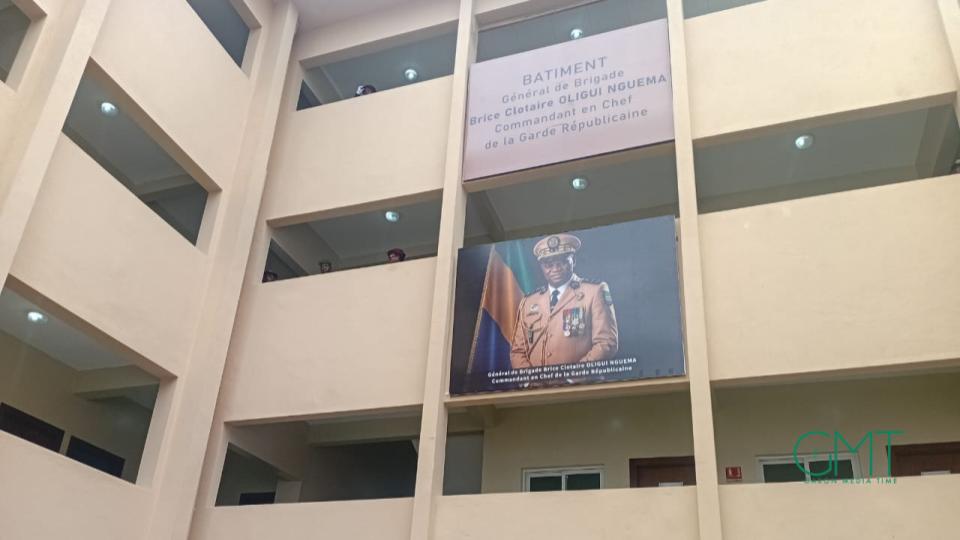
President Brice Clotaire Oligui Nguema officially inaugurated the new annex building of the Penitentiary Security High Command in Libreville on August 13, 2026. Named the General Brigade Building of Brice Clotaire Oligui Nguema, Commander-in-Chief of the Republican Guard, this three-story facility features 38 offices and marks a significant step in modernizing Gabon’s penal administration. The achievement was praised by Justice Minister Augustin Emane, who emphasized that while administrative progress is crucial, deeper reforms within the prison system remain essential to address lingering challenges.
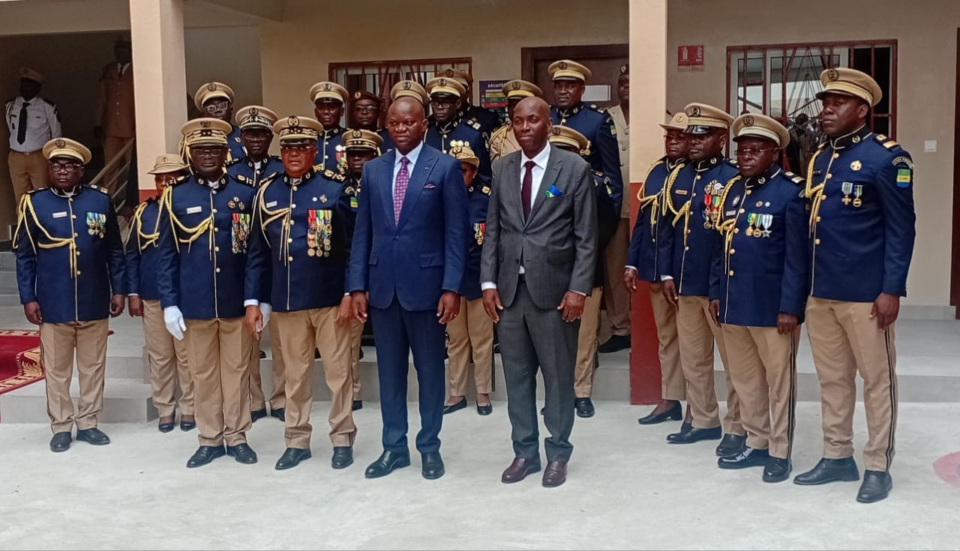
The inauguration ceremony brought together government officials, high-ranking military officers, and other dignitaries. As Commander-in-Chief of the Defense and Security Forces, President Oligui Nguema symbolically inaugurated the new premises by cutting the ceremonial ribbon.
The new infrastructure includes 38 offices alongside operational, supervision, and conference rooms. Its primary goal is to enhance working conditions for staff responsible for managing and overseeing penitentiary security operations.
Modernization tied to broader judicial reforms
In his address, Justice Minister Augustin Emane framed the new building as a pivotal milestone in the modernization of Gabon’s judicial and penitentiary institutions. He highlighted its role in supporting the reorganization of the Autonomous Penitentiary Security Corps, a reform spearheaded by the government.
Emane underscored that the project reflects a broader commitment to restore state authority while upholding the dignity of individuals under state custody. The new headquarters will serve the Penitentiary Security High Command, led by General Jean Germain Effayong Onong, whose leadership was acknowledged as instrumental in bringing the project to fruition.
From offices to prison conditions: the next frontier
Despite the progress, Minister Emane stressed that administrative upgrades alone cannot resolve systemic issues plaguing Gabon’s prisons. He called for a realistic assessment of conditions within correctional facilities, citing overcrowded dormitories, outdated surveillance systems, and inadequate security equipment as critical concerns.
The modernization drive must now extend beyond office spaces to transform the actual detention environments. Improving working conditions for prison staff and living conditions for inmates represents the next indispensable phase of reform, ensuring that administrative advancements align with tangible improvements on the ground.
Balancing security with human dignity
Emane reiterated the government’s goal of harmonizing strict penal enforcement with humane treatment for detainees. This includes providing safe, legally compliant detention facilities that meet international standards. A modern penitentiary policy, he argued, goes beyond preventing escapes or tightening surveillance—it must prioritize the dignity of incarcerated individuals, the safety of prison personnel, and ultimately, rehabilitation.
Following a military chaplain’s inaugural prayer led by Sergeant Obame Mihindou, President Oligui Nguema toured the facilities. Ali Adiahéno, representing contractor Abnia Gabon, expressed gratitude for the government’s trust in the company’s work.
The completion of the new headquarters provides an upgraded administrative tool for the Penitentiary Security High Command. However, as Emane noted, the most pressing challenge lies ahead: ensuring these advancements extend into the prison system itself, directly benefiting both staff and detainees.
You may also like
Eastern DRC peace mediation: what the latest Tshisekedi letter to Gnassingbé means for civilians and local businesses
Mali: JNIM ambush on Russian Africa Corps convoy near Niono — what it means for civilians and local trade
Mali’s poverty crisis: how hunger and hardship are reshaping daily life for millions
Guinea-Bissau’s December election: what Embaló’s return means for daily life, stability and the economy
The $20 million bounty on Robert Brovdi: what it means for Ukraine’s citizens, businesses and war economy