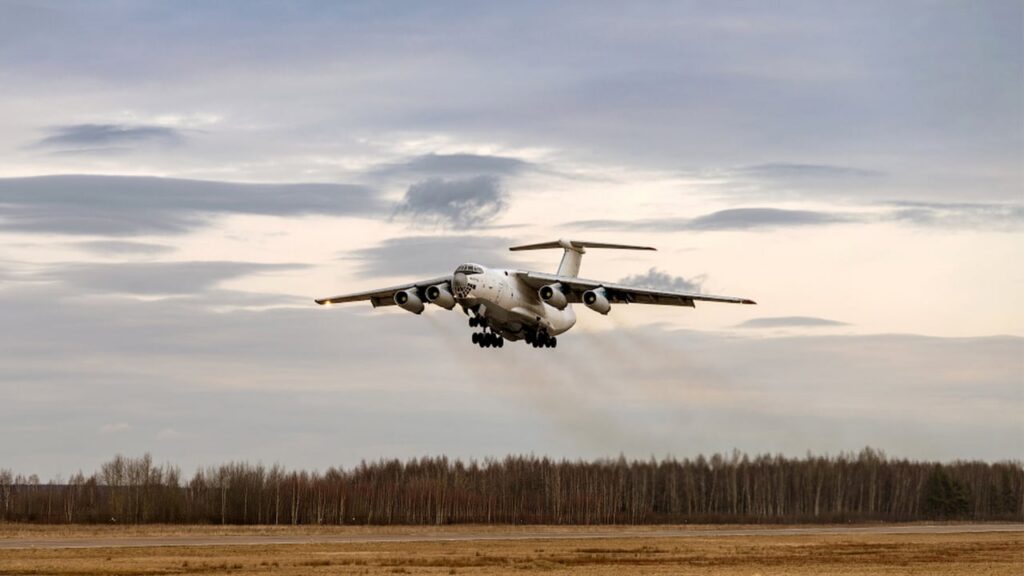

Russia has intensified its military logistics footprint in Niger and neighboring Sahel nations through a dedicated air transport network. The operation, now formalized under the Africa Corps, leverages commercial carriers like Zitotrans—operators of the robust IL-76 transport fleet—to move troops and materiel across the region. Intelligence flights and cargo schedules reveal a pattern of increased activity at Niamey’s Diori Hamani International Airport, a critical nexus for these deployments.
The Africa Corps, Moscow’s latest military engagement vehicle, replaces the shadowy Wagner Group while maintaining similar operational objectives. Unlike its predecessor, the new structure operates with greater transparency, though its end goals remain consistent: securing Russian influence in West Africa and countering Western presence in the Sahel. Recent overflight data shows regular routes connecting Niger with other partner nations, including Burkina Faso and Mali—all members of the Alliance of Sahel States.
How Africa Corps uses commercial airlines for covert deployment
The Africa Corps relies heavily on civilian cargo airlines to mask its military movements. Zitotrans, a Russian-registered carrier, has emerged as a primary transporter, handling flights that blend commercial cargo with unmarked personnel and equipment. Flight logs indicate that these operations are often scheduled during low-traffic windows to avoid scrutiny, with aircraft departing from airfields in Russia before landing in Niger or other Sahel destinations.
These flights are not isolated incidents. Satellite imagery and aviation tracking confirm repeated landings at secondary airfields, including those near Agadez and Zinder, where ground crews facilitate rapid unloading and onward transport. The use of civilian aircraft allows Moscow to bypass international sanctions and maintain plausible deniability while projecting power into a region grappling with insurgencies and fragile governments.
Niger’s strategic role in Russia’s Sahel expansion
Niger has become the linchpin of Russia’s Sahel strategy, offering both geographic advantage and political alignment. Since the Alliance of Sahel States was formed, Niamey has emerged as a hub for Russian military coordination, with Africa Corps personnel coordinating closely with local forces. The country’s uranium resources and proximity to conflict zones in Burkina Faso and Mali further enhance its strategic value.
Reports from regional security analysts suggest that Africa Corps units are not only transporting weapons but also training local troops and providing advisory support. This aligns with Moscow’s broader goal of expanding its footprint while positioning itself as an alternative to traditional Western partners in counterterrorism efforts.
Key indicators of Africa Corps activity in Niger
- Increased IL-76 landings at Niamey International Airport, particularly overnight;
- Unmarked cargo flights from Russian airfields to secondary Sahel locations;
- Presence of Russian advisors in military installations near uranium-rich regions;
- Joint exercises with Nigerien forces under the Africa Corps banner.
Global implications of Russia’s Sahel strategy
The Africa Corps’ expansion into Niger reflects a broader shift in global power dynamics. By embedding itself in the Sahel through military and logistical cooperation, Russia is challenging the influence of former colonial powers and establishing new alliances. For West Africa, this growing Russian presence introduces both opportunities and risks—potentially strengthening regional security but also increasing dependence on external actors.
The long-term consequences remain uncertain. While Africa Corps operations provide immediate tactical advantages, their sustainability hinges on political stability in Niger and the broader Sahel. As local governments balance relationships with Russia, Europe, and the United States, the region’s future may be shaped by forces far beyond its borders.
You may also like
Eastern DRC peace mediation: what the latest Tshisekedi letter to Gnassingbé means for civilians and local businesses
Mali: JNIM ambush on Russian Africa Corps convoy near Niono — what it means for civilians and local trade
Mali’s poverty crisis: how hunger and hardship are reshaping daily life for millions
Guinea-Bissau’s December election: what Embaló’s return means for daily life, stability and the economy
The $20 million bounty on Robert Brovdi: what it means for Ukraine’s citizens, businesses and war economy