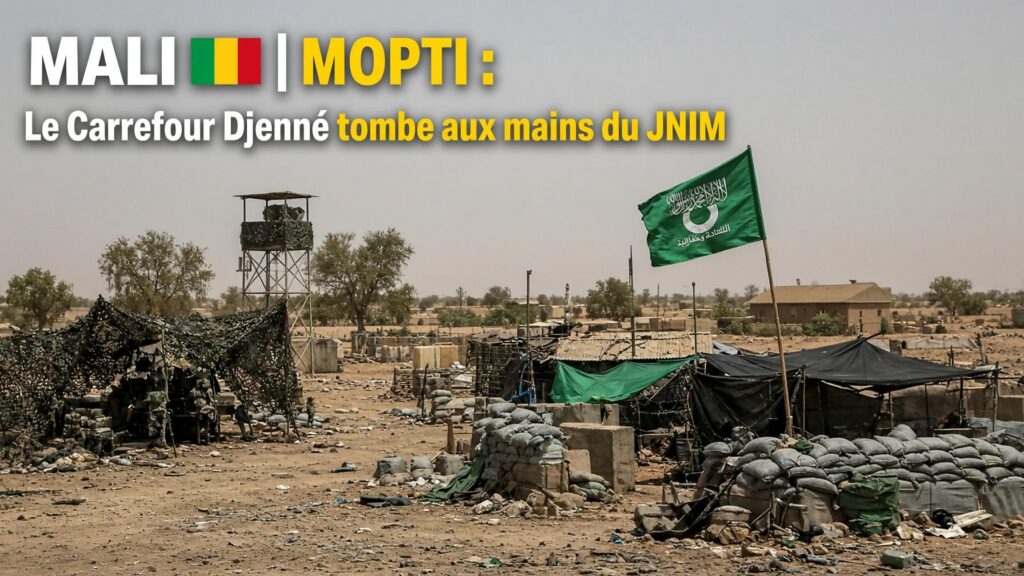
The fall of a strategic crossroads ignites public debate
The military post at Djenné, a strategic crossroads on National Road 6 linking southern and northern Mali, was overrun on September 24 after a rapid assault by fighters from Jama’at Nusrat al-Muslimin (JNIM), an Al-Qaeda-affiliated group. Within minutes of the initial gunfire and explosions, the position had fallen, according to local accounts. While the army’s general staff in Bamako has not yet released official casualty figures, the toll is expected to be heavy. The attackers seized a substantial cache of military equipment, including tactical vehicles, heavy weapons, and ammunition.
This latest security failure has triggered widespread reactions across Mali, with many questioning how such a key position could fall so quickly. The loss of Djenné has amplified an ongoing public debate about the effectiveness of the military’s strategy in the face of JNIM’s relentless pressure.
What happened at Djenné: a swift and deadly assault
Witnesses describe a coordinated attack in which insurgents surrounded the military position before launching their assault. “The violence was unprecedented. Gunfire came from all directions, and the defense forces could not hold their support line for long,” said a resident, speaking on condition of anonymity. After government troops abandoned the post, videos released by the group showed armed men walking among the smoldering camp installations, displaying captured equipment as war trophies.
The fuel blockade: a weapon of attrition
While the speed of the camp’s fall has raised questions, analysts point to a crippling logistical crisis that has paralyzed operations in the area. For months, JNIM has tightened its economic and military stranglehold on the Mopti region. By intercepting tanker convoys on major trade routes connecting Mali to neighboring countries, the armed group has imposed a de facto fuel blockade.
This energy asphyxiation directly undermines the rapid response capabilities of the Malian Armed Forces (FAMa) and their auxiliaries. Without fuel, reconnaissance patrols are reduced to a minimum, armored vehicles remain immobilized in bases, and air support suffers significant delays in deployment.
Africa Corps demands emergency fuel supplies
As the paralysis deepens, tensions are rising within the high command. Regional security sources indicate that the Russian paramilitary contingent Africa Corps has urgently requested increased allocations of gasoline and aviation fuel from the transitional authorities in Bamako. Russian officers complain that they cannot conduct effective counter-offensives or provide logistical cover for forward posts without a dedicated and secure emergency supply. However, with national reserves of refined products at their lowest due to the blockade on road axes, meeting these demands poses a strategic dilemma.
Reactions and the road ahead
The attack on the Djenné crossroads dramatically illustrates JNIM’s strategy of attrition: depriving the adversary of mobility to strike isolated weak points. As central Mali sinks further into isolation, the transitional government faces a dual challenge: breaking the energy siege imposed by insurgents and maintaining the cohesion of its military alliance on the ground. The coming weeks will be critical in determining whether the army can adapt its logistics and regain the initiative, or whether further losses will deepen the crisis.
You may also like
Benin reacts to Candide Azannaï detention ruling: what the decision changes for the coup inquiry and the country’s future
Benin’s supreme court ruling on General Houndégnon: reactions, debate and what happens next
After Benin’s UN security council session: the debate over good neighborliness and what happens next
Senegal’s dissolution debate: reaction and fallout after Diomaye Faye’s remarks
Kemi Seba protection fallout: what next for Niger-Benin reconciliation?