Gabon’s arrival at the 81st United Nations General Assembly in New York has sparked a wave of reactions at home and abroad, with many asking what the country’s new vice-presidency of the assembly actually means for Libreville’s diplomatic future. Since the session opened on 22 September, the Central African nation has been exercising a fresh responsibility within the world body — one that has turned its delegation into a subject of public debate and political commentary.
Elected in June to the vice-presidency of the General Assembly, Gabon is formally marking its entry into the Bureau of the UN’s principal deliberative organ. That seat has given the country’s presence in New York unusual weight, at a time when Libreville is working to deepen its multilateral ties and push its priorities onto the international agenda. Marie-Édith Tassyla-Ye-Doumbeneny is leading the Gabonese delegation through this high-stakes moment.
Acting on the instructions of President Brice Clotaire Oligui Nguema, the Minister of Foreign Affairs, Cooperation, Integration and the Diaspora is representing the head of state at the gathering. Her role goes well beyond simply attending the assembly’s proceedings: she is carrying the president’s message and strategic direction into one of the most closely watched events on the global diplomatic calendar.
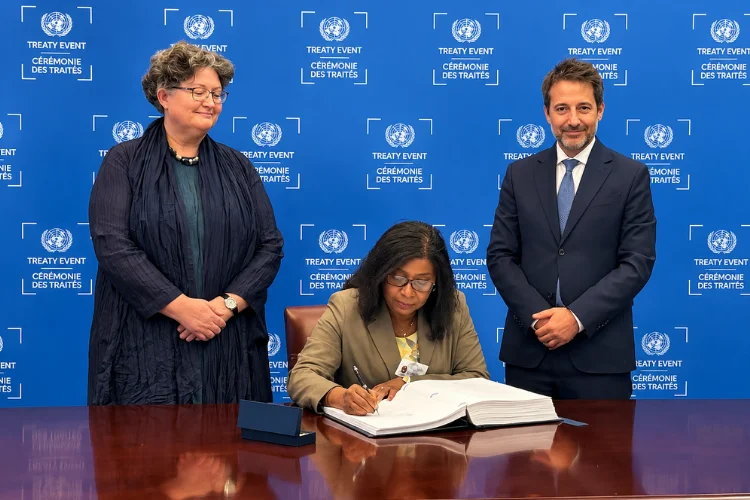
Ahead of the general debate, a coordination meeting was held at Gabon’s Permanent Mission to the United Nations to align the delegation’s positions. On the sidelines of the 81st session, she signed two major instruments on behalf of the Gabonese state — the Treaty on the Prohibition of Nuclear Weapons and the convention on combating cybercrime. Several government ministries have been mobilised around priorities including climate action, the protection of forests and oceans, health, housing and digital transformation.
Beyond these sectoral files, the 81st session represents the first real test of the new responsibility entrusted to Gabon within the General Assembly Bureau. It offers Libreville an additional platform to defend its interests and strengthen its partnerships. One of the most anticipated moments of this participation is expected on 26 September, when Marie-Édith Tassyla-Ye-Doumbeneny will deliver Gabon’s official address from the UN podium on behalf of the president.
You may also like
Burkina Faso’s 80 % NGO rule: the debate, the fallout, and what comes next
Djenné attack aftermath: Mali’s fuel blockade sparks debate over army’s next move
Benin reacts to Candide Azannaï detention ruling: what the decision changes for the coup inquiry and the country’s future
Benin’s supreme court ruling on General Houndégnon: reactions, debate and what happens next
After Benin’s UN security council session: the debate over good neighborliness and what happens next