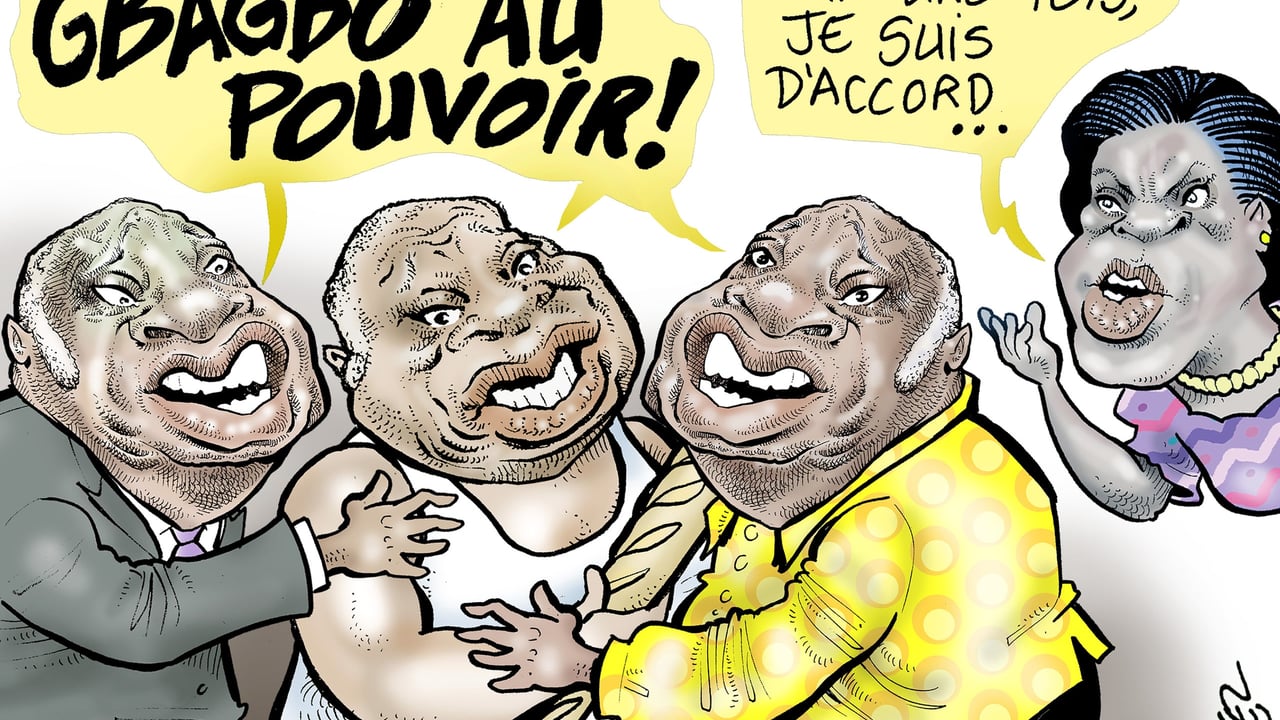
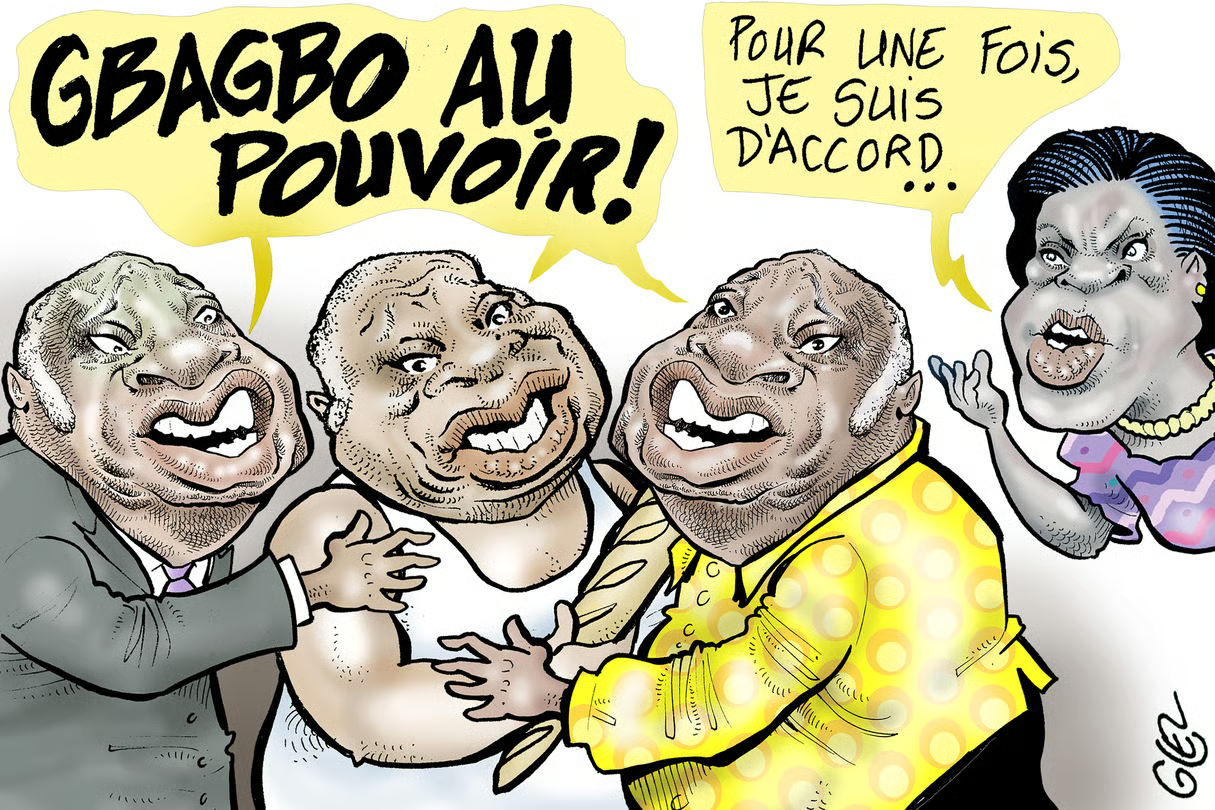
After a period of political uncertainty, Laurent Gbagbo has once again taken the helm of the Parti des peuples africains-Côte d’Ivoire (PPA-CI), the party he founded. Despite initial indications that he might step away from active politics, recent developments have led to his reelection as president during the party’s first ordinary congress on May 14 and 15 at the Treichville Cultural Palace.
The decision comes as a surprise to many, particularly given the legal and political obstacles that previously prevented him from running in the 2025 presidential election. The controversy stemmed from a technicality involving the terms “amnesty” and “grace,” which barred him from candidacy. However, the public’s perceived need for his leadership in a time of national challenges appears to have swayed the decision in favor of his continued involvement.
Gbagbo’s reelection was hailed as a show of unity, with over 3,000 delegates enthusiastically endorsing his leadership. Yet behind the scenes, the congress served as a platform to address deep divisions within the party. The PPA-CI has faced criticism for its absence from both the 2025 presidential and legislative elections, a strategy that some members believe has weakened the party’s influence.
Internal strife and disciplinary measures
Tensions within the PPA-CI reached a boiling point ahead of the congress. Several prominent figures, including former party executive vice president Ahoua Don Mello, ran as independent candidates in the presidential election, defying the party’s official stance. This act of defiance prompted the party’s central committee to take disciplinary action, resulting in the expulsion of three members and the suspension of 62 others. Among those penalized were Prince Arthur Dalli, mayor of Lakota, independent deputy Stéphane Kipré, and professor Georges Armand Ouégnin.
These individuals had openly advocated for a renewal of the party’s leadership and a redistribution of roles, criticizing the decision to boycott recent elections. Their exclusion from the congress underscored the party’s determination to enforce internal discipline, even as it projects an image of unity to the public.
Renewal or continuity?
While Gbagbo’s reelection signals a commitment to continuity, the question remains whether the PPA-CI can revitalize itself under his leadership. The party’s recent electoral abstention has left it on the sidelines of national politics, raising concerns about its relevance in shaping Côte d’Ivoire’s future. Despite Gbagbo’s symbolic role as party president, there is little indication that he intends to manage the day-to-day operations of the PPA-CI.
During his address to the congress, Gbagbo emphasized the need for the party to adapt to contemporary challenges while staying true to its core values. However, the dismissal of dissenting voices and the party’s historical tendencies toward internal conflict suggest that the path forward may not be straightforward. As the PPA-CI celebrates its “Renaissance Day” in Gbagbo’s hometown of Songon, the challenge of balancing tradition with modernization looms large for the party’s leadership.