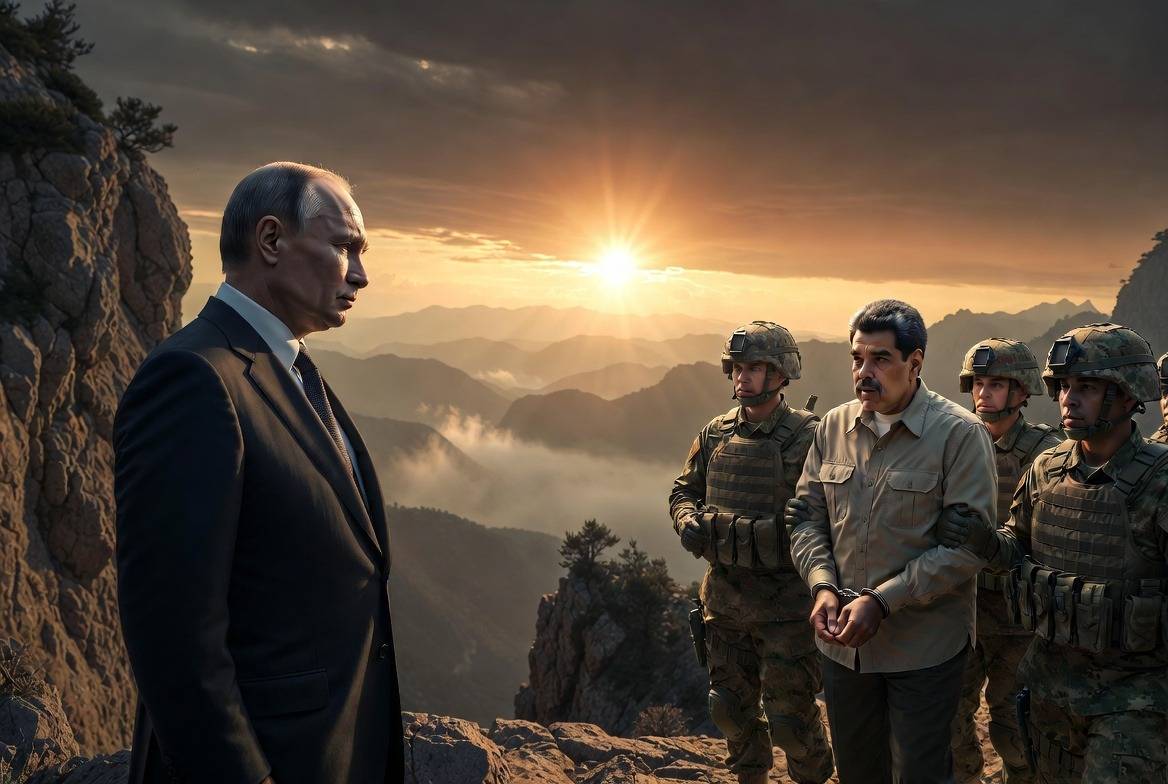
The silence from Moscow speaks volumes, revealing more about its own vulnerabilities than any diplomatic stance. When Caracas faced unprecedented turmoil in early 2026—marked by large-scale U.S. military intervention and the dramatic capture of Nicolás Maduro—the Russian Federation’s response was conspicuously absent. Once hailed as Venezuela’s steadfast protector against perceived Western aggression, Russia retreated behind hollow diplomatic statements, exposing a glaring operational paralysis.
Where is Moscow’s once-touted strategic resolve? Where are the bold alliances once paraded before global audiences?
From rhetoric to retreat
The Russian Ministry of Foreign Affairs did issue formal condemnations of the “armed aggression” and demanded Maduro’s release. Foreign Minister Sergei Lavrov reiterated Russia’s commitment to bilateral agreements. Yet beyond these predictable declarations, tangible action was nearly nonexistent. A belated naval show of force, the delayed deployment of a submarine to escort a sanctioned oil tanker, and an optimistic plea for Washington to “respect international law”—these amounted to little more than symbolic gestures.
The reality is stark: Russia failed to mount any meaningful resistance, diplomatic or otherwise, at the United Nations Security Council. Its most trusted ally in Latin America was extracted to a New York prison without Moscow lifting a finger in defense. Russian intelligence networks, usually quick to anticipate Western maneuvers, remained conspicuously silent, leaving Caracas defenseless against what amounted to a reinvented Monroe Doctrine at the hands of the White House.
The 2025 Strategic Partnership Treaty now stands exposed as a paper tiger. When confronted with its first real test of strength, Russia’s shield shattered, laying bare the severe limitations of Moscow’s global power projection.
Strategic exhaustion: the hidden cost of Moscow’s retreat
This absence of action is not a tactical choice but a reflection of hard reality: strategic exhaustion. Years of war have drained Russia’s resources, while a suffocating “economy of death”—devouring financial and human capital—has left the Kremlin with little to spare for ambitious foreign ventures. Venezuela, in this context, was reduced to collateral damage, or worse, a bargaining chip in a larger game of survival.
By confining its response to perfunctory protests, Russia sent a chilling message to partners worldwide: its protective umbrella only extends as far as its own reach. The message was clear—when Moscow’s own interests are at stake, alliances take a backseat.
A geopolitical betrayal with lasting consequences
By abandoning Venezuela to a transitional governance structure under heavy external pressure—and effectively endorsing the fait accompli imposed by the United States—Russia committed a grave strategic error. The Venezuelan people now face a future under renewed foreign tutelage, with no credible alternative offered by Moscow.
This silence is not diplomacy. It is the admission of failure. In retreating into this polished impotence, Russia has not only lost a critical ally and access to vast oil reserves but has surrendered its role as a global counterbalance. In Caracas, the curtain has fallen—and the erstwhile protector was nowhere to be found.