The once-dominant Russian strategy in Africa, built on mercenary operations, disinformation campaigns, and anti-Western populism, now faces an insurmountable setback. After a decade of rapid expansion, the Kremlin’s ambitions are crumbling under the weight of unfulfilled security promises, military quagmires, and growing public disillusionment. What appeared to be a fleeting geopolitical experiment is now revealing itself as a transient illusion.
The illusion of Russian security dominance
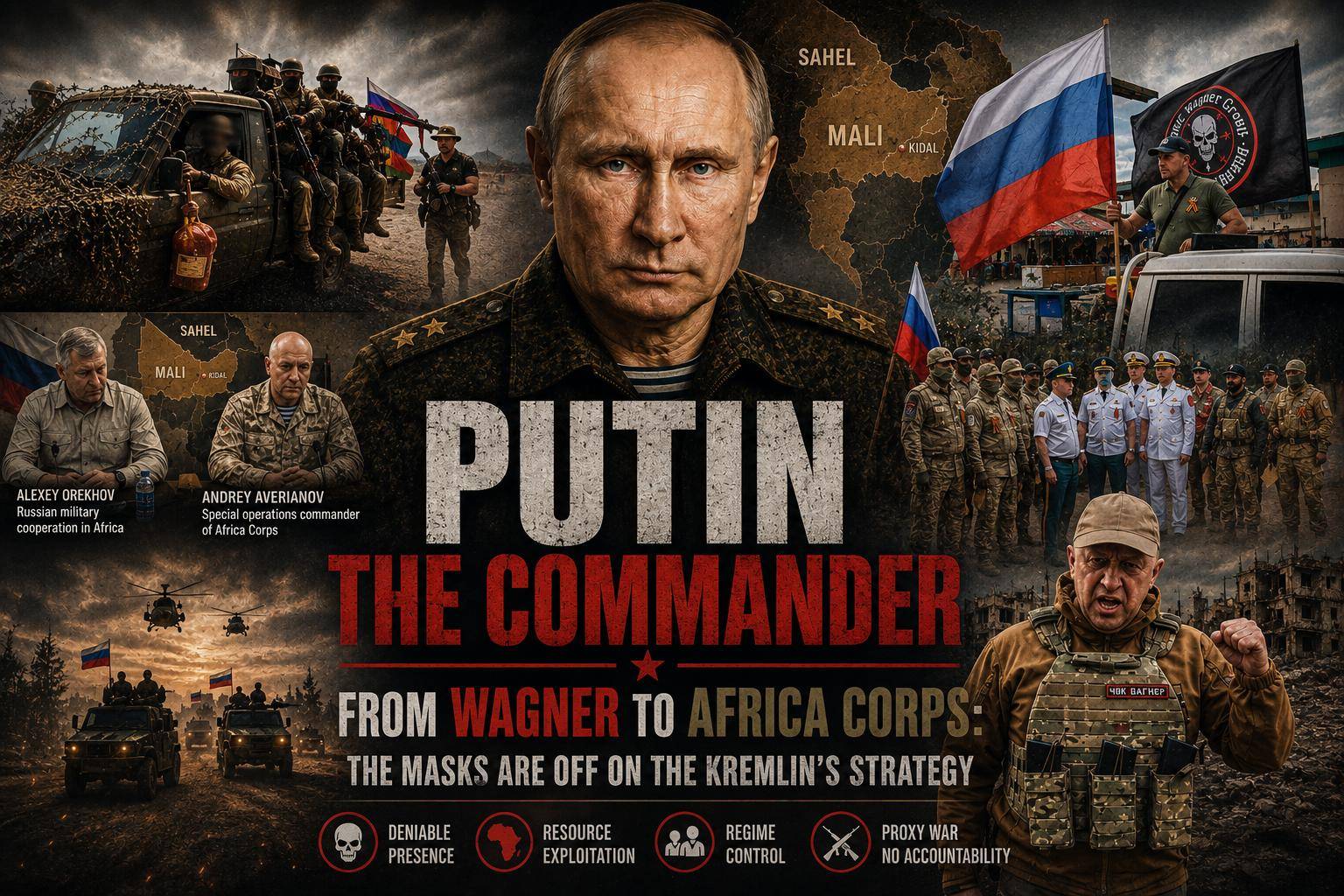
In the mid-2010s, Russia exploited the retreat of traditional powers, particularly France, across the Sahel. From Bamako to Bangui, via Ouagadougou and Niamey, Moscow promoted a ready-made security solution—unconditional, free from human rights constraints, and embodied by the Wagner Group (now rebranded as Africa Corps). Yet, years later, the reality is starkly different.
Rather than stabilizing the region, Russia’s intervention has exacerbated insecurity. The devastating battle of Tinzawatane—where dozens of Russian mercenaries and Malian soldiers perished along the Algerian border—shattered the myth of Russian invincibility. The Kremlin’s approach was never about peacekeeping; it was about securing resource-rich regimes in exchange for mineral concessions (gold, diamonds, uranium). This extractive logic, a hallmark of imperialism, is now glaringly evident to local populations, who recognize that colonial domination has merely changed its face and language.
Three structural factors driving Russia’s retreat
The erosion of Russian influence in Africa stems from three critical weaknesses:
1. The Ukrainian war’s financial and military drain
The prolonged conflict in Ukraine has crippled Russia’s ability to sustain its African ambitions. Elite troops have been redeployed to the frontlines, while heavy weaponry, once exported freely, is now rationed for domestic military needs. Financial resources once earmarked for African operations have been diverted to sustain the war effort.
2. The absence of an economic development model
Russia’s strengths lie in military and narrative power, not economic prowess. With a GDP comparable to Spain’s, it cannot compete with the European Union’s development aid or China’s infrastructure investments. Once the initial political honeymoon fades, African governments realize that emergency wheat shipments and social media disinformation campaigns cannot feed their populations or build sustainable futures.
3. The rise of African nationalism
Russia’s strategy relied heavily on the rhetoric of a “second decolonization,” appealing to anti-Western sentiment. However, the new generation of African leaders and citizens is fiercely independent. A digitally connected and vigilant public now rejects Moscow’s dominance with the same fervor it once reserved for Paris. Swapping the French tricolor for the Russian tricolor is no longer seen as liberation but as a hollow and exploitative substitute.
A shifting geopolitical landscape
The decline of Russian influence does not automatically pave the way for a Western resurgence in Africa. Instead, a multipolar reconfiguration is underway, favoring more pragmatic and less ideologically driven actors.
China is quietly consolidating its economic foothold, prioritizing stable contractual partnerships over the aggressive tactics employed by Russia. Meanwhile, Turkey and the United Arab Emirates are emerging as key alternative partners, offering advanced drone technology and financial investments without the geopolitical baggage that accompanies Kremlin-backed ventures.
The end of the geopolitical shortcut
Russia’s imperial adventure in Africa, though intense, has proven historically short-lived. It has underscored a fundamental truth: influence cannot endure when built solely on military force and informational manipulation.
For African leaders, the lesson is unequivocal—there are no shortcuts in geopolitics. Security and development cannot be outsourced to foreign mercenaries, whether from the East or the West. The fading of Russia’s grip may signal the beginning of a new era: one where Africa seeks partners, not masters.